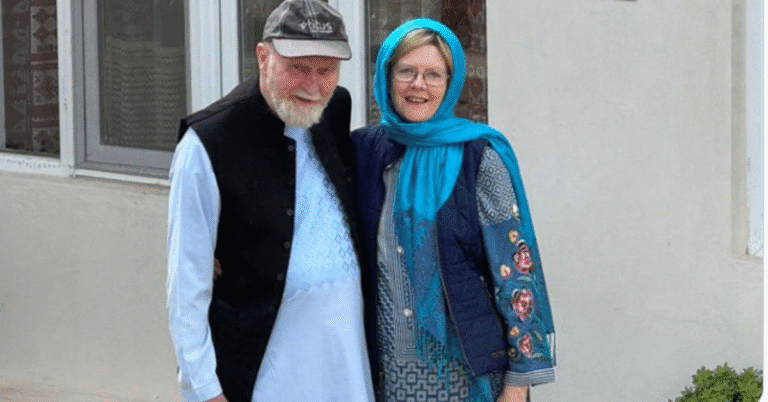

Woman Held by Taliban- An American woman detained by the Taliban alongside a British couple has given a harrowing account of their suffering in prison, warning the BBC that the elderly couple is “literally dying” and “time is running out.”
Arrest and Background
Faye Hall, an American national, was arrested along with Peter Reynolds, 80, and Barbie Reynolds, 76, on February 1 while returning to Bamiyan Province, Afghanistan, where the couple lived. Although Ms. Hall was released after two months in captivity, the Reynolds remain imprisoned without knowing the reason for their detention despite four court appearances.
Table of Contents
The Foreign, Commonwealth & Development Office (FCDO) confirmed it is supporting the couple’s family and stressed the UK’s limited capacity to assist, due to the embassy’s closure after the Taliban’s return to power in 2021.
First Interview After Release
In her first interview since release, Ms. Hall broke down in tears on BBC Breakfast when asked what message she had for the couple. She expressed deep affection and hope: “I love them, I know they will be out very soon, don’t ever give up.”
Peter and Barbie Reynolds had been living in Afghanistan for nearly two decades after marrying in Kabul in 1970. They ran a charity program, which was officially approved by the Taliban when they took control in 2021. Despite this, the reason for their arrest remains unclear.
Arrest Details and Prison Conditions
Ms. Hall revealed that the group, which included an interpreter, flew from Kabul to Bamiyan Province in a privately chartered plane but were stopped at a Taliban checkpoint. They spent days being transferred between police stations and various prisons.
She described appalling prison conditions: cramped cells, a maximum-security facility typically housing murderers, barbed wire fences, and guards armed with machine guns. The elderly couple’s health rapidly deteriorated during their detention.
Barbie Reynolds reportedly lost significant weight and, at one point, was unable to stand or walk. Peter’s condition also worsened despite receiving daily medication from the Qatari government, essential for his heart surgery and cancer treatment history.
“We just have these elderly people, they’re literally dying, and time is running out,” said Ms. Hall.
Mental and Physical Toll
Ms. Hall highlighted the psychological strain, noting the constant uncertainty of their future. “Every day you do not know where you’ll be tomorrow,” she said. She also pointed out that they were the only foreigners in the prison, adding to their vulnerability.

The couple’s son previously expressed fears that his parents would die in detention, describing Peter’s severe convulsions and Barbie’s numbness due to anemia and malnutrition.
UN and Government Responses
In July, the UN issued a warning that the couple could perish “in such degrading conditions” without immediate medical care, calling the detention “inhumane.”
READ ALSO- Viral Video: Indian woman Questioned by US Cops for Alleged Theft at Target Store
Ms. Hall urged both the US and UK governments to collaborate and do more to secure the couple’s release.
A spokesperson from the US State Department condemned the Taliban’s “history of unjustly detaining foreign nationals” and called for an immediate end to “hostage diplomacy.”
Taliban’s Official Statement
In contrast, the Taliban’s foreign minister claimed in July that Peter and Barbie Reynolds were “in constant contact with their families” and that efforts were ongoing to secure their release. He insisted their human rights were being respected, with full access to treatment, family contact, and proper accommodation.
Ongoing Situation(Woman Held by Taliban)

The FCDO reiterated its support for the family but noted that assistance for British nationals in Afghanistan remains “severely limited.” The official travel advisory strongly advises against all travel to Afghanistan.
As the situation remains unresolved, international pressure mounts on the Taliban to release the elderly couple and address the humanitarian concerns surrounding their imprisonment.


 By
By


 gratis binance-konto says: