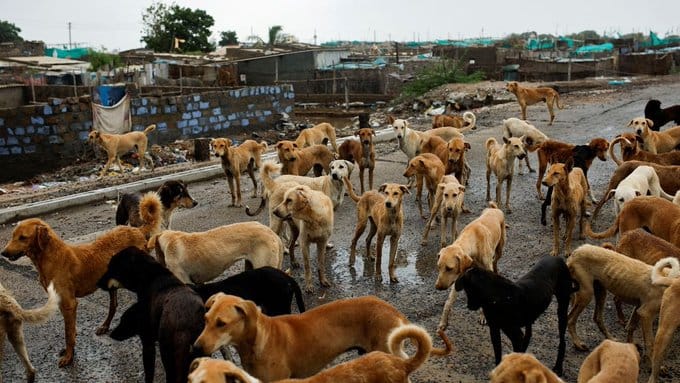
Supreme Court Orders All Stray Dogs in Delhi-NCR Move To Shelters , In a landmark ruling aimed at tackling the growing menace of stray dog attacks in the Delhi-NCR region, the Supreme Court has directed that all stray dogs must be removed from residential areas and shifted to dedicated shelters. The court has also warned that any individual or organisation obstructing this exercise will face the strictest legal consequences.
The move comes in the wake of rising incidents of dog bites and deaths due to rabies, a public health crisis that has sparked heated debates and legal challenges. Notably, NDTV has been consistently highlighting the dangers posed by stray dogs roaming city streets, reporting cases in which children, elderly individuals, and vulnerable pedestrians have been mauled—sometimes fatally.
Why the Supreme Court Stepped In (Stray Dogs Move To Shelters)
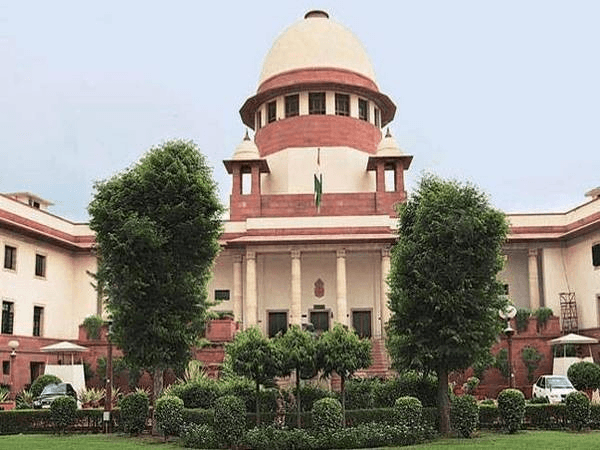
The bench, comprising Justice JB Pardiwala and Justice R Mahadevan, took suo motu cognisance of a news report detailing the increasing number of rabies-related deaths linked to stray dog attacks. The court made it clear from the outset that this issue is being addressed purely from a public interest perspective and not through an emotional or sentimental lens.
“We are not doing this for ourselves; it is for the safety and well-being of the public. No sentiments should interfere,” Justice Pardiwala stated during the proceedings.
The court has restricted arguments in this case to the Union Government, rejecting petitions and interventions from dog lovers or other third parties. In the judges’ view, the scale and urgency of the problem require swift and decisive action, without the delays that prolonged litigation could cause.
Key Directives from the Court
#BREAKING | All Stray Dogs In Delhi-NCR To Be Moved To Shelters: Supreme Court’s Big Order
NDTV’s @nupurdogra Reports pic.twitter.com/nTOedajeu8
— NDTV (@ndtv) August 11, 2025
Justice Pardiwala instructed the amicus curiae, advocate Gaurav Agarwala, to outline practical steps for addressing the stray dog problem. Acting on these suggestions, the court ordered:
Immediate relocation of all stray dogs from residential and commercial localities to shelters situated in remote or less populated areas.
Temporary suspension of existing rules if they delay or obstruct the relocation process.
Ban on adoption of stray dogs during the period of relocation.
Strict penalties for interference, including contempt of court charges against individuals or groups hindering the relocation.
The court also stressed that civic bodies must treat the matter with the utmost urgency, noting that the situation is “grim” and that every locality must be made completely free of stray dogs.
Solicitor General Tushar Mehta informed the court that a site in Delhi had already been identified for the relocation of stray dogs. However, this plan had been stalled after certain animal rights activists secured a stay order from a lower court.
Responding sharply, the bench questioned the accountability of such activists.
“Will these animal activists bring back the lives lost to rabies? Public safety cannot be sacrificed for the sake of sentiment,” Justice Pardiwala remarked.
Mr. Mehta reinforced this sentiment by saying, “We cannot sacrifice our children just because of a few dog lovers.”
Infrastructure and Monitoring of Shelters
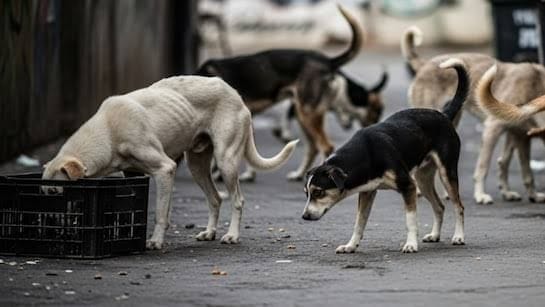
The Supreme Court’s order is not limited to simply moving stray dogs away from human-populated areas. The justices have laid down detailed guidelines for the creation and management of shelters:
Specialised Facilities: Shelters must be equipped with trained professionals capable of handling aggressive or injured dogs.
Medical Care: Facilities should include sterilisation and immunisation services to control the dog population and prevent the spread of diseases like rabies.
Security Measures: CCTVs must be installed to prevent escapes, and dogs should not be released back onto the streets under any circumstances.
Helpline for Dog Bite Cases: Civic authorities are to establish a 24/7 helpline to promptly register and respond to dog bite complaints.
The court also recommended forming a dedicated task force if necessary, to carry out the relocation quickly and efficiently.
The order applies across the entire Delhi-NCR region, which includes:
The National Capital Territory of Delhi
Noida (Uttar Pradesh)
Ghaziabad (Uttar Pradesh)
Gurugram (Haryana)
Civic bodies in these jurisdictions are required to report their progress to the court on a regular basis.
Rabies Vaccine Availability – A Major Concern
Beyond relocating dogs, the court expressed concern over the shortage of rabies vaccines, which are critical in preventing fatalities after dog bites.
The Delhi government has been directed to:
Publish detailed information on where rabies vaccines are available.
Maintain transparent records of vaccine stock levels.
Provide monthly data on the number of people receiving post-exposure treatment.
The court stressed that without adequate vaccines, even the sheltering of stray dogs would not fully resolve the public health crisis.
Public Reaction and Debate
The Supreme Court’s directive has triggered strong reactions from different sections of society.
Supporters of the move argue that aggressive stray dogs pose an unacceptable risk, particularly in densely populated areas where children play outdoors and elderly people often walk alone. They cite numerous incidents where attacks have led to severe injuries or death, leaving families traumatised.
Opponents, primarily animal rights activists, fear that mass relocation could lead to overcrowding in shelters, poor living conditions for the animals, and possible mistreatment.
However, the court appears determined to prioritise human safety over these concerns, at least until the immediate threat is under control.
In one of the most uncompromising parts of the order, the bench stated:
“Not a single stray dog should be released back onto the streets. If we discover that this has happened, we will take stern action.”
This firm stance reflects the court’s recognition that even partial non-compliance could undermine the entire initiative. The justices emphasised that failure to act decisively now could lead to more preventable deaths.
India’s stray dog population is estimated to be over 60 million, with a significant concentration in urban areas. The World Health Organization reports that India accounts for roughly 36% of global rabies deaths, most of which are caused by dog bites.
Delhi-NCR, with its dense population and insufficient dog control measures, has become a hotspot for such incidents. Over the past few years, media reports have documented a rise in aggressive stray dog behaviour, prompting repeated calls for government intervention.
While previous efforts focused on sterilisation and vaccination drives, critics say these programs have been poorly implemented, underfunded, and too slow to make a noticeable difference. The Supreme Court’s latest directive could mark a turning point if enforced effectively.
Civic authorities now face a tight deadline to:
Identify vulnerable localities.
Deploy trained personnel for safe capture and transport of stray dogs.
Construct and operationalise shelters with proper veterinary facilities.
Ensure continuous monitoring to prevent re-release.
Publicise rabies vaccine availability and ensure adequate stock.
The court has indicated that it will closely monitor compliance, and any delays or negligence will invite legal repercussions.


 By
By