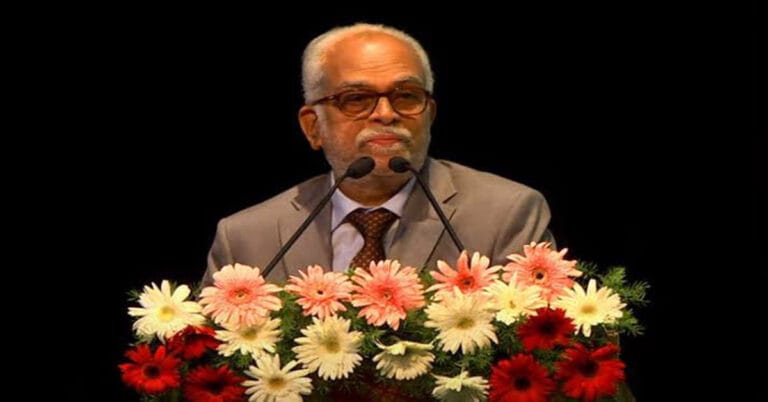

The Opposition INDIA bloc’s announcement of retired Justice B. Sudershan Reddy as its joint Vice-Presidential candidate has added a new dimension to the political narrative ahead of the polls. Known for his uncompromising judgments and unwavering commitment to constitutional principles, Justice Reddy has left a lasting mark on India’s legal landscape. His career spans landmark rulings — from striking down unconstitutional state-sponsored militias to pushing for transparency in black money investigations — to guiding modern-day policies such as the Telangana caste census.
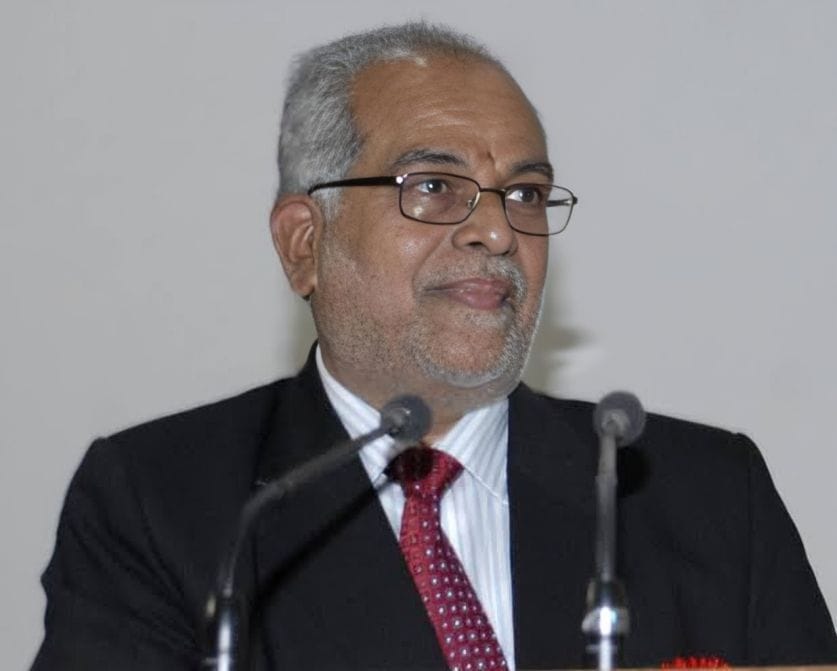
By nominating a jurist of his stature, the Opposition has not only put forward a candidate of impeccable integrity but also sought to challenge the ruling NDA’s pick, CP Radhakrishnan, on grounds of credibility, intellect, and constitutional morality.
From Salwa Judum to Social Justice: A Legacy of Landmark Judgments
Justice Sudershan Reddy’s name first entered national prominence when he was part of the Supreme Court bench that declared Chhattisgarh’s Salwa Judum — a state-backed anti-Naxalite militia composed largely of local tribal youth — unconstitutional. The bench found that the policy of arming tribal recruits to fight Maoists not only violated constitutional guarantees but also exposed vulnerable communities to violence and exploitation.
The Salwa Judum verdict remains a landmark in Indian jurisprudence, underscoring the principle that the state cannot abdicate its responsibility to maintain law and order by outsourcing it to armed vigilante groups. By striking down this practice, Justice Reddy upheld the sanctity of constitutional rights and the duty of the state to protect its citizens, particularly marginalized communities.https://trendingnews18.com/tigress-protect-cubs-during-bathing-shared-ifs/
This judgment earned him a reputation as a jurist who stood firmly for human rights, even in the face of state power and security arguments.
The Fight Against Educational Inequality
In 2011, Justice Reddy again made headlines for his judgment on the admission policies of the Army College of Medical Sciences in Delhi. The college reserved all its seats exclusively for wards of serving and retired Army personnel and widows, even when candidates qualified through a common entrance examination.
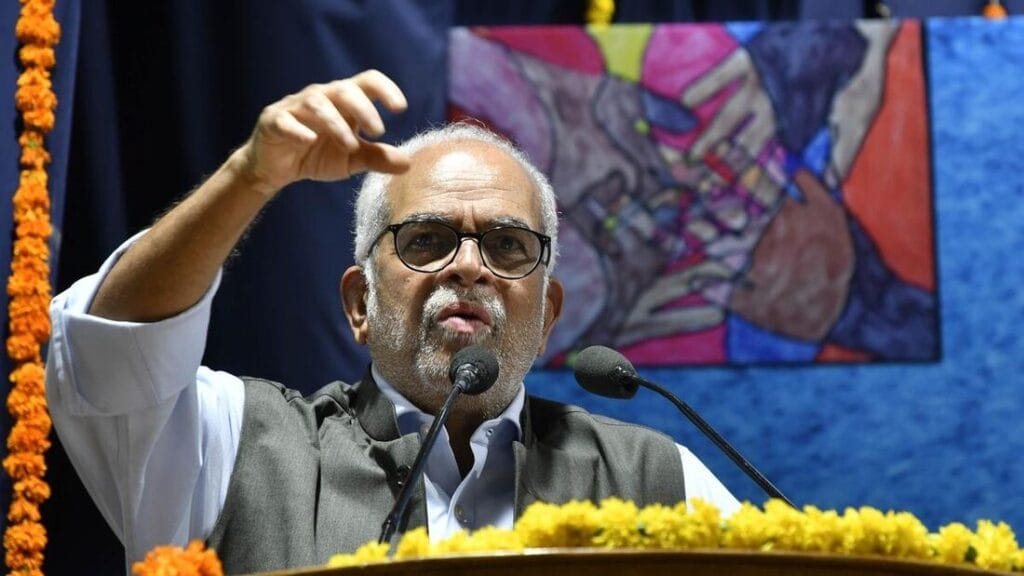
Justice Reddy disapproved of this policy, calling it discriminatory and unjust. He argued that such practices restricted access to higher education for disadvantaged groups, while merit and talent were not confined to any one class or community. His words carried a strong warning:
“If a vast majority of our youngsters, especially those belonging to disadvantaged groups, are denied access to the higher educational institutions in the private sector, it would mean that a vast majority of youngsters, notwithstanding a naturally equal distribution of talent and ability, belonging to disadvantaged groups would be left without access to higher education at all. That would constitute a state of social emergency with a potential for conflagration that would be on an unimaginable scale.”
This ruling went beyond the specifics of the case, articulating a larger vision of equitable access to education. It highlighted Justice Reddy’s belief that education is not merely a privilege but a constitutional and social necessity.
Taking on Black Money: The SIT Judgment
Just before his retirement in 2011, Justice Reddy delivered another powerful verdict in the Ram Jethmalani & Others v. Union of India case. The case dealt with the issue of black money — vast amounts of unaccounted wealth stashed abroad by individuals and entities.
Justice Reddy was unsparing in his criticism of the Union government’s inaction. He noted that the failure was not in constitutional safeguards but in the will of the state to act against financial misconduct. His observations cut to the heart of governance and accountability:
“The major problem, in the matters before us, has been the inaction of the State… The failure is not of the Constitutional values or of the powers available to the State; the failure has been of human agency.”
To address the issue, Justice Reddy ordered the formation of a Special Investigation Team (SIT), chaired by retired Supreme Court judge Justice B. P. Jeevan Reddy. The SIT was tasked with probing black money stashed abroad, examining methods of transfer, and assessing whether such funds were being used for unlawful activities, including those that could pose threats to national security.
This ruling emphasized not just legal accountability but also the broader dangers of unchecked financial misconduct — the concentration of economic power, the erosion of transparency, and the weakening of democratic institutions.
Role in Telangana Caste Census
Even after retirement, Justice Reddy continued to play an influential role in shaping policy debates. Most recently, he steered the Telangana caste census under Chief Minister Revanth Reddy’s leadership. As an expert, he guided the process with an emphasis on social equity and scientific data collection.
This involvement reflects his long-standing commitment to addressing social inequalities and ensuring that policies are grounded in justice and fairness. By associating himself with this exercise, Justice Reddy underscored that caste-based inequities cannot be wished away; they must be studied, understood, and addressed through concrete measures.
Political Significance of His Candidature
The Opposition INDIA bloc’s decision to field Justice Reddy as its Vice-Presidential nominee is as much a political strategy as it is a recognition of his stature. Congress President Mallikarjun Kharge, while announcing his name, praised him as a “consistent and courageous champion of social, economic, and political justice.”
The nomination comes at a time when Telugu pride and regional identity hold immense political value in Andhra Pradesh and Telangana. The NDA’s nominee, CP Radhakrishnan, is a seasoned leader, but the INDIA bloc’s choice of a respected jurist from Telangana presents a direct challenge — particularly for NDA ally Telugu Desam Party (TDP) and its chief Chandrababu Naidu.
For the INDIA bloc, Reddy’s candidature symbolizes a push for values-driven politics, one that combines regional pride with national constitutional responsibility.
Early Life and Legal Career
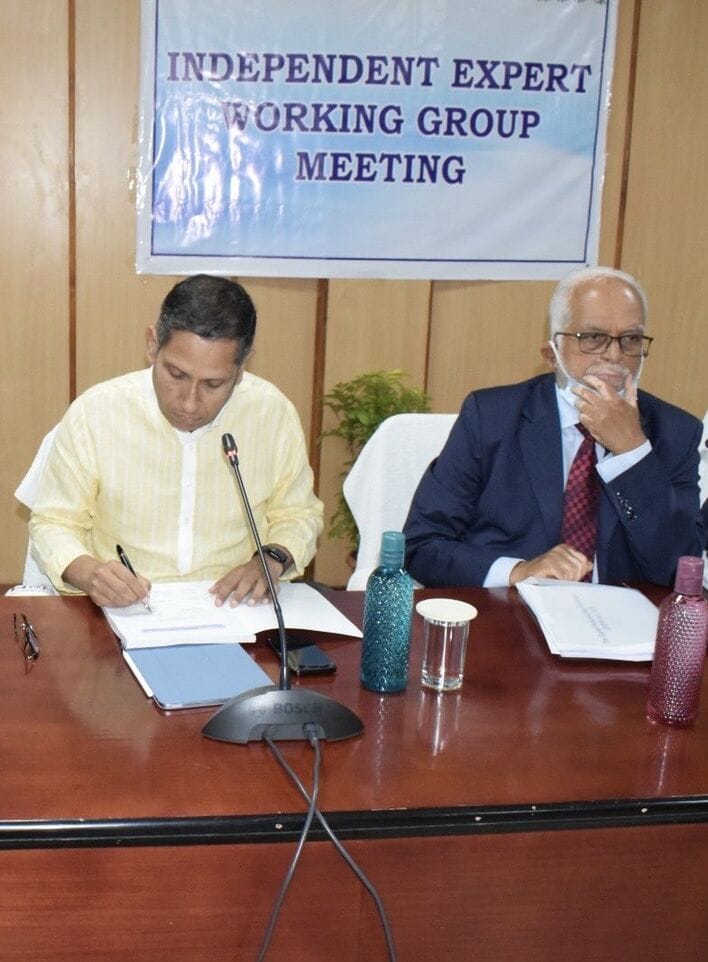
Born in undivided Andhra Pradesh and raised in Telangana, B. Sudershan Reddy began his legal career at the Bar in Hyderabad. He was appointed as a permanent judge of the Andhra Pradesh High Court on May 2, 1995, and later elevated to the Supreme Court.
Throughout his judicial career, he demonstrated a clear pattern: his judgments consistently reflected concern for marginalized groups, insistence on accountability from those in power, and a vision of justice rooted in equity.
His jurisprudence was not about technicalities alone; it carried moral weight. Whether it was defending tribal communities from state exploitation, ensuring fair access to education, or demanding transparency in financial governance, Justice Reddy positioned himself as a guardian of constitutional values.
Why His Nomination Matters
By nominating Justice Reddy, the INDIA bloc has sent a strong message. His career embodies values of justice, accountability, and social equality, all of which resonate deeply at a time when India faces debates over inequality, transparency, and governance.
For voters in the Telugu states, his candidature carries emotional and cultural significance. For the broader electorate, it symbolizes the Opposition’s attempt to foreground issues of constitutional morality over partisan politics.
Justice B. Sudershan Reddy’s journey from the courtroom to the political arena is a story of consistency and conviction. His judgments — from striking down Salwa Judum to establishing the SIT on black money — continue to be touchstones of constitutional values. His advocacy for equitable education and social justice reflects a jurist who always looked beyond narrow legalism to the lived realities of citizens.
Now, as the INDIA bloc’s Vice-Presidential candidate, Justice Reddy brings not only legal expertise but also the credibility of a life spent upholding fairness and accountability. Whether in law, policy, or politics, his name stands for principled resistance to injustice.
In nominating him, the Opposition has indeed “turned the tables” on its rivals, while also reminding the nation that the ideals of justice, equality, and constitutional integrity are not just legal principles but political necessities.


 By
By