The bond between a brother and a sister is truly unique — a mix of friendship, love, teasing, and lifelong support. Across cultures, sibling relationships hold a special place, but in India, this connection is celebrated in a very special way through the festival of Raksha Bandhan. This festival, deeply rooted in tradition, goes beyond just tying a thread; it is about strengthening bonds, cherishing memories, and making a promise of protection and care.
What is Raksha Bandhan?
Raksha Bandhan is a traditional Hindu festival that honors the love and duty shared between brothers and sisters. While siblings across the world share emotional connections, India has dedicated an entire festival to this relationship. The name itself comes from two Sanskrit words “Raksha” meaning protection, and ‘Bandhan” meaning bond or tie. When combined, they signify “the bond of protection.”
Though most people think of Raksha Bandhan as a celebration between a biological brother and sister, the festival has a broader meaning. It is also celebrated between cousins, distant relatives, sister-in-law and brother-in-law, or even close friends who share a sibling-like bond.
The festival is celebrated not only in India but also in Nepal, Mauritius, and parts of Pakistan among Hindu communities. It falls on the full moon day (Purnima) of the Hindu month of Shravana, which usually corresponds to August in the Gregorian calendar.
The Rituals of Raksha Bandhan
The celebration of Raksha Bandhan is a colorful , joyous occasion. Preparations begin days in advance, with markets filled with vibrant rakhis — decorative threads made from silk, cotton, or sometimes even gold and silver.
Traditional Steps of Celebration:
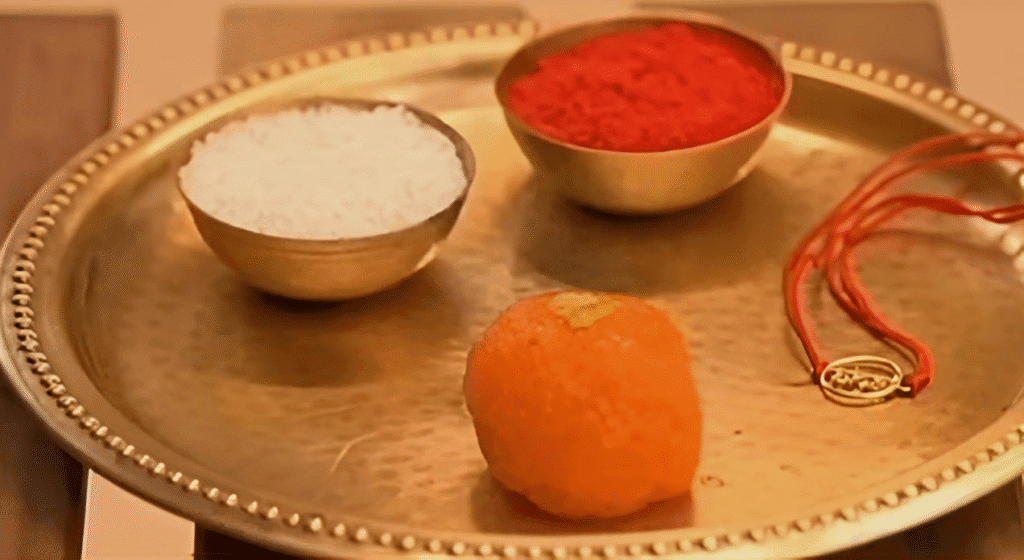
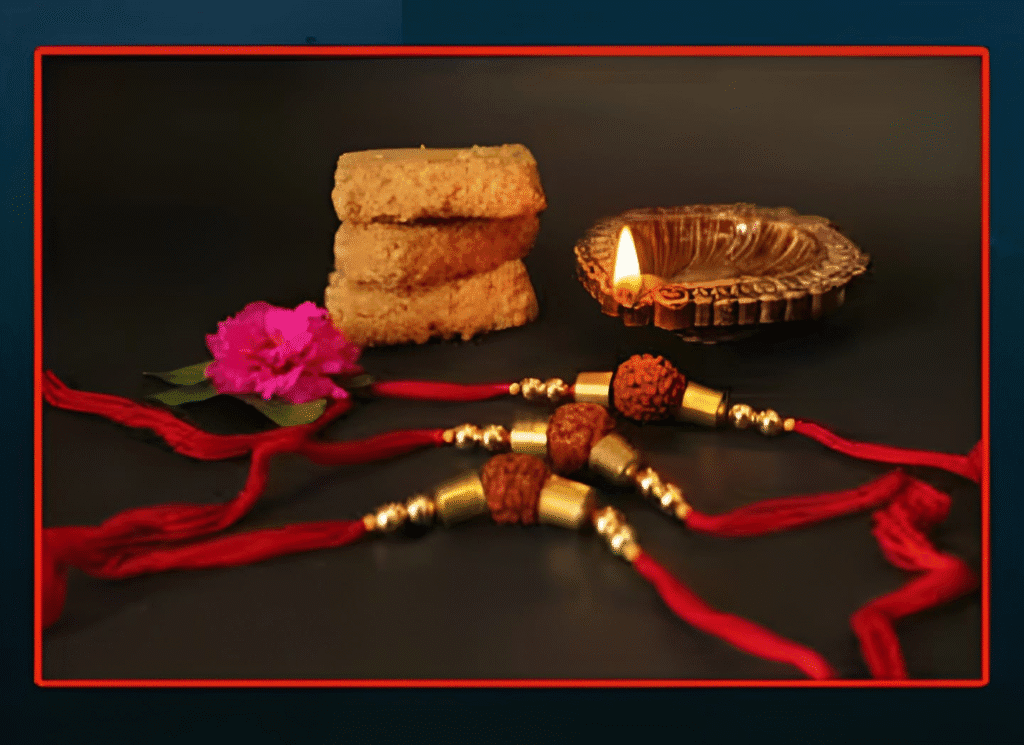
Puja Preparations – Sisters prepare a special puja thali (worship plate) that contains a rakhi, rice grains (akshat), kumkum (vermilion), sweets, and a lit diya (lamp).
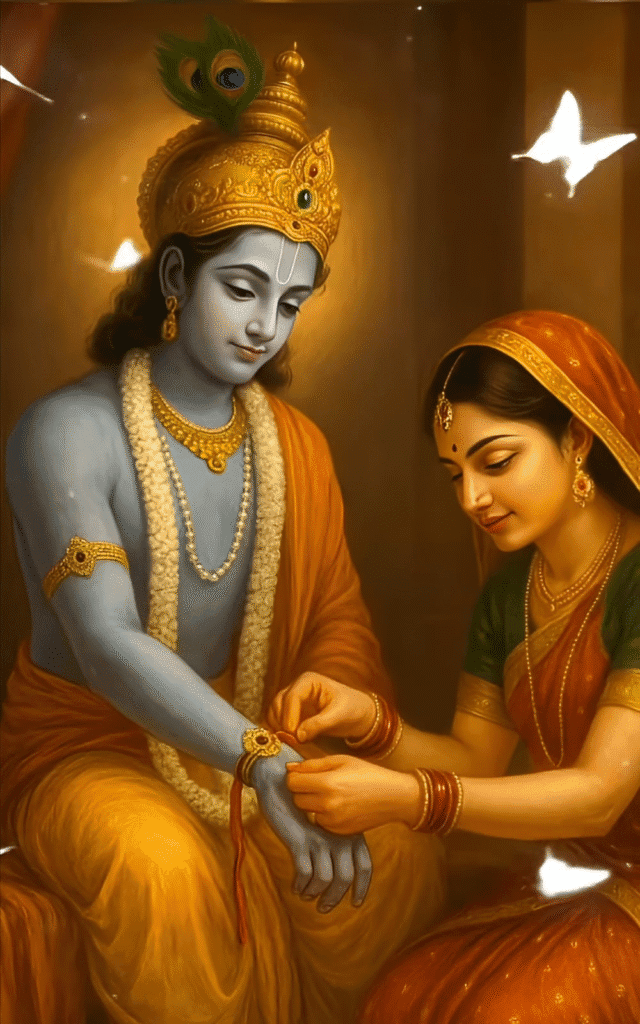
Tying the Rakhi – On the auspicious day, the sister ties the rakhi around her brother’s wrist, applies a tilak on his forehead, and prays for his health, happiness, and long life.
Exchange of Gifts – The brother gives his sister a gift — which could be money, clothes, jewelry, or anything special — as a token of love and a promise to protect her.
Family Gatherings and Feasts – Families come together, share festive meals, and enjoy traditional sweets like laddoos, barfi, and kaju katli.
The warmth of the festival lies not in the value of gifts but in the emotions, blessings, and the unspoken assurance that siblings will stand by each other through life’s ups and downs.
ALSO READ–Adhara Pana Ritual of Lord Jagannath and Siblings Held Today in Puri
Significance in Different Religions in India
While Raksha Bandhan is primarily a Hindu festival, its spirit transcends religious boundaries.
Hinduism – Most prominently celebrated in northern, western, and central India, and in Hindu communities in Nepal, Pakistan, and Mauritius.
Jainism – Jain monks and priests offer ceremonial threads to devotees as a symbol of protection and blessings.
Sikhism – Sikhs observe the festival as Rakhardi or Rakhari, maintaining the tradition of tying sacred threads.
This diversity shows how the idea of mutual care, protection, and love between siblings resonates across faiths.
Historical and Mythological Origins
Raksha Bandhan has been celebrated for centuries, with its origins intertwined with history and mythology. The stories not only highlight the cultural depth of the festival but also convey values of loyalty, protection, and selflessness.
1. Indra Dev and Sachi
As mentioned in the Bhavishya Purana, a fierce battle once raged between the gods (devas) and demons (asuras). Indra, the god of rain and thunder, was struggling against the demon king Bali. Worried for her husband’s safety, Indra’s wife, Sachi, approached Lord Vishnu, who gave her a holy cotton thread. She tied it around Indra’s wrist, invoking divine blessings. With renewed strength, Indra defeated the demons. This story shows that in ancient times, sacred threads were tied not only between brothers and sisters but also by wives to protect their husbands before they left for war.
2. King Bali and Goddess Lakshmi
According to the Bhagavata Purana and Vishnu Purana, Lord Vishnu once defeated King Bali and, bound by a promise, agreed to stay in his palace. However, Goddess Lakshmi longed to return to Vaikuntha. She tied a rakhi to Bali, making him her brother. When he asked what gift she wanted, Lakshmi requested that Vishnu be freed from his promise. Bali agreed, showing the power of sibling bonds to transcend even divine duties.
3. Santoshi Maa’s Creation
In another legend, Lord Ganesha’s sons, Shubh and Labh, complained about not having a sister to celebrate Raksha Bandhan with. On the advice of sage Narada, Ganesha created Santoshi Maa through divine flames, granting his sons the joy of having a sister.
4. Krishna and Draupadi
The Mahabharata tells how Draupadi once tore a strip of her sari to bandage Lord Krishna’s bleeding finger. Moved by her gesture, Krishna vowed to protect her in times of trouble — a promise he fulfilled during the infamous disrobing scene in the Kaurava court. This story reflects the core essence of Raksha Bandhan: unconditional protection.
5. Yama and Yamuna
According to legend, Yama, the god of death, had not visited his sister Yamuna for 12 years. When he finally came, Yamuna welcomed him warmly. Pleased, Yama asked her to name a gift she wanted. She wished for him to visit her regularly. To honor her wish, Yama granted her immortality, ensuring their bond would last forever. This story is also linked to Bhai Dooj, another festival celebrating sibling love.
Cultural and Emotional Importance
Raksha Bandhan is more than just a ritual — it is a day of expressing love, forgiveness, and gratitude.
Strengthening Family Ties – In an era when families are often scattered due to work and migration, Raksha Bandhan brings them together.
Beyond Blood Relations – Many people tie rakhi to friends, mentors, and soldiers, symbolizing respect and care even without a biological link.
A Symbol of Duty – The brother’s promise is not just about physical protection but also about emotional and moral support.

 By
By