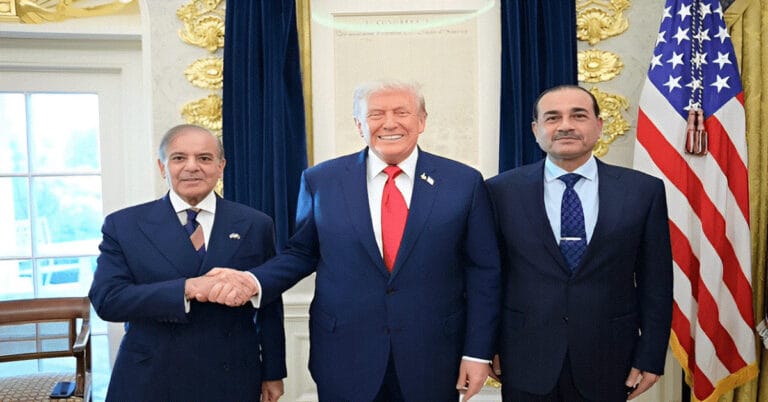

President Trump Meets – welcomed Pakistani Prime Minister Shehbaz Sharif to the White House on Thursday, highlighting a significant moment in the evolving relations between Washington and Pakistan. Accompanying Sharif was Pakistan’s Army Chief, Field Marshal Asim Munir, underscoring the strategic importance of the visit.
This meeting was historic for multiple reasons. It marked Sharif’s first encounter with a sitting U.S. president, and he became the first Pakistani prime minister to enter the Oval Office since Imran Khan’s visit in July 2019. The session, held behind closed doors, reflected the growing importance of U.S.-Pakistan ties amid global and regional challenges.
Warm Reception at the White House
Sharif arrived at the West Executive Avenue entrance just before 5 pm local time, greeted by senior administration officials. President Trump praised both leaders as “great leaders” ahead of the high-level discussions. The welcoming ceremony and Oval Office meeting signaled a mutual commitment to enhancing diplomatic and strategic cooperation between the two nations.
Table of Contents
Agenda: Trade, Security, and Bilateral Relations
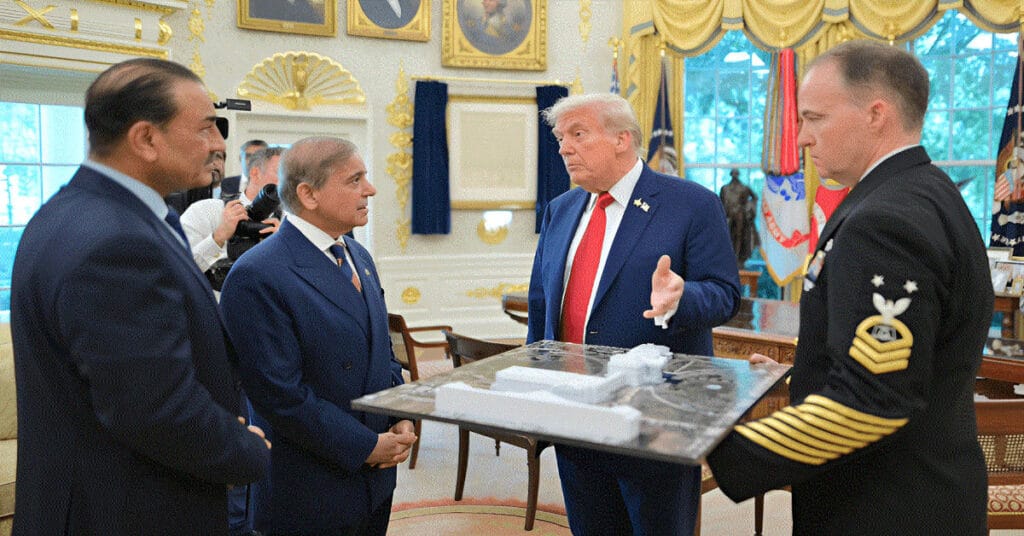
The closed-door talks were expected to cover a wide range of topics critical to both countries. Key agenda items likely included:
- Bilateral Relations: Strengthening diplomatic ties and addressing past challenges in U.S.-Pakistan relations.
- Trade and Economic Cooperation: Exploring opportunities for increased trade, investment, and economic collaboration.
- Regional Security: Addressing concerns in South Asia, including Afghanistan and counterterrorism measures.
- Global Challenges: Discussing climate change, pandemic response, and other international issues requiring joint action.
The presence of Field Marshal Munir highlighted the importance of defense and security discussions in the meeting, signaling a comprehensive approach to bilateral ties beyond diplomacy and trade.
Strategic Significance of the Visit
Analysts see Sharif’s visit as a strategic move to strengthen Pakistan-U.S. relations after a period of fluctuating engagement. With both countries navigating complex regional dynamics, including India-Pakistan tensions and developments in Afghanistan, the meeting was a timely effort to align interests and foster dialogue.
For Pakistan, the visit represents an opportunity to reaffirm its role as a key partner for the United States in South Asia. For the U.S., engaging Pakistan’s political and military leadership allows Washington to advance its objectives in regional security, trade, and counterterrorism initiatives.
Trump’s Remarks and Public Statements
President Trump, speaking ahead of the meeting, described both leaders as “great leaders,” emphasizing his interest in strengthening U.S.-Pakistan ties. While the Oval Office session was closed to media, Trump’s remarks suggested a positive tone and mutual respect between the two sides.
ALSO READ- “Centre Cancels FCRA Licence of NGO Linked to Sonam Wangchuk”
Observers note that public messaging from the White House often complements diplomatic negotiations, signaling intent and commitment to both domestic and international audiences.
Historical Context: U.S.-Pakistan Relations
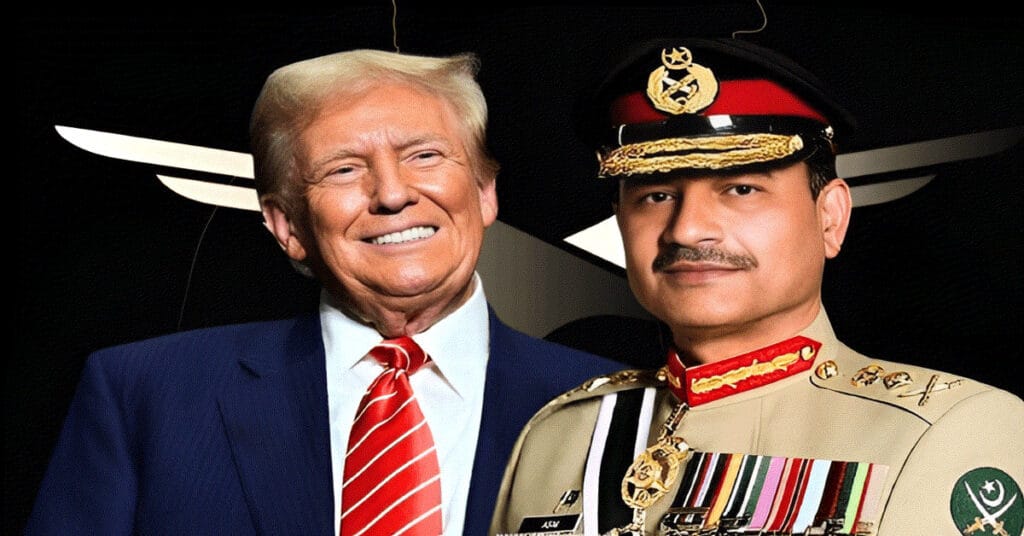
The visit comes at a time when U.S.-Pakistan relations are experiencing cautious optimism. Past years saw periods of tension over security, counterterrorism cooperation, and diplomatic alignment. High-level meetings such as this one are seen as critical in rebuilding trust and exploring new avenues for collaboration.
Prime Minister Sharif’s presence in the Oval Office—alongside the country’s top military leader—reinforces the message that Pakistan is ready to engage with the U.S. on multiple fronts, from defense to economic partnerships.
Outcomes and Expectations
While the full details of the talks remain confidential, analysts expect potential agreements on enhanced trade cooperation, security coordination, and joint initiatives addressing global challenges. The meeting also sets a precedent for future high-level engagement between the two nations, paving the way for regular diplomatic and strategic dialogue.
ALSO READ- Google Celebrates 27th Birthday with Nostalgic Doodle
Both sides are expected to continue discussions following Sharif’s visit, with potential follow-ups in trade, defense cooperation, and regional security measures.
Prime Minister Shehbaz Sharif’s historic meeting with President Donald Trump at the White House, accompanied by Field Marshal Munir, signals a renewed chapter in U.S.-Pakistan relations. With a focus on trade, security, and regional cooperation, the visit highlights the mutual interest of both nations in strengthening strategic ties. As the world watches, the outcomes of this high-level meeting could shape the future of South Asian diplomacy and U.S.-Pakistan collaboration.


 By
By

 Kode Referal Binance Terbaik says:
 labākais binance norādījuma kods says:
 binance us register says:
 Binance注册 says: