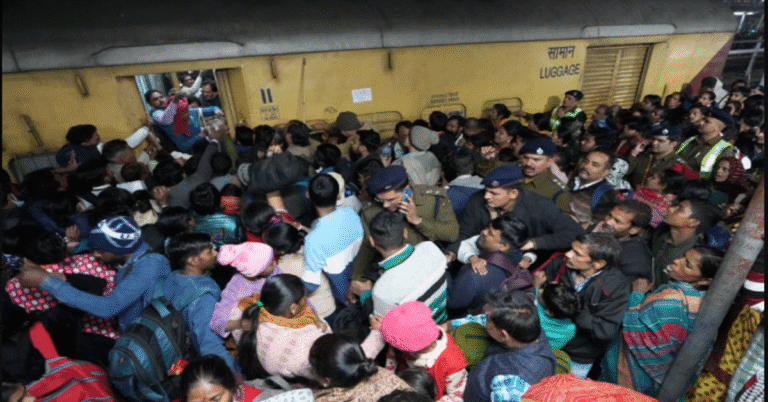

A tragic stampede at an Indian train station has once again highlighted the dangers of overcrowding and poor crowd management. According to officials, at least 18 people lost their lives and several others were injured when passengers pushed and shoved each other near a busy station platform.
How the Stampede Happened
Table of Contents
The incident took place at a major train station that was already packed with commuters. As trains arrived and departed, the crowd began to swell. People rushed to board and exit trains at the same time, leading to a sudden surge of movement.
Eyewitnesses reported that the passageways were narrow, making it difficult for people to move freely. In the chaos, many passengers lost balance, fell to the ground, and were trampled by others who had no space to stop or step aside.
Within minutes, the situation turned deadly. By the time authorities managed to control the crowd, 18 people had been declared dead and dozens more were injured.
Overcrowding: A Daily Struggle in Indian Railways
"Running the Indian Railways, which is considered a lifeline for millions, is not a side gig. But under @BJP4India, governance has become a multitasking circus delivering half-baked results everywhere."
— All India Trinamool Congress (@AITCofficial) February 17, 2025
– Shri @abhishekaitc
The latest proof? 18 LIVES LOST, including five… pic.twitter.com/3klVKjeyvW
India’s railway network is one of the largest in the world, carrying millions of passengers every day. While it remains the lifeline of the nation, overcrowding is a persistent problem.
At peak hours, platforms are often jam-packed, and passengers are forced to stand shoulder to shoulder. Narrow footbridges, insufficient entry and exit points, and poor communication between railway staff and passengers only make the situation worse.
This tragic stampede is not the first of its kind. India has witnessed similar incidents in the past, raising questions about whether lessons have truly been learned.
Voices from the Ground
Survivors of the stampede shared heart-wrenching accounts. One commuter said that people were shouting for help but no one could move in the sea of bodies. Another described how children and elderly passengers were the worst affected, as they were unable to withstand the pressure of the crowd.
Families of the victims gathered at hospitals and police stations, searching for their loved ones and demanding accountability from railway authorities.
Government Response and Rescue Efforts
Authorities rushed to the scene soon after the incident. Emergency teams carried the injured to nearby hospitals while police tried to manage the crowd.
The government announced compensation for the families of those who died and promised financial assistance for the injured. Senior railway officials also assured the public that a full investigation would be carried out to find out what went wrong and how such incidents can be prevented in the future.
Why Stampedes Keep Happening
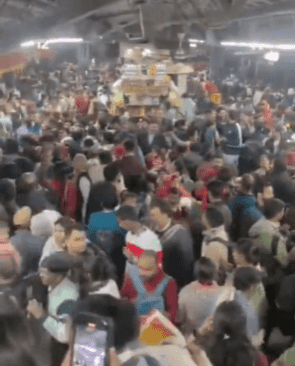
Experts point out that stampedes in India often occur due to a mix of poor infrastructure, lack of planning, and panic among crowds. When too many people are funneled into narrow spaces without proper crowd control, the risk of disaster becomes very high.
Simple measures like widening bridges, improving communication systems, adding more entry and exit routes, and deploying trained crowd management staff could save lives. Unfortunately, many of these changes are yet to be fully implemented.
A Wake-Up Call for Safer Travel
The death of 18 people in this train station tragedy serves as a painful reminder of the risks that millions of daily commuters face. For many Indians, traveling by train is not a choice but a necessity. Ensuring their safety should be a top priority for the authorities.
READ ALSO- Indian Navy Inks ₹66 Crore Deal with Odisha’s Coratia Technologies for Underwater ROVs
As investigations continue, families mourn, and survivors recover, the big question remains: Will this tragedy finally push the system to change? Or will it fade into memory, like many stampedes before it?
The Indian train station stampede that killed 18 people is a grim example of the dangers of overcrowding and lack of proper infrastructure. While promises of investigations and safety measures are being made, real change will only come with urgent action. Until then, millions of railway passengers continue to live with the daily risk of accidents in overcrowded spaces.


 By
By