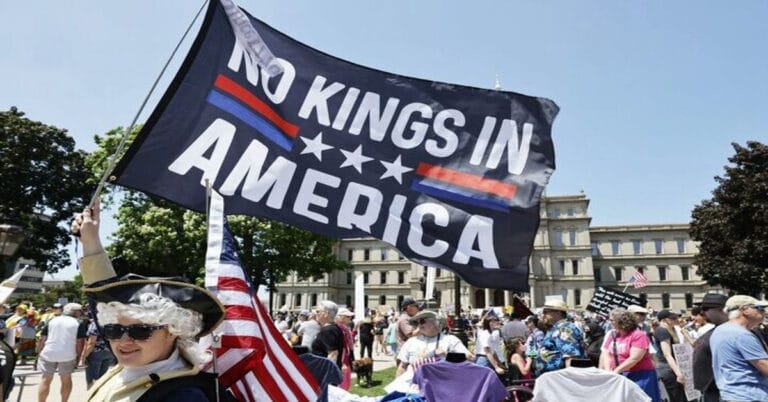

Millions of Americans have taken to the streets across all 50 states on Saturday, October 18, 2025, as part of a massive wave of demonstrations branded the “No Kings” protests. The rallies, now being called No Kings II, mark one of the largest synchronized protest movements in U.S. history.
Organizers say that over 2,500 events are being held nationwide — from Washington D.C.’s National Mall to Los Angeles, New York, Chicago, and Miami — to voice opposition to what they describe as authoritarian overreach by President Donald Trump’s administration.
Background: From “No Kings I” to “No Kings II”
The first “No Kings” protests erupted earlier this year in June 2025, coinciding with the President’s call for a national military parade celebrating his birthday and the U.S. Army’s 250th anniversary. Critics argued that the event was emblematic of a growing “cult of personality” around the presidency. That protest, which drew millions, laid the foundation for the second and larger wave now unfolding this weekend.
The name “No Kings” harkens back to America’s founding principle — that the nation was built to avoid rule by monarchs or unchecked leaders.
Well, this is gonna trigger the no kings protestors even more.
— Sassafrass84 (@Sassafrass_84) October 16, 2025
I love my president. 🤣🤣🤣 pic.twitter.com/Rpuft6Q244
The Issues at Stake
At the heart of these protests lies a fear that civil and democratic rights in the U.S. are under strain. Organizers and supporters allege that the administration has taken aggressive and unilateral steps to curb dissent. They point to immigration clampdowns, the deployment of federal forces in local jurisdictions, attempts to influence ongoing elections, and increased restrictions on the press as examples of policies testing constitutional limits.
Protesters also highlight perceived threats to First Amendment rights, citing reports of arrests at peaceful demonstrations and federal monitoring of activist groups. Many participants say they feel an urgency to “reclaim democracy” and keep up the momentum through sustained civic action. As one organizer noted, “We can’t wait for the ballot box — accountability must start now.”
Voices from the Streets
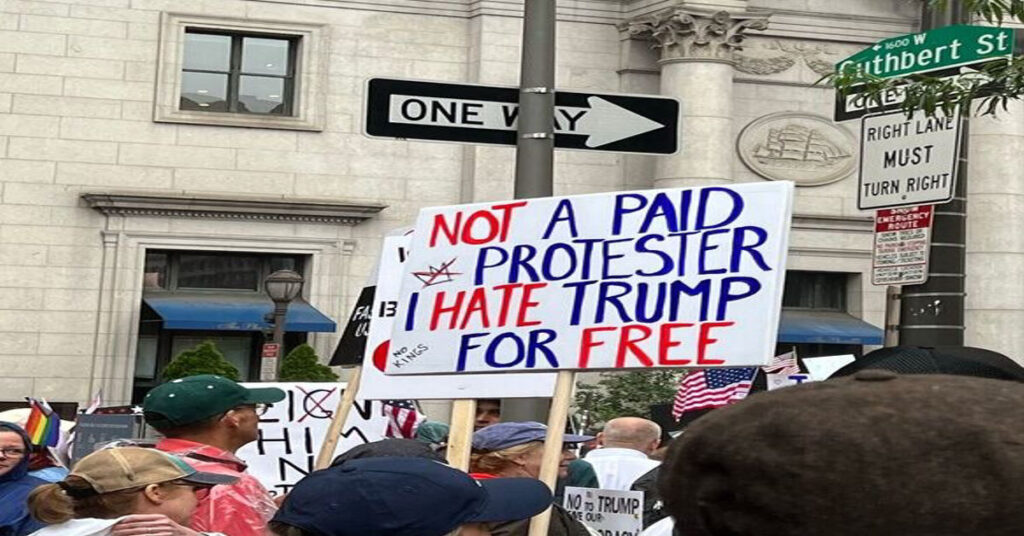
The protests have drawn together a remarkably diverse coalition: students, union workers, clergy members, veterans, and even disillusioned conservatives. In Washington, D.C., demonstrators flooded the National Mall holding placards reading “Democracy, Not Dynasty” and “Power Belongs to the People.” In Los Angeles and New York, solidarity rallies featured speeches from civil rights advocates and musicians calling for unity.
Ezra Levin, co-founder of the activist network Indivisible, said in an interview with NBC News that this could be “the largest protest in modern American history,” with expected participation surpassing the estimated five million who joined the June marches. According to organizers, the movement is not just about one leader or one party — it’s a call to defend the democratic framework itself.
Government and Political Reactions
The protests have drawn sharp criticism from administration officials. House Speaker Mike Johnson dismissed the movement as a “hate America rally,” suggesting that it includes elements linked to antifa and other radical groups. Some Republican lawmakers have even warned that the National Guard might be called if protests turn chaotic, though White House officials have not confirmed any such plans.
Democrats, meanwhile, have rallied behind the demonstrations. Senator Chris Van Hollen drew a historical parallel, saying the protestors “carry the same spirit” as the revolutionaries who stood up to monarchic power during America’s founding years. Several Democratic governors have assured protesters of state-level protection for peaceful assemblies.
The Symbolism of “No Kings”
The title “No Kings” captures a powerful sentiment about governance and accountability. Organizers explain that the phrase challenges any notion of centralized or lifelong rule, reminding citizens that leaders serve the people — not the other way around. The movement has particularly resonated with Gen Z activists, who have spearheaded marches using social media and livestreams to mobilize participants in real time.
REA ALSO – Mother Elephant Rescues Stuck Calf in Heartwarming Video Shared by Forest Officer
Global Attention
What makes this protest wave unprecedented is its international echo. Solidarity events have been reported in Canada, Mexico, and the United Kingdom, where demonstrators voiced support for American activists. Global media outlets are framing the “No Kings” movement as a battle for the soul of American democracy at a turning point in world politics.
Conclusion
Whether it becomes a lasting political turning point or just another episode in America’s turbulent civic history remains to be seen. Still, the “No Kings” movement has already carved its place in the record books. For millions of Americans taking to the streets this weekend, the message is clear — democracy is not a gift to be kept, but a right to be defended.


 By
By

 打开Binance账户 says:
 Binance注册奖金 says: