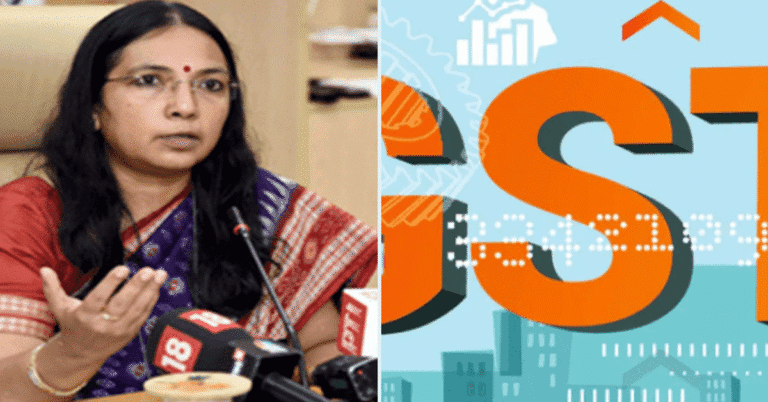

The National Consumer Helpline (NCH) has received as many as 3,000 complaints related to Goods and Services Tax (GST) since the government announced reductions in tax rates. The update was shared by Consumer Affairs Secretary Nidhi Khare on September 29, 2025, during an event in New Delhi.
The rising number of complaints has raised concerns that several retailers and businesses are not passing on the benefits of reduced GST to consumers, prompting stricter government monitoring.
3,000 GST Complaints Filed So Far
According to Ms. Khare, the ministry is actively forwarding these complaints to the Central Board of Indirect Taxes and Customs (CBIC) for further investigation and necessary action.
Table of Contents
The move highlights the government’s effort to ensure that customers benefit directly from the tax relief measures introduced recently.
Concerns Over Misleading Discounts
One of the key issues flagged by the ministry is the use of misleading discount practices by certain retailers. Some businesses allegedly continue to show inflated prices and then apply discounts, effectively nullifying the benefits of reduced GST rates.
“The Consumer Affairs Ministry is closely monitoring instances where consumers are being cheated through misleading discount practices to avoid passing on the benefits of reduced GST rates,” Ms. Khare explained.
Such practices have sparked consumer frustration, as the purpose of tax cuts is to lower the cost of goods and services, not to boost retailer margins.
Technology to Strengthen Monitoring
To tackle the growing number of complaints and identify patterns more effectively, the ministry is now deploying artificial intelligence (AI) and chatbot technology.
These tools are expected to:
- Classify complaints sector-wise for better tracking.
- Identify repeat offenders among businesses.
- Provide real-time alerts for violations.
- Help in ensuring transparency in pricing.
By introducing advanced monitoring systems, the government aims to make it harder for businesses to exploit loopholes in tax benefits.
Why Are GST Complaints Rising?

The GST rate cuts were announced with the goal of reducing the financial burden on consumers and stimulating spending. However, many consumers claim that retailers and service providers are not reflecting these reductions in their final bills.
Some of the common complaints include:
- Shops charging the old GST rate despite reductions.
- Discounts being presented in a misleading way to mask the actual price.
- Restaurants and service providers not passing on the reduced rates.
- Confusion in billing due to lack of clarity on applicable GST.
This growing disconnect between policy and practice is what has triggered a spike in consumer grievances.
Role of the National Consumer Helpline
The National Consumer Helpline (NCH) acts as a bridge between consumers and the government. It allows citizens to report unfair trade practices through calls, online portals, or mobile applications.
ALSO READ- PCB Chief Mohsin Naqvi Faces Backlash on Social Media Over Asia Cup Final Trophy Act,
The data collected helps authorities like the Consumer Affairs Ministry and CBIC to take targeted actions against offenders. With GST-related issues now dominating complaints, the helpline has become a crucial tool for monitoring compliance.
Government’s Message to Businesses
The Consumer Affairs Ministry has made it clear that businesses must ensure transparency and fairness in billing practices. Any attempt to deny consumers the benefits of tax cuts could attract legal and regulatory action.
By involving CBIC in handling complaints, the government is signaling that the issue is not just about consumer rights but also about tax compliance.
What Consumers Should Do
Consumers who suspect they are being overcharged or misled can:
- File a complaint on the National Consumer Helpline (NCH).
- Retain bills and receipts as proof of overcharging.
- Report businesses that do not update GST rates after reductions.
- Spread awareness so others are not exploited.
By actively reporting, consumers play a role in ensuring fair practices in the marketplace.
The surge of 3,000 GST-related complaints after tax cuts shows that while government policies are aimed at helping citizens, proper enforcement remains a challenge. With the use of AI-driven monitoring, stricter oversight from CBIC, and active consumer participation, the government hopes to curb unfair practices.
For businesses, this serves as a reminder that compliance and transparency are not optional but necessary. For consumers, it’s reassurance that their concerns are being heard and acted upon.
In the long run, effective monitoring and accountability will ensure that GST benefits truly reach the people they were meant for.


 By
By