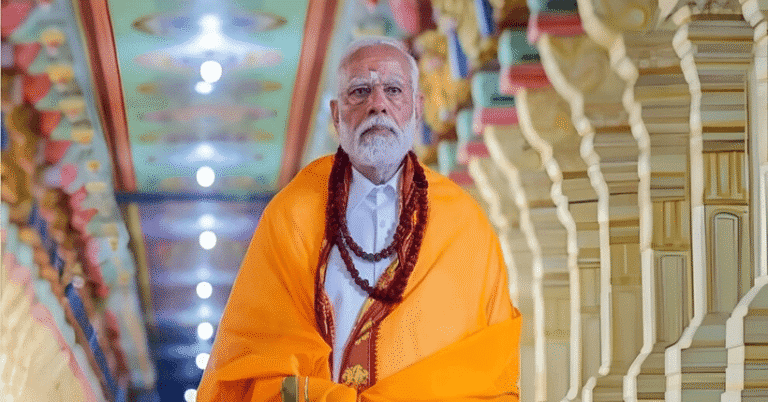

New Delhi: US President Donald Trump’s late-night phone call to Prime Minister Narendra Modi — made to wish him on his 75th birthday — appears to have injected fresh momentum into a strained bilateral relationship. Tensions had been mounting over steep 50% tariffs on Indian exports, a stalled trade deal, and Washington’s displeasure with India’s continued purchase of Russian oil despite sanctions, which the White House argues indirectly fuels the Ukraine war.
Many see the call as Trump’s attempt to reset ties after months of friction over New Delhi’s unwillingness to align on key issues — from refusing to credit him for the Op Sindoor ceasefire, to staying silent on his push for a Nobel Peace Prize, and the ongoing tariff disputes. The disagreements had cast a shadow over what experts regard as one of the world’s most consequential Indo-Pacific partnerships, even prompting Trump to describe India’s economy — the fourth-largest globally by nominal GDP — as “dead.”
Thank you, my friend, President Trump, for your phone call and warm greetings on my 75th birthday. Like you, I am also fully committed to taking the India-US Comprehensive and Global Partnership to new heights. We support your initiatives towards a peaceful resolution of the…
— Narendra Modi (@narendramodi) September 16, 2025
Against this backdrop, Trump’s phone call carried far greater significance than a routine birthday greeting.
Unpacking the Modi-Trump Phone Call
Perhaps the most telling detail wasn’t the call itself, but the timing of the social media updates that followed — with PM Modi posting about it 37 minutes before President Trump.
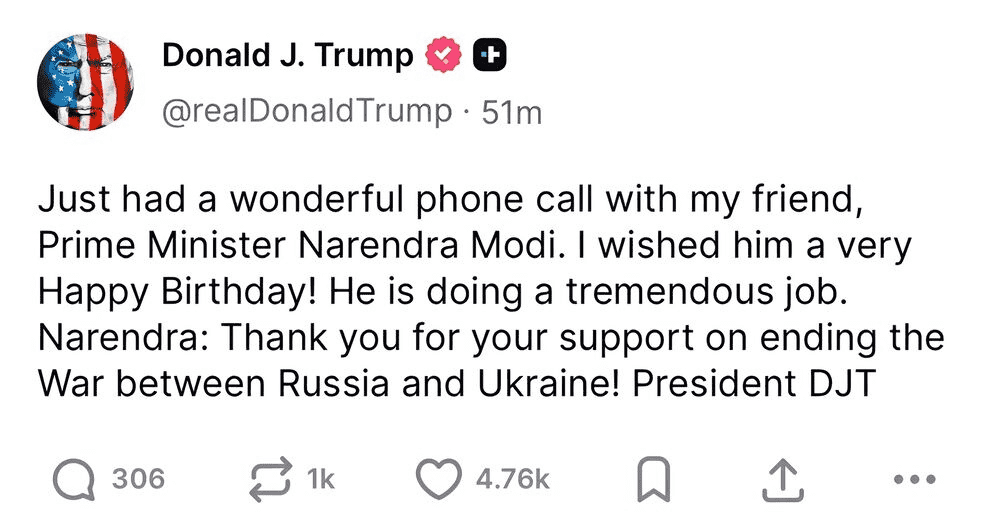
Mr. Modi’s post on X appeared at 10:53 pm, while Mr. Trump’s followed on Truth Social at 11:30 pm. Why does this matter? Because Donald Trump — ever the showman and master of timing — understands the value of being first. His Truth Social post claiming credit for the Op Sindoor ceasefire is a case in point: it went live before either India or Pakistan had spoken, fueling weeks of speculation despite New Delhi’s firm denials. Similarly, his surprise announcement of an Iran-Israel ceasefire in June caught both Tehran and Tel Aviv off guard, as they were still exchanging missile fire.
In this context, Prime Minister Modi’s move to post first — in a world where digital optics often define the narrative — likely unsettled Trump. His response, pointedly addressing Modi by his first name, seemed an attempt to reassert dominance and reclaim control of the story.
The second key point to examine is the leaders’ reference to Ukraine. According to official readouts, Mr. Modi reiterated his “support” for Donald Trump’s pledge to end the war — a conflict Trump has promised to resolve within weeks, if not days, of taking office on January 20. This gesture is widely viewed as a reciprocal outreach by India.
Trump’s efforts to broker peace have been hampered by a defiant Vladimir Putin and by Moscow’s ability to generate war funds through continued oil and gas sales despite sanctions. The U.S., in fact, has previously accused India of indirectly aiding this effort by purchasing discounted Russian crude — a factor that prompted Trump to impose an additional 25% tariff.
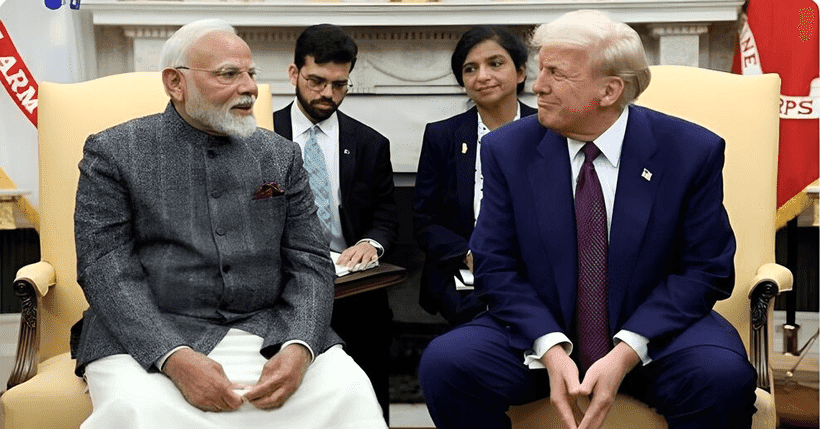
Against this backdrop, Mr. Modi’s reference to Ukraine appears designed to reassure Trump, signaling goodwill without binding his government to any concrete commitments, including reducing energy imports from Russia.
India-US Trade Talks Resume
The Trump-Modi phone call also served as a friendly push to revive stalled trade negotiations between the two nations. The proposed US-India Bilateral Trade Agreement (BTA) has long been stuck, largely due to New Delhi’s resistance to opening its price-sensitive agricultural and dairy markets to American exporters.
PM Modi has remained firm on safeguarding the interests of millions of farmers, livestock herders, and fishing communities who depend on the sector for subsistence. With crucial state elections this year and next, he has made it clear that their economic welfare will not be compromised.
This week, a sixth round of talks took place in India, where US chief trade negotiator Brendan Lynch met with his Indian counterpart Rajesh Agrawal. According to NDTV, the outcome was positive. Commerce Minister Piyush Goyal indicated that an initial set of agreements could be finalized by November.
READ ALSO – Hardik Pandya Rumored to Be Dating Model-Actor Mahieka Sharma
June 17 Phone Call Shadow
All of this unfolded against the backdrop of a June 17 phone call, during which Mr. Modi firmly set the record straight on Donald Trump’s ceasefire claims and reiterated India’s stance on Pakistan-occupied Kashmir.
Since then, in fact, the two leaders had not spoken directly to each other; The New York Times said Mr Modi refused four calls from Mr Trump in that period, something unthinkable for most global leaders.
Instead, PM Modi busied himself in reaching out to China and Russia, with a high-profile visit to the former country for the Shanghai Cooperation Organisation signalling a landmark thaw in Beijing ties.
India and China working together – making the ‘elephant’ and ‘dragon’ dance and with Russia in the mix too, would be unacceptable to the US, and that may have prompted the Trump outreach.
That outreach began with a September 6 social media post in which President Trump declared he would “always be friends” with Prime Minister Modi, who responded in equally warm terms. The Tuesday night phone call added further weight to this gesture, suggesting that India-US relations may now be finding their way back on track.


 By
By