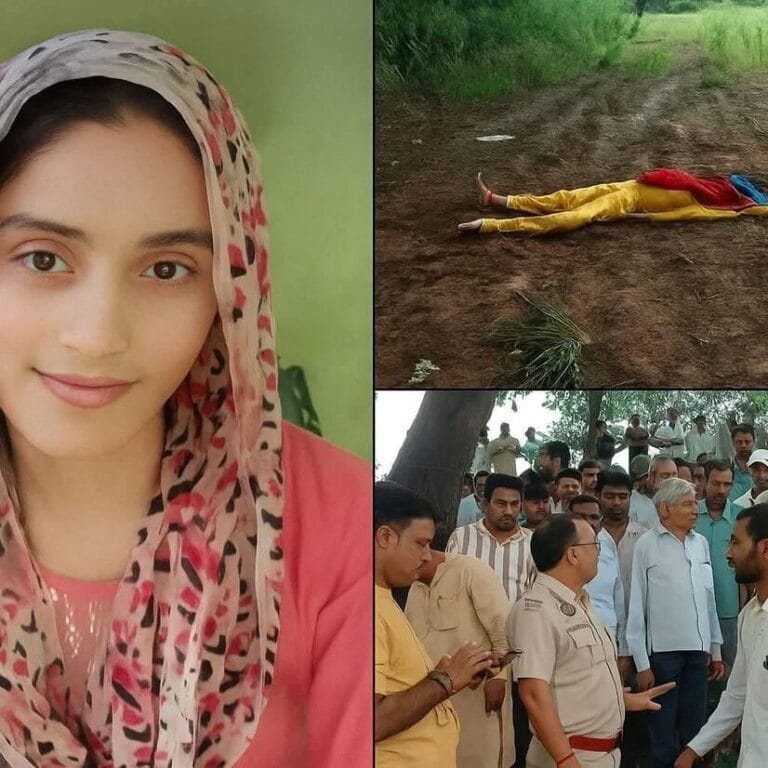

Loharu (Haryana), August 18 – The brutal murder of 19-year-old teacher Manisha from Dhani Laxman village in Loharu continues to shake the region, as six days have passed without any major breakthrough by the police. With the killers still at large, public anger has spilled onto the streets, sparking widespread protests, road blockades, and calls for swift justice.

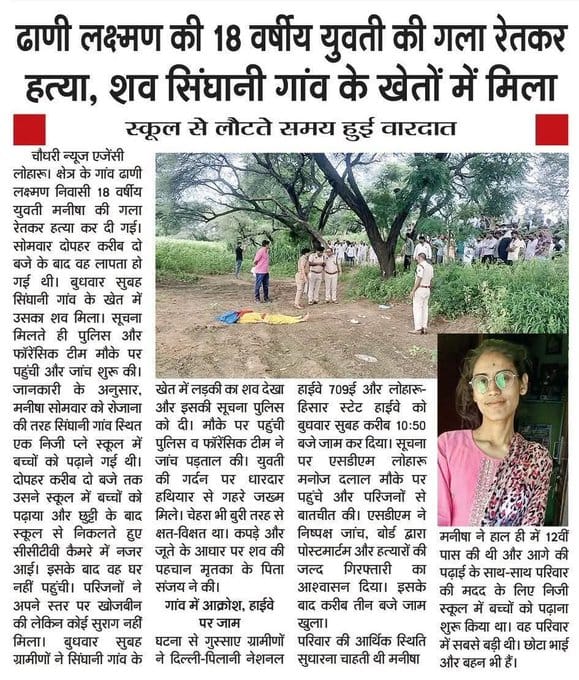
Manisha, a young teacher who had been working at a play school in Singhani, left her home on August 11 as part of her usual routine. Eyewitness accounts later placed her near a nursing college that afternoon, but after that, she disappeared without a trace. For two agonizing days, her family and villagers searched frantically for her. Their worst fears came true on August 13, when Manisha’s decapitated body was discovered in a field near a canal.
The brutality of the crime shocked the community: not only had she been killed, but her face was also disfigured with acid, making identification difficult. Investigators have not ruled out the possibility of gangrape, further intensifying public outrage.
Protests and Road Blockades
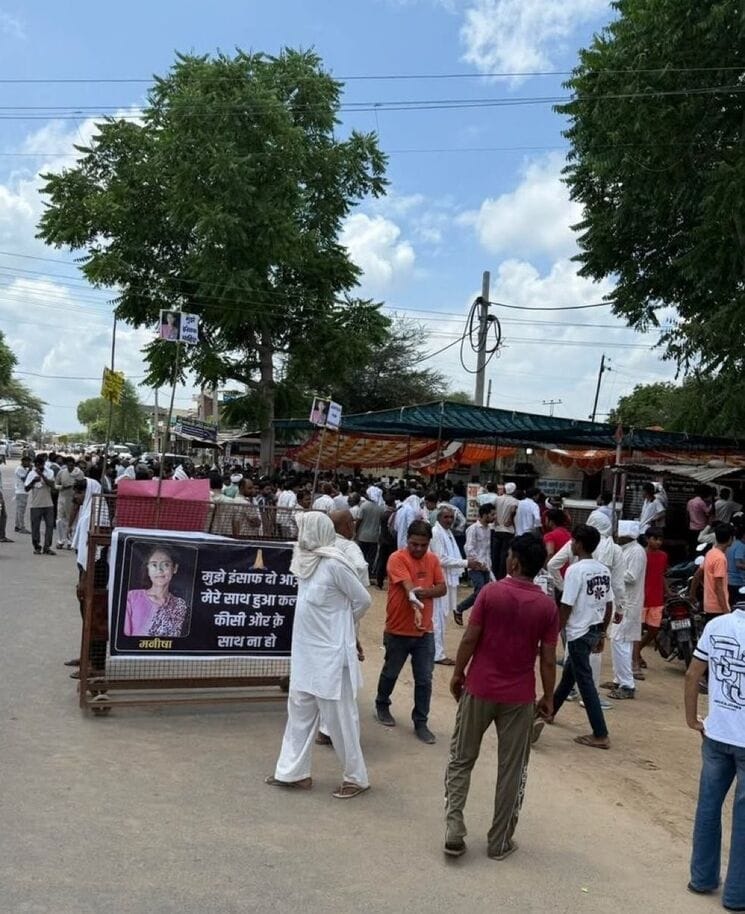
With no arrests made, villagers’ anger has grown each day. On Sunday, frustration boiled over as residents organized massive protests across Loharu and nearby areas. Several key roads, including NH-709E, Loharu–Mahendragarh road near Samsavas village, and the Baddu route, were blocked by demonstrators.
Shops and businesses also joined in the protests. In Siwani town, shopkeepers closed markets in solidarity, while in Loharu, markets remained shut for the second consecutive day. The shutdown brought normal life to a halt, reflecting the depth of anger and grief felt across the community.
At the heart of the protests was a Mahapanchayat convened at Dhigawa, near the protest site. The gathering drew not only villagers but also community leaders and activists, all demanding accountability from the authorities. The Mahapanchayat emphasized that the community would not back down until the culprits were caught and punished.
The event became a platform for villagers to express their frustration at the perceived inaction of the police. Many accused the authorities of moving too slowly, failing to use modern investigative tools, and not prioritizing the safety of women in rural areas.
Police Struggle for Leads
Amid mounting pressure, the police intensified their search for evidence on Sunday afternoon. Around 2:15 pm, officers were seen combing through the canal near the crime site. A large police contingent entered the waters and searched for several kilometers, hoping to find clues that could shed light on the murder.
ALSO READ- Iconic actor Terence Stamp, best known as General Zod in the ‘Superman’ films, dies aged 87.
Heavy security was deployed in the area to prevent any untoward incidents during the search, as large crowds of local residents gathered to watch the operation. Despite these efforts, no significant breakthrough has been announced.
Senior officers have assured the public that the investigation is moving forward, with multiple angles being pursued, including possible personal enmity, kidnapping, and sexual assault. However, the lack of arrests has only fueled suspicion and anger among locals.
Family’s Refusal to Accept the Body
The victim’s family, devastated by the gruesome murder, has so far refused to perform Manisha’s last rites. They insist that they will not claim the body until the police arrest those responsible. For them, justice is not merely about mourning their daughter but ensuring that no other young woman in the area suffers a similar fate.
Family members have also alleged that law enforcement’s response was sluggish in the crucial early hours after Manisha went missing. They believe that swifter police action might have saved her life.
Community Outrage and Demand for Justice
The entire Loharu region has been united in grief and anger. For many residents, Manisha’s murder is not an isolated crime but a reflection of the growing vulnerability of women in rural Haryana. Villagers have raised their voices against what they see as systemic failures: inadequate police presence, lack of safety measures for women, and delayed investigations.
The outrage has not remained confined to Loharu. Neighboring towns and villages are also joining in solidarity, with community leaders warning of larger agitations if justice continues to be delayed. Some have even called for state-level intervention, demanding that the Haryana government fast-track the case and ensure accountability.
Manisha’s case has reignited conversations about women’s safety in rural India. While urban centers often dominate discussions around gender-based violence, crimes in small towns and villages frequently go underreported or unresolved. Community members argue that this neglect leaves young women particularly vulnerable, especially those who must travel daily for education or work.
Activists are now calling for stricter enforcement of laws, better patrolling in rural areas, installation of surveillance systems, and fast-track courts for cases involving sexual violence and murder.
As the protests intensify, the spotlight remains firmly on the police and local administration. The Mahapanchayat has signaled that villagers are prepared to escalate their agitation unless swift action is taken. The refusal of the victim’s family to accept her body underscores the deep mistrust between the community and the authorities.
For now, the question remains: Will justice be delivered for Manisha? Until then, the anger, grief, and determination of the people of Loharu show no signs of fading.


 By
By