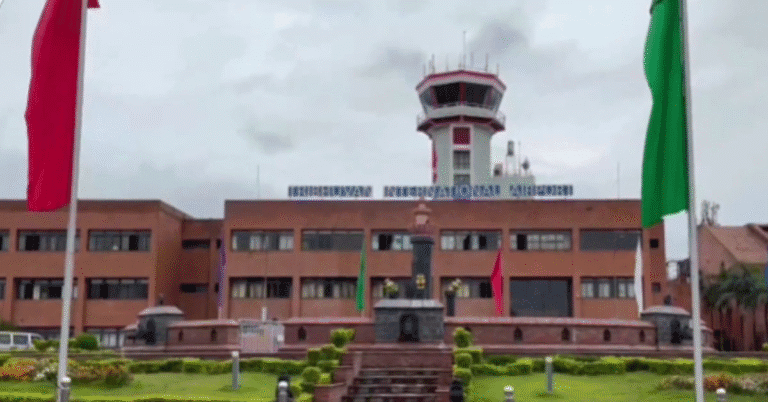

Kathmandu’s Tribhuvan International Airport reopened on Wednesday, a day after it was forced to shut down due to violent protests sweeping across Nepal. The closure came amid escalating unrest led by the Gen-Z movement, which demanded political reforms and the resignation of the government. The Nepal Civil Aviation Authority confirmed the resumption of airport operations following an urgent security committee meeting held on Wednesday. The decision was made after Nepal’s army imposed nationwide restrictions to curb further violence and restore order across the country.
Table of Contents
In an official statement, the Nepal Civil Aviation Authority announced, “We hereby inform that the flights suspended due to adverse circumstances would now be lifted, which has been made in accordance with the decision of the Tribhuvan International Airport Security Committee meeting held today.” Passengers were advised to contact their respective airline companies for updated flight information and were instructed to carry official airline tickets and identification documents when traveling.
Nepal Imposes Nationwide Restrictions as Violent Protests Escalate
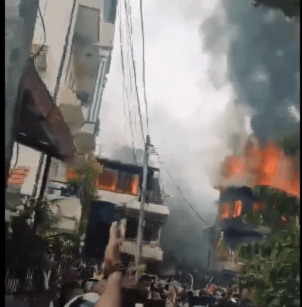
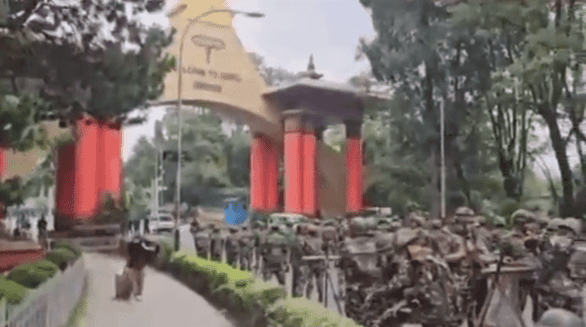
The closure of the airport came as the situation in the capital city, Kathmandu, and other parts of Nepal became increasingly tense. Following days of violent protests led predominantly by young demonstrators from the Gen-Z generation, the Nepalese Army was deployed nationwide to manage the unrest. The protests, which began as an anti-corruption movement, quickly escalated into demands for political overhaul, resulting in violent clashes, looting, and arson in several areas.
As part of the crackdown, security forces arrested 27 individuals involved in criminal activities such as looting, arson, and vandalism during the protests. The arrests occurred between 10 pm on Tuesday and 10 am on Wednesday as part of an organized effort to restore law and order. In addition to the arrests, three fire trucks were dispatched to extinguish fires that had been deliberately set by protesters amid the chaos. These measures were taken to prevent the further destruction of property and ensure public safety.
The Nepalese Army also imposed nationwide restrictions to limit movement and public gatherings until further notice. Authorities warned that any acts of vandalism, looting, or arson committed “under the guise of agitation” would be treated as criminal offenses. The restrictions were enforced strictly to deter further violence and prevent the situation from spiraling out of control.
Tribhuvan Airport Closure Amid Nepal Protests
Earlier, the closure of Tribhuvan International Airport had led to significant disruptions in air travel. Indian airlines, including Air India and IndiGo, announced the cancellation of flights to and from Kathmandu on September 10, citing safety concerns due to the ongoing unrest. IndiGo’s official statement on the social media platform X (formerly Twitter) said, “Following the extension of the airport closure in #Kathmandu, all flights to and from the city will remain cancelled until 1800 hrs on September 10.”
The airport, being Nepal’s only international gateway, plays a vital role in the country’s connectivity with the rest of the world. The temporary shutdown not only disrupted passenger travel but also affected cargo and essential medical supplies, heightening concerns among businesses and travelers alike. With the reopening, both domestic and international flights resumed, offering much-needed relief to stranded passengers and the economy.
The ongoing protests in Nepal have gained significant international attention, especially due to the active participation of the younger generation, who have emerged as the driving force behind the movement. The demonstrators have voiced strong demands for political accountability, transparency, and reforms to curb corruption within the government. Their mobilization represents a shift in the political landscape of Nepal, with Gen-Z emerging as a powerful voice for change.
Nepal’s Political Crisis Deepens
The political unrest intensified after several incidents of police brutality and heavy-handed responses by security forces, which resulted in numerous injuries and casualties. Reports indicated that over 30 people had died, and more than 1,000 were injured during the violent clashes across the country. These numbers highlight the human cost of the political crisis and the urgent need for dialogue and reconciliation between the government and the protesters.
READ ALSO- What Is The Reason Behind The Nepal Protest Moment And Why Primeminister Resign From The Post
Meanwhile, Nepal’s interim Prime Minister, Sushila Karki, has vowed to address the unrest and focus on restoring stability. Her leadership has come at a pivotal time, as the nation grapples with systemic governance challenges. Karki has repeatedly emphasized the need for unity, reforms, and cooperation with neighbouring countries, especially India and China, to stabilize the region. Her government faces the daunting task of rebuilding trust among citizens and implementing structural changes that the protest movement demands.
Nepal Faces Political and Economic Challenges
The reopening of Kathmandu’s airport is a key step toward normalcy as the nation tries to emerge from the shadow of unrest. It symbolizes not just the restoration of essential services but also a commitment by the authorities to return to peace and order. However, the situation remains fragile, and the international community continues to closely monitor developments in Nepal.
As the transitional government works to stabilize the country, the path ahead remains uncertain. The challenges of political reform, economic recovery, and national unity are immense. The eyes of Nepal and the world are now focused on how the interim leadership navigates these turbulent times and whether they can fulfill the aspirations of the youth-led movement for a democratic and corruption-free Nepal.


 By
By