
The connection between elephants and Kerala’s temples runs deep, with majestic jumbos often seen as symbols of heritage, power, and spirituality. Yet, in recent years, the use of captive elephants in festivals and rituals has sparked debates around animal welfare, with growing calls for more compassionate practices. On Saturday, a major step in this direction was taken when Bollywood actor Jackie Shroff and People for the Ethical Treatment of Animals (PETA) India presented a life-size mechanical elephant to the historic Nediyathali Sri Siva Temple at Kodungallur in Kerala.
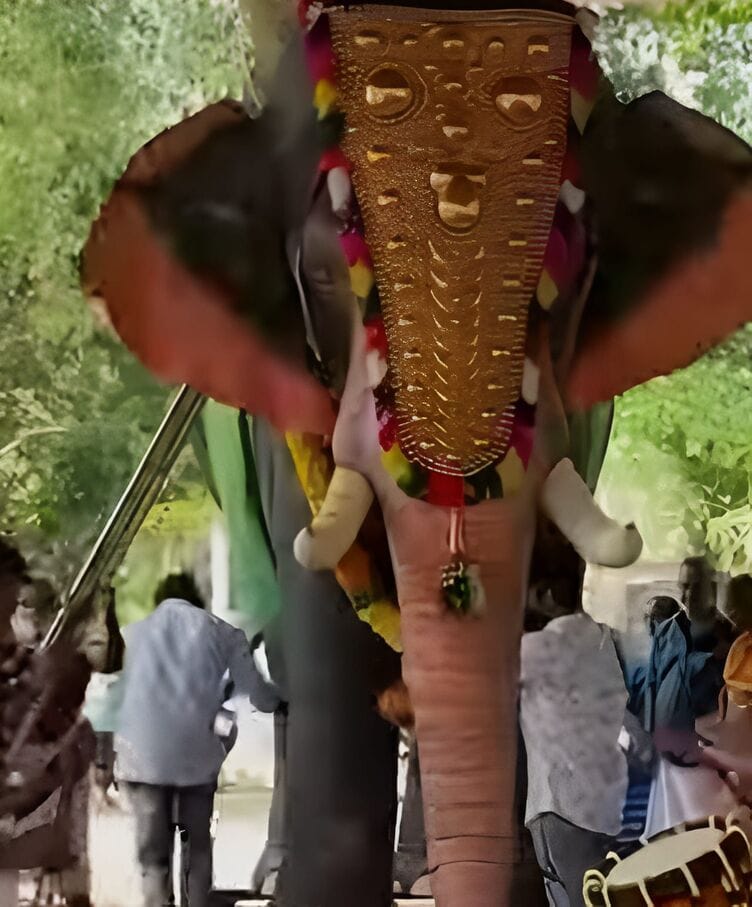
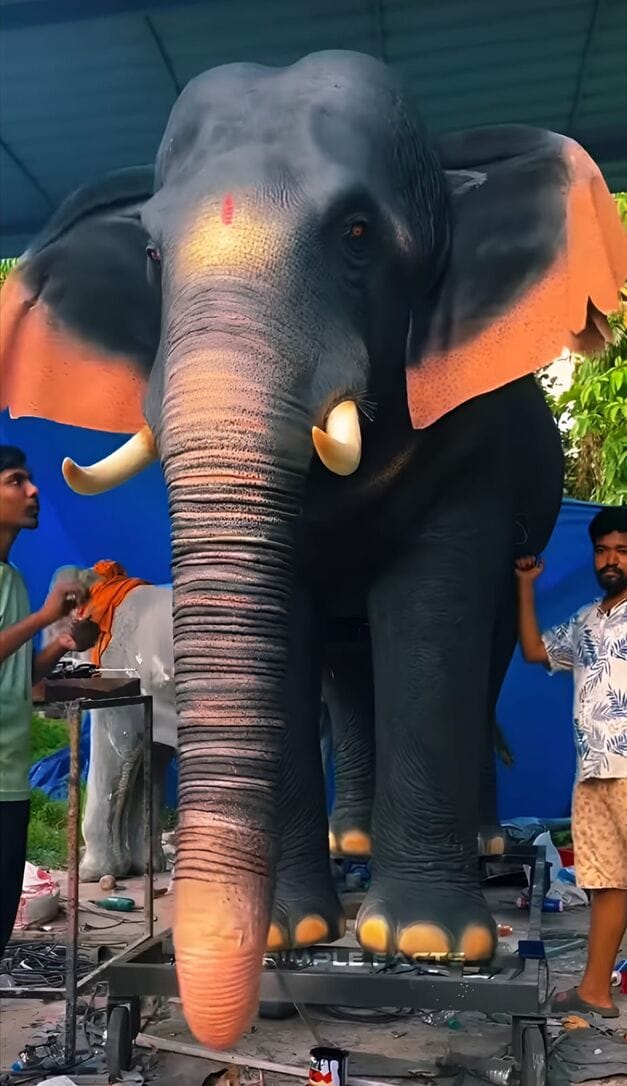
The three-metre-tall, 800-kilogram robotic elephant, named ‘Thaleeswaran’, was welcomed into the temple through a grand inauguration ceremony that included a Panchari Melam performance, showcasing Kerala’s rich percussion tradition. The donation, according to PETA India, was made in recognition of the temple’s progressive decision to never own or hire live elephants, a move that reflects compassion for animals while still preserving cultural rituals.
Jackie Shroff’s Message of Compassion
Speaking on the occasion, veteran actor Jackie Shroff expressed his heartfelt appreciation for the temple’s initiative. Known for his deep love for nature and animals, Shroff said that his “heart lights up” whenever he sees God’s creations living happily.
“Elephants are not meant to stand on hard floors, carry people on their backs, or walk in circles with chains around their legs,” Shroff explained. “God intended for them to splash in rivers, roam in forests, and just be elephants. That’s exactly why I’m donating Thaleeswaran, a mechanical elephant, to a revered temple in Kerala.”
His words highlighted the contrast between the natural lives elephants are meant to enjoy and the harsh reality many face in captivity. By donating Thaleeswaran, Shroff hoped to demonstrate that tradition and compassion can coexist without exploitation.
The Mechanical Jumbo: Tradition with Technology
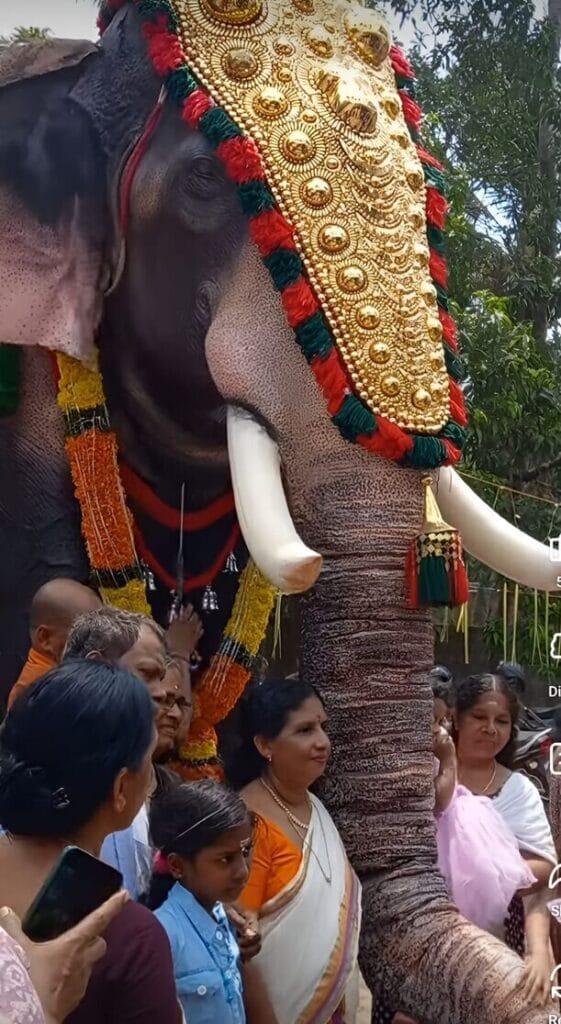
Thaleeswaran is not just a symbolic gesture — it is also a technological marvel. Constructed from rubber, fibre, mesh, foam, steel, and metal, the mechanical elephant is powered by five motors and mounted on a wheelbase for mobility. Despite being man-made, it is designed to replicate the appearance, movements, and even certain behaviors of a real elephant.
According to PETA India, the elephant can:
- Shake its head,
- Move its ears and eyes,
- Swish its tail,
- Lift its trunk,
- Spray water, and
- Carry a mounted seat for rituals or rides.
The robot operates by being plugged into an electric source and can be safely moved around during processions. With its realistic design and interactive features, it allows devotees, especially children, to engage with the animal without any danger.
Congress MP Benny Behanan, who attended the inauguration, praised the innovation, remarking: “Though it looks like a real elephant, it is completely safe. Children can touch it, take photos, and enjoy its presence without any risk, and this brings great joy to their hearts. It feels just like a real elephant, but with the added safety and compassion that makes it perfect for temple traditions.”
Temple’s Warm Welcome
The president of the Nediyathali Sri Siva Temple, Suresh Babu, emphasized that the adoption of Thaleeswaran was not just about ritual convenience but also a deeper spiritual and ethical statement.
“With this compassionate step, we can honour Lord Ganesha without causing distress to any living being,” he said. “This mechanical elephant is not just a symbol of tradition but also a tribute to all sacred beings created by the divine.”
The temple’s decision to embrace such a modern yet compassionate approach has been widely praised, setting an example for other institutions in Kerala and beyond.
Kerala’s Long Tradition with Elephants
Kerala is often called the “land of elephants”, with these gentle giants forming an integral part of the state’s festivals, particularly in Thrissur Pooram and other temple processions. However, concerns about the welfare of captive elephants have been growing. Many temple elephants spend long hours standing on hard surfaces, bound by chains, and are often deprived of the free movement, companionship, and natural habitats they need.
Animal welfare organizations have frequently highlighted the physical and psychological toll on these creatures. Injuries, foot problems, malnutrition, and stress-related behaviors are commonly reported. There have also been instances of elephants running amok during festivals, causing accidents, which further underscores the risks to both animals and humans.
PETA India’s Campaign for Mechanical Elephants
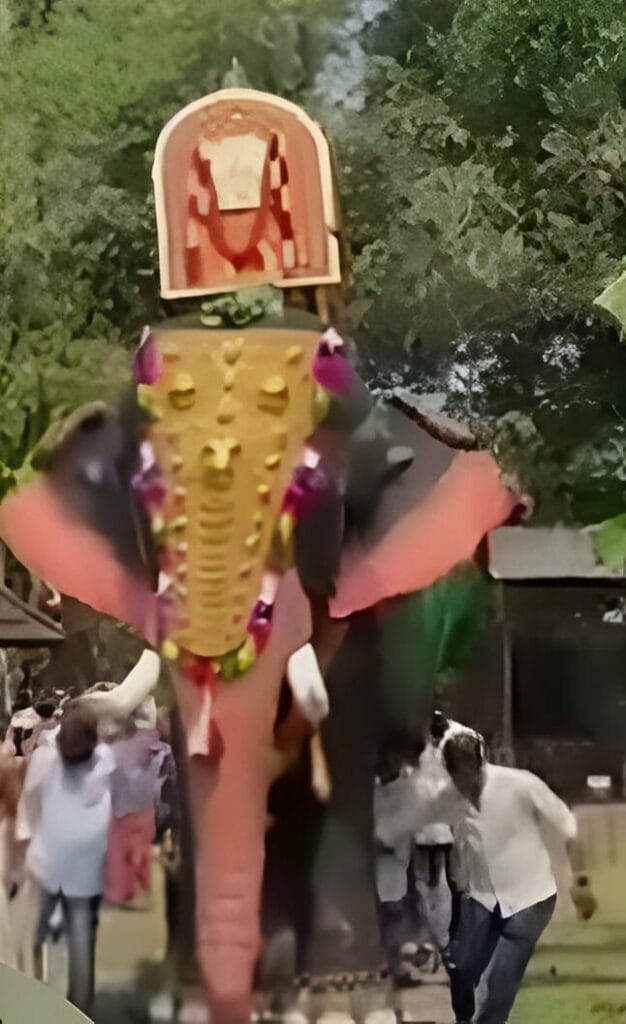
Recognizing these challenges, PETA India has been advocating for the use of mechanical elephants as an ethical alternative. Thaleeswaran is the 11th robotic elephant donated by the organization to temples, and the 7th in Kerala.
In Thrissur district alone, three such elephants have already been donated, including:
- Irinjadappilly Raman at the Irinjadappilly Sree Krishna Temple,
- Kombara Kannan at the Kombara Sreekrishna Swami Temple, and
- Another jumbo donated to a Thrissur temple earlier this year.
Other notable mechanical elephants include:
- Mahadevan at the Thrikkayil Mahadeva Temple in Kochi,
- Vadakkumbad Sankaranarayanan at the Edayar Sree Vadakkumbad Shiva Vishnu Temple in Kannur,
- Baladhasan and Devi Dasan at temples in Thiruvananthapuram.
Each of these mechanical elephants has been welcomed enthusiastically by temples and communities, demonstrating that cultural rituals can be preserved without the exploitation of living animals.
Significance of the Nediyathali Sri Siva Temple
The Nediyathali Sri Siva Temple itself is a historically significant shrine, dedicated to Lord Shiva. Housing one of the largest Shivlings in Kerala, it is among the four Thali temples constructed during the Perumakan dynasty.
History records that King Ramavarma Kulashekara once sought refuge at this temple during an attack on Kodungallur. It was here that he formed a chaverpada (suicide squad) to defend his kingdom. Such stories add to the temple’s cultural and spiritual importance, making the introduction of Thaleeswaran not just a practical change but a milestone in its long history.
A Shift Towards Compassion
For PETA India and Jackie Shroff, this initiative represents more than a single donation — it’s part of a larger vision to align tradition with compassion. By introducing mechanical elephants into temple culture, they aim to end the suffering of captive elephants while still honoring the grandeur and spiritual essence that devotees cherish.
In many ways, Thaleeswaran embodies a new model for cultural practices: one where technology, compassion, and tradition merge seamlessly.
As PETA India noted in its statement: “A mechanical elephant looks, feels, and functions like a real elephant. Yet it causes no suffering, no distress, and no risk. It’s a step towards a compassionate future.”
The gifting of Thaleeswaran to the Nediyathali Sri Siva Temple is more than just a story about innovation — it is a symbolic turning point. It represents the possibility of upholding centuries-old traditions while respecting the rights and dignity of animals.
With growing awareness about the challenges faced by captive elephants, such initiatives could very well shape the future of temple festivals in Kerala and across India. As Jackie Shroff beautifully put it, elephants belong in rivers and forests, not chains. By welcoming a mechanical elephant, the temple has shown that compassion and devotion can walk hand in hand, setting a precedent for generations to come.

 By
By