
A 44-year-old Sohi from Denmark has shared the deeply personal and controversial decision she made to donate her daughter’s beloved pony to a zoo so it could be euthanised and fed to lions. Her revelation comes at a time when Aalborg Zoo has faced growing backlash after appealing to the public to donate small and even healthy animals for their captive predators’ diet.
The Story Behind the Decision(Sohi Gave Daughter’s Pony to Feed Zoo Lions)
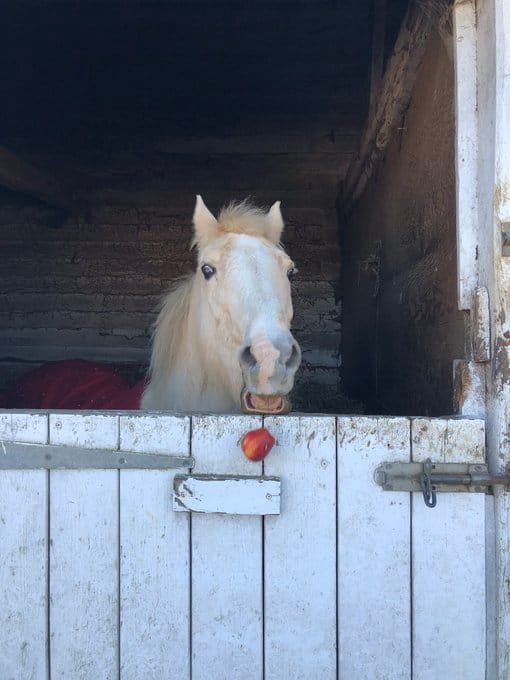
The woman, identified as Pernille Sohl, spoke to the times about her choice in 2020 to donate Chicago 57, a 22-year-old German riding pony, to Aalborg Zoo. The pony had been suffering from severe eczema and was in excruciating pain, leaving Sohl with no humane alternative other than euthanasia.
Sohl acknowledged that the idea of giving a pet to be fed to predators might sound “very dramatic and bizarre” to outsiders. However, she explained that in her view, the animals donated to the zoo are not alive when presented to the predators and would be euthanised anyway. “They are going to be put down anyway, and it is not like they are alive when they are given to the predators,” she emphasised.
Running a small farm in Assens, Denmark, Sohl works with children struggling with mental health issues, offering them opportunities to spend time with horses. Her connection to animals is strong, which made the decision especially emotional. But she believed that rather than letting Chicago 57’s body go to waste, it could serve a purpose by becoming part of the zoo’s natural food chain.
Aalborg Zoo’s Practice and Justification
Aalborg Zoo maintains that this practice is rooted in animal welfare and professional integrity. The zoo’s policy aims to imitate the natural food chain for its carnivorous animals, ensuring their diet closely mirrors what they would hunt in the wild.
In a recent public appeal, the zoo asked for “unwanted animals” such as chickens, rabbits, and guinea pigs. They promised that these animals would be “gently euthanized” before being fed to predators like the European lynx, which needs whole prey to maintain natural feeding behaviour.
“Chickens, rabbits and guinea pigs form an important part of the diet of our predators – especially the European lynx, which needs whole prey that resembles what it would naturally hunt in the wild,” the zoo said in a statement. “That way, nothing goes to waste – and we ensure natural behaviour, nutrition and well-being of our predators.”
According to Aalborg Zoo, donors can receive a small tax deduction: DKK100 (£11.60) for smaller animals and DKK5 (58p) per kilogram for larger animals like horses.
The Numbers Behind the Practice
The zoo’s donation programme has received a surprising level of participation. So far this year, Aalborg Zoo has taken in 22 horses, 53 chickens, 137 rabbits, and 18 guinea pigs. Many of these animals were either old, sick, or otherwise deemed unsuitable for rehoming.
Although Sohl did not receive payment for her pony, she would have been eligible for a tax rebate under the scheme. For her, it was never about the money but about what she considered a more meaningful end for her pet.
Another Similar Case
Sohl’s decision is not an isolated one. Another woman, Helen Hjortholm Andersen, donated her Shetland pony, Paprika, to Jyllands Park Zoo. In her case, the motivation was more practical: the high cost associated with removing and disposing of a dead animal.
Andersen supports the idea of allowing deceased pets to benefit other animals rather than being incinerated or buried. “It’s part of the circle of life,” she explained, adding that while the thought of a predator eating a beloved animal may be upsetting, it ultimately serves a natural purpose.
The Controversy and Backlash
Despite the zoo’s reasoning, Aalborg Zoo’s request for healthy small pets has triggered public outrage. Critics argue that the idea of deliberately sourcing domestic animals—even if unwanted or old—for predator food crosses an ethical line.
Animal welfare groups have raised concerns about normalising the idea of killing healthy pets for zoo feed. Some have questioned whether the practice might lead to the unnecessary euthanasia of animals that could be rehomed.
On the other hand, defenders of the practice point to the reality of carnivores’ diets in the wild. Zoos often face challenges in sourcing food that keeps animals’ natural behaviours intact, and whole-prey feeding is widely recognised as beneficial for the physical and psychological health of predatory species.
ALSO READ– Planting Trees for a Decade: Meet Bihar’s Daughter, Putul Devi, to Be Honoured by the President
The Larger Debate on Feeding Practices in Zoos Feeding carnivores with whole prey is not unique to Aalborg Zoo. Many zoos around the world use this method to ensure predators receive the necessary nutrients and mental stimulation from hunting-like behaviours. However, the source of that prey can vary widely.
In some cases, prey animals are raised specifically for this purpose. In others, donations come from farms, breeders, or private owners whose animals are no longer viable for other purposes. While the practice is accepted in professional zoo circles, it can be jarring to the general public when it involves animals commonly kept as pets.
Sohi ’s Reflections
Looking back, Sohl stands by her choice. She believes Chicago 57’s end, though unconventional, was humane and meaningful. “It was not an easy decision,” she admitted, “but I believe it was the right one for him. He was suffering, and this way, he could give something back to nature.”
Her story has sparked conversations not only about the ethics of zoo feeding practices but also about how society views the roles of domestic animals in the broader ecosystem. For some, her decision is a compassionate and practical solution to a painful situation; for others, it’s an uncomfortable reminder of the harsh realities of the food chain—even within the controlled environment of a zoo.
As the debate continues, Aalborg Zoo stands by its policy, maintaining that their approach prevents waste, supports predator health, and mirrors the balance of the natural world. Whether the public will come to accept this reasoning remains uncertain.


 By
By