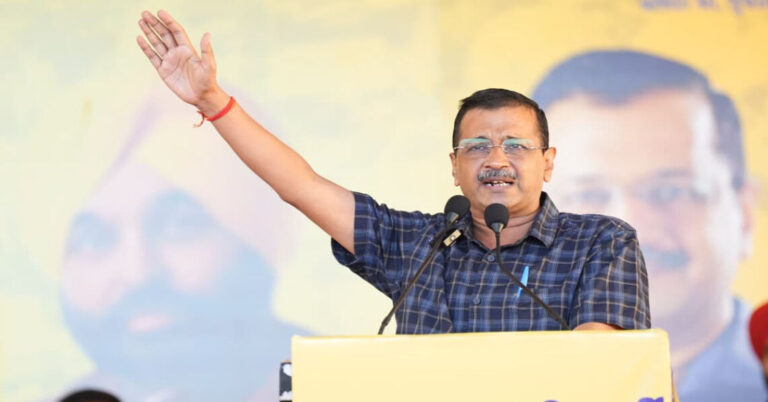

A fresh political controversy has erupted after the Bharatiya Janata Party (BJP) shared photos online claiming that Delhi Chief Minister Arvind Kejriwal has a new luxurious residence in Chandigarh, calling it “Sheesh Mahal 2.0.” The pictures, allegedly showing a lavish mansion, have triggered heated exchanges between the BJP and the Aam Aadmi Party (AAP), reviving the debate over political extravagance and the use of public funds.
BJP’s Allegations: “Luxury at Public Expense”
Table of Contents
BJP leaders took to social media on Friday to share photos of what they described as Kejriwal’s “Chandigarh palace.” The images show a large bungalow surrounded by lush greenery and high boundary walls. BJP spokespersons alleged that the property was being renovated and upgraded at massive expense, even as AAP claims to represent simplicity and honesty.
The BJP accused Kejriwal of hypocrisy, saying that while he talks about common people and austerity, he lives in opulent comfort. “This is not a residence; it’s a palace funded by taxpayers. After the Delhi ‘Sheesh Mahal,’ here comes the Chandigarh version,” a BJP leader wrote on X (formerly Twitter), referring to Kejriwal’s controversial Delhi residence renovation that had earlier drawn public criticism.
Several BJP leaders also demanded an official inquiry into whether government funds were being used to maintain or renovate the Chandigarh bungalow. “People deserve to know how much public money is being spent for Kejriwal’s comfort,” they added.
AAP’s Response: “False Propaganda by BJP”
The Aam Aadmi Party wasted no time in countering the allegations. Senior AAP leaders dismissed the BJP’s claims as “baseless propaganda” aimed at distracting people from real issues such as inflation, unemployment, and corruption in BJP-ruled states.
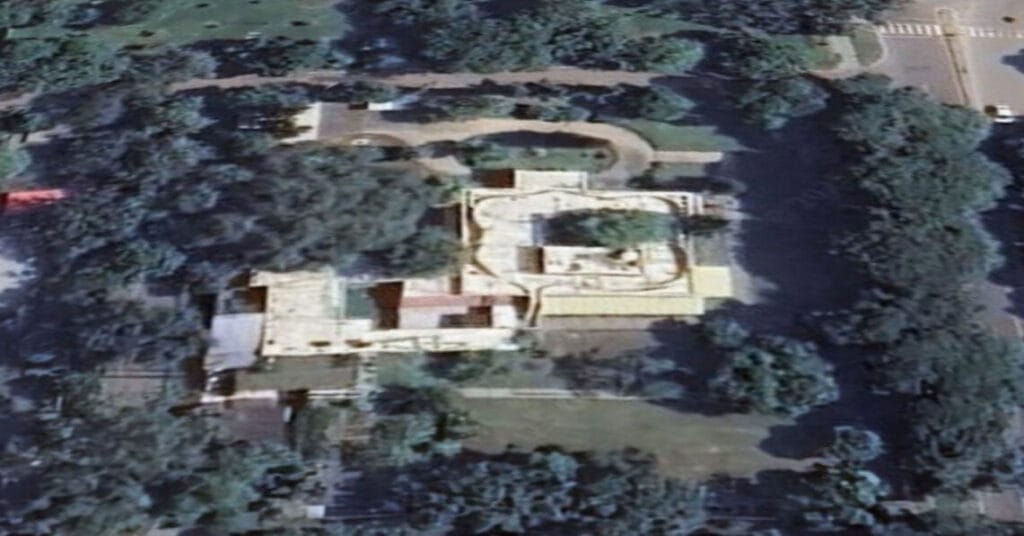
AAP clarified that the bungalow in question is an official residence used for administrative purposes when Kejriwal visits Chandigarh in his capacity as a national political figure. “This is not Kejriwal’s personal property. It belongs to the government and is used by several officials. BJP is trying to mislead people with fake narratives,” an AAP spokesperson stated.
The party further accused the BJP of launching a coordinated smear campaign ahead of upcoming elections, saying the ruling party at the Centre was “afraid of AAP’s growing influence across states.”
The “Sheesh Mahal” Controversy: A Recurring Debate(‘Arvind Kejriwal’)
The term “Sheesh Mahal” first gained political traction in 2023 when the BJP accused Kejriwal of spending around ₹45 crore on renovating his official residence in Delhi. That controversy had sparked massive debates over political ethics, public money usage, and the contrast between Kejriwal’s earlier image as a “common man’s leader” and his current lifestyle.
The latest “Sheesh Mahal 2.0” claim in Chandigarh appears to be a continuation of that narrative, with the BJP once again trying to project Kejriwal as being out of touch with his own ideals.
However, AAP leaders maintain that all official residences, including those used by ministers and chief ministers, undergo periodic renovations as per government protocol. They have accused the BJP of double standards, pointing out that leaders from the saffron party also stay in state-owned properties with similar amenities.
Political Reactions and Public Opinion
Political observers say the controversy is part of a larger political strategy as the BJP and AAP compete for influence beyond Delhi. With Punjab and Haryana being key battlegrounds, both parties have been trying to shape public perception aggressively.
READ ALSO- Vivek Oberoi Donates Ramayana Fee to CharityWhile BJP continues to push the “luxury at public cost” narrative, AAP is positioning itself as a target of “political vendetta.” On social media, the debate has polarized users — with some criticizing alleged extravagance and others calling the BJP’s claims a distraction tactic.
The “Sheesh Mahal 2.0” controversy reflects the intensifying rivalry between the BJP and AAP, both vying for political space in North India. Whether the Chandigarh bungalow truly represents extravagance or is simply a routine government property, the debate highlights how image politics continue to dominate India’s political landscape.
For now, Kejriwal’s “Sheesh Mahal 2.0” remains at the center of yet another political storm — one that is likely to echo through election season as both parties seek to shape public perception with their own narratives.


 By
By
 binance account says:
 mejor código de referencia de Binance says:
 cfgoldrush says:
 бнанс створення акаунту says: