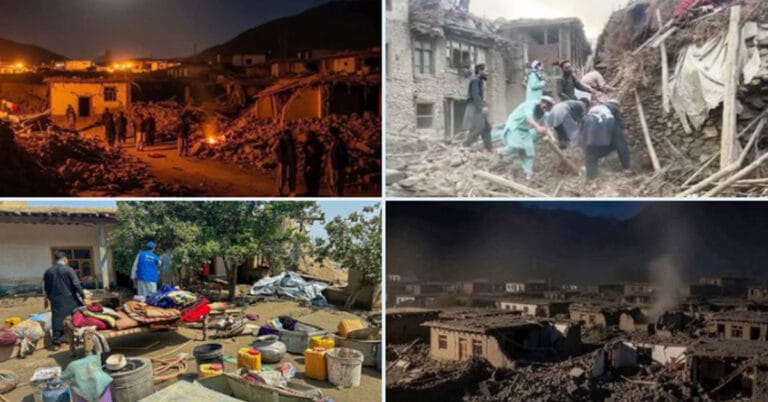

Kabul: A large-scale rescue operation was launched in Afghanistan on Monday after a powerful 6.0-magnitude earthquake and multiple aftershocks devastated parts of the country’s mountainous eastern region. According to Taliban authorities, more than 800 people lost their lives and thousands were injured as homes collapsed in remote villages near the Pakistan border.
The quake struck just before midnight, shaking buildings across Afghanistan and even jolting neighboring Pakistan’s capital, Islamabad. The tremors were felt across a wide area, with the US Geological Survey (USGS) estimating that more than 1.2 million people experienced strong or very strong shaking.
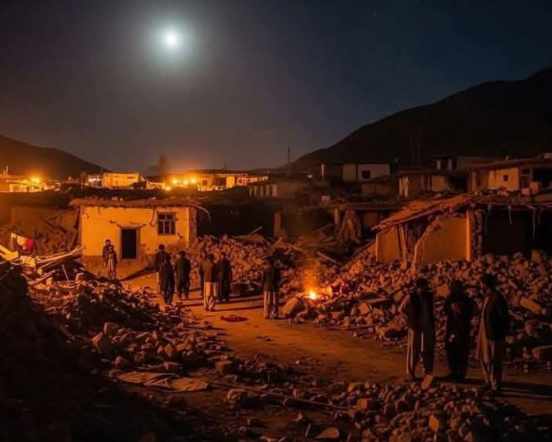
The Scale of Destruction
The epicenter of the earthquake was located in Afghanistan’s eastern provinces, primarily affecting Kunar and Nangarhar.
- In Kunar province, Taliban government spokesman Zabihullah Mujahid confirmed that around 800 people were killed and more than 2,500 were injured.
- In Nangarhar province, at least 12 people died and 255 were injured.
“Numerous houses were destroyed,” said Interior Ministry spokesman Abdul Mateen Qani while speaking to AFP.
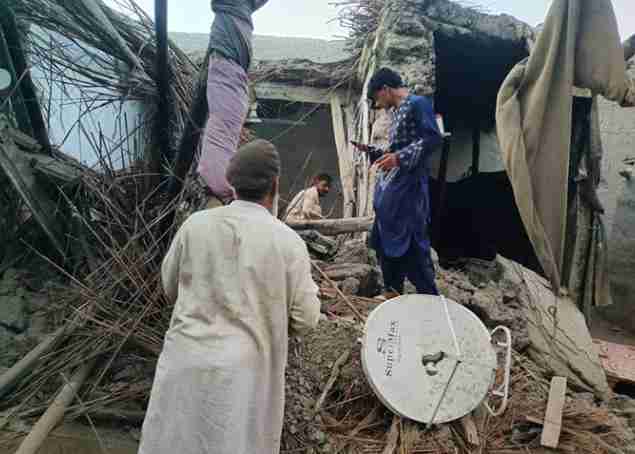
The devastation was particularly severe because most Afghans live in mud-brick homes that crumble easily in earthquakes. Entire villages were flattened, leaving thousands homeless.
The UN migration agency raised concerns that some of the worst-affected villages in Kunar remain inaccessible due to road blockages, slowing down relief efforts.
Immediate Response and Rescue Efforts
The Taliban authorities quickly mobilized emergency teams along with support from United Nations agencies to assist survivors.
According to the Afghan defense ministry, 40 flight sorties had already been carried out to deliver aid, evacuate the injured, and transport emergency supplies to quake-hit regions.
In Kunar’s Nurgal district, residents themselves rushed to clear blocked roads and reach cut-off villages. But the challenge remains enormous, with many communities isolated by landslides and limited telecommunications.
Breaking 🚨 Afghanistan 🇦🇫
— Islamist Cannibal (@Raviagrawal300) September 1, 2025
A powerful 6.0 magnitude earthquake struck Afghanistan last night, causing a severe tragedy. The earthquake, centered approximately 20 kilometers from Jalalabad city near the Pakistan border, has claimed over 800 lives, with 2,800 people injured.
1/2 pic.twitter.com/Zh7mqUxiCm
“There is a lot of fear and tension… Children and women were screaming. We had never experienced anything like this in our lives,” said Ijaz Ulhaq Yaad, a local member of the agricultural department.
He added that many victims were families who had recently returned to Afghanistan from Iran and Pakistan, seeking to rebuild their lives. Tragically, many of them lost homes they had only just constructed.
Geographic and Seismic Details
According to the USGS, the quake struck at a shallow depth of just 8 kilometers (5 miles), which intensified the shaking on the surface. The epicenter was located 27 kilometers from Jalalabad, the capital of Nangarhar province.
This region, straddling the Afghanistan-Pakistan border, has long been seismically active. It lies close to the Hindu Kush mountain range, where the Eurasian and Indian tectonic plates meet, making it prone to frequent and destructive earthquakes.
Adding to the tragedy, Nangarhar province had also been hit by flash floods just days earlier, which killed five people and destroyed crops and property.
The earthquake has deepened Afghanistan’s already dire humanitarian crisis. Ravaged by more than four decades of war, the country is still grappling with economic collapse, widespread poverty, and mass displacement.
The destruction of homes, already fragile due to poverty and substandard construction, has left tens of thousands without shelter. With road access cut off in many areas, delivering emergency food, water, and medical aid is proving to be a challenge.
The UN and international aid agencies warned that the coming days will be crucial for survivors, as many villages remain without clean water, electricity, or healthcare facilities.
Condolences and International Solidarity
The tragedy has sparked condolences from world leaders and organizations.
UN Secretary-General Antonio Guterres expressed solidarity with Afghanistan:
The Taliban government has also called for greater international assistance, highlighting the limitations of its resources to respond to such a large-scale disaster.
Eyewitnesses described terrifying moments as the earthquake struck in the middle of the night.
Residents said entire families were buried under rubble when their mud-brick homes collapsed. Children and elderly people were among the most vulnerable victims.
Villagers in Kunar said the tremors were so powerful that people ran out of their homes in panic, screaming and crying.
“We had never experienced anything like this before,” one resident told AFP, describing how chaos and fear gripped communities as the ground shook violently.
Aftershocks Continue
The initial 6.0-magnitude quake was followed by at least five aftershocks throughout the night. The strongest aftershock measured 5.2 and struck just after 4:00 am (local time).
Aftershocks have left survivors too scared to return to damaged homes, forcing many to spend the night outdoors in open fields despite the lack of shelter and resources.
Unfortunately, Afghanistan has a long history of devastating earthquakes.
- October 2023: A 6.3-magnitude earthquake in western Herat province killed more than 1,500 people and damaged or destroyed over 63,000 homes.
- June 2022: A 5.9-magnitude quake in Paktika province killed 1,000 people and left tens of thousands homeless.
This latest earthquake in 2025 adds to the string of natural disasters that have repeatedly tested Afghanistan’s resilience.
As rescue operations continue, the death toll is expected to rise. With many remote villages still unreachable, authorities fear that hundreds more may be trapped under collapsed homes.
The Taliban government has appealed to international organizations for urgent assistance in terms of medical aid, food supplies, and temporary shelters.
For the people of Afghanistan, who are already battling poverty, displacement, and political instability, this earthquake is yet another devastating blow. Yet, the scenes of neighbors rushing to rescue survivors, and ordinary villagers working tirelessly to clear blocked roads, reflect the enduring spirit of resilience among Afghans.
As the world watches, Afghanistan once again faces the challenge of rebuilding lives and homes amid tragedy.


 By
By

 Binance创建账户 says:
 binance referral code says: