

The Bhubaneswar Municipal Corporation (BMC) has revealed alarming statistics about the city’s stray dog population, showing that Odisha’s capital has a significantly higher number of strays compared to the national average. According to the latest enumeration conducted by the BMC, Bhubaneswar’s stray dog population stands at 47,126, which translates to 36 dogs per 1,000 humans, more than three times the national average of 11.
Massive Enumeration Drive Across the City
Table of Contents
The stray dog population survey was carried out by the BMC in two phases — from September 18 to 21, and again from September 22 to 25. The extensive survey covered all 67 wards under the Bhubaneswar Municipal Corporation area. To ensure accuracy, the BMC formed 410 teams, each operating under the supervision of senior veterinary officers. The enumeration teams collected data ward by ward, identifying not just the number of dogs but also their gender, age group, and sterilization status.
The final data revealed that Bhubaneswar currently houses 47,126 stray dogs. Out of these, 23,047 are male, 15,552 are female, and 1,124 are puppies. The census also found that 4,068 male dogs and 3,335 female dogs have already been sterilized under the city’s animal birth control program. Despite these efforts, the overall stray dog population remains significantly high, raising concerns among residents and officials alike.
Stray Dog Population Density Raises Concerns
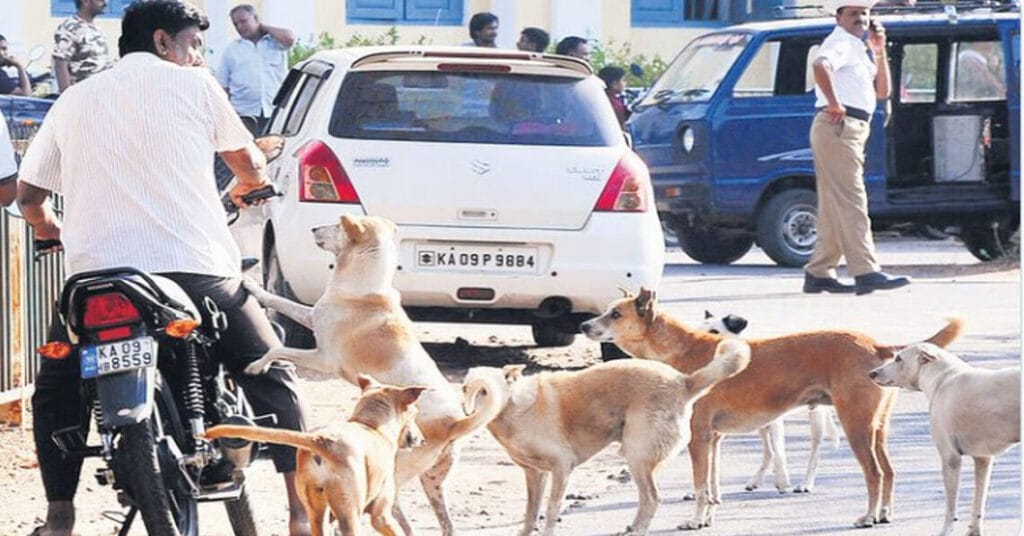
According to BMC estimates, Bhubaneswar’s human population stands at around 13 lakh (1.3 million). This means the stray dog population accounts for 3.62% of the total human population. On average, each ward has around 703 stray dogs roaming the streets.
Among all the wards, Ward No. 23 recorded the highest number of stray dogs at 1,703, followed by Ward No. 6 with 1,062 dogs. Other wards with high counts include Wards 7, 49, and 65.
Officials note that this density is much higher than the national benchmark. As per the 20th National Livestock Census conducted by the Department of Animal Husbandry and Dairying, Government of India, the average stray dog density nationwide is 11 dogs per 1,000 humans. In comparison, Bhubaneswar’s figure of 36 per 1,000 is more than triple the national average, although slightly lower than Odisha’s state average of 39.
Understanding the Reasons Behind the High Stray Dog Population
Experts believe that rapid urbanization, inadequate waste management, and insufficient sterilization drives have contributed to the rise in Bhubaneswar’s stray dog population. Open garbage dumps and food waste in residential and market areas provide easy food sources, allowing stray dogs to thrive.
Although the BMC has been conducting sterilization and vaccination drives under its Animal Birth Control (ABC) program, officials admit that the scale of the operation is yet to match the city’s growing stray numbers. The existing capacity to sterilize dogs each month is limited, and gaps in coverage often allow the population to rebound quickly.
Animal welfare activists also point out that relocation or culling of stray dogs is not a sustainable solution, as it violates the Animal Birth Control Rules (2023) and the Prevention of Cruelty to Animals Act. Instead, they emphasize long-term strategies like consistent sterilization, vaccination, and community feeding programs to build human-dog harmony.
BMC’s Objective Behind the Enumeration
According to the BMC, the enumeration of the stray dog population was conducted with several objectives in mind. First, it aims to develop an effective sterilization and vaccination plan to control population growth and prevent the spread of diseases like rabies.
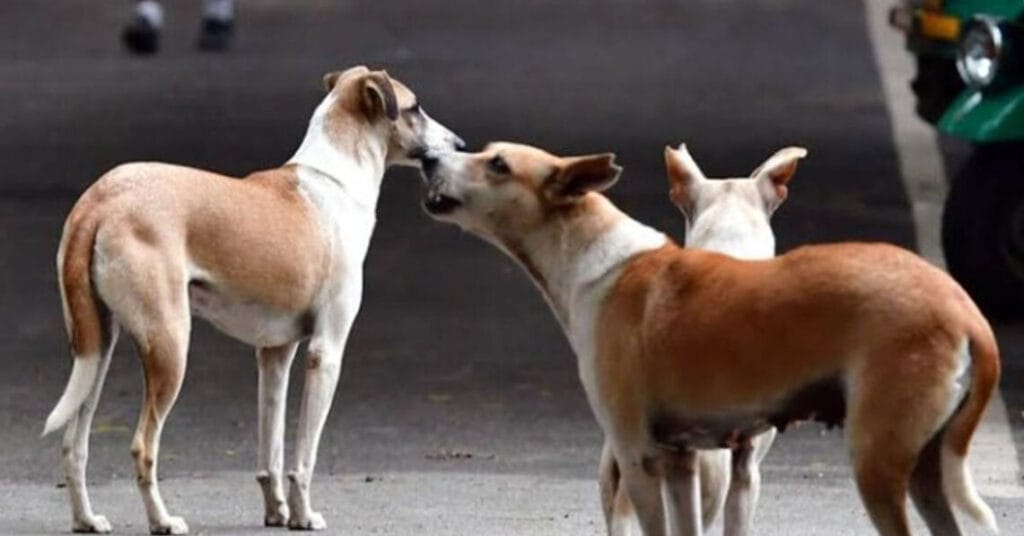
Secondly, the corporation seeks to reduce human-dog conflicts, which have been rising in recent years due to dog bites and territorial aggression in certain neighborhoods. By identifying hotspots with high stray density, the BMC can better allocate resources and plan focused sterilization campaigns.
The survey also serves to improve the welfare of stray dogs, ensuring that sterilization and vaccination efforts are humane and scientifically managed. “The goal is to protect both people and animals by reducing conflict, preventing rabies, and ensuring that dogs are treated ethically,” said a senior BMC official.
Future Steps for Stray Dog Management
Following the census, the BMC plans to collaborate with animal welfare organizations and veterinary experts to expand sterilization capacity. The civic body also intends to introduce awareness campaigns encouraging residents not to harm or relocate strays but to support vaccination and feeding initiatives in their localities.
READ ALSO- Bengaluru Surgeon Arrested for Allegedly Killing Doctor Wife with AnaesthesiaBMC officials further stated that they are exploring digital tagging systems to track sterilized and vaccinated dogs, ensuring better data management for future monitoring. The ultimate goal is to bring the stray dog population closer to national averages through a structured, compassionate, and data-driven approach.
A Call for Balance Between Coexistence and Control
While Bhubaneswar’s stray dog population remains a pressing civic issue, authorities and activists agree that the solution lies in responsible management rather than elimination. The city’s latest census provides an essential foundation for evidence-based policymaking, but its success will depend on consistent implementation, funding, and public participation.
As Bhubaneswar continues to grow as a modern urban center, balancing human safety with animal welfare will remain one of its most critical challenges.