
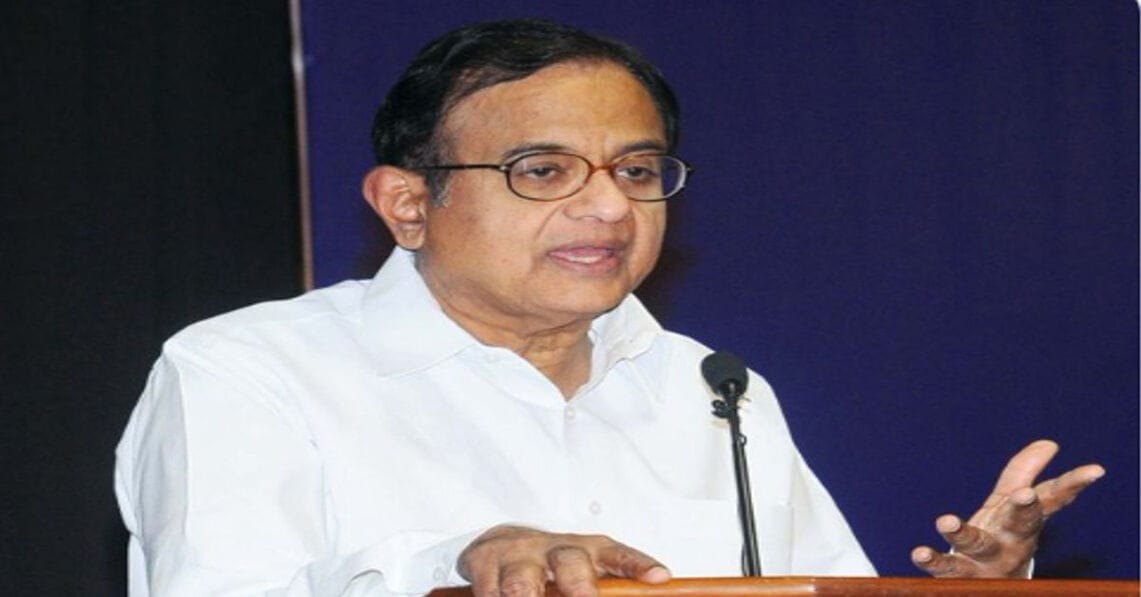
Prime Minister Narendra Modi has once again targeted the Congress party over its handling of national security, using former Union Minister P. Chidambaram’s recent remarks about the 26/11 Mumbai terror attacks as ammunition. Speaking at the inauguration of the Navi Mumbai International Airport, Modi accused the Congress-led UPA government of showing weakness in the face of terrorism and bowing to international pressure after one of the worst terror attacks in India’s history.
Chidambaram’s Revelation on India’s 26/11 Response
In a recent interview, senior Congress leader and former Home Minister P. Chidambaram shared details about the government’s internal discussions following the 2008 Mumbai terror attacks. Chidambaram, who took charge as Home Minister after the attacks, revealed that he had considered launching a retaliatory strike against Pakistan.
Table of Contents
However, he added that global pressure, particularly from the United States, dissuaded India from taking military action. According to Chidambaram, then U.S. Secretary of State Condoleezza Rice had personally travelled to New Delhi to meet him and Prime Minister Manmohan Singh. During those discussions, Rice reportedly urged India not to retaliate militarily against Pakistan to avoid escalating tensions in the region.
Chidambaram’s remarks have reignited debate over how India should have responded to the 26/11 attacks, which left 166 people dead, including foreign nationals, after 10 Pakistani terrorists carried out coordinated strikes across Mumbai.
PM Modi Questions Congress’ Decision Not to Retaliate
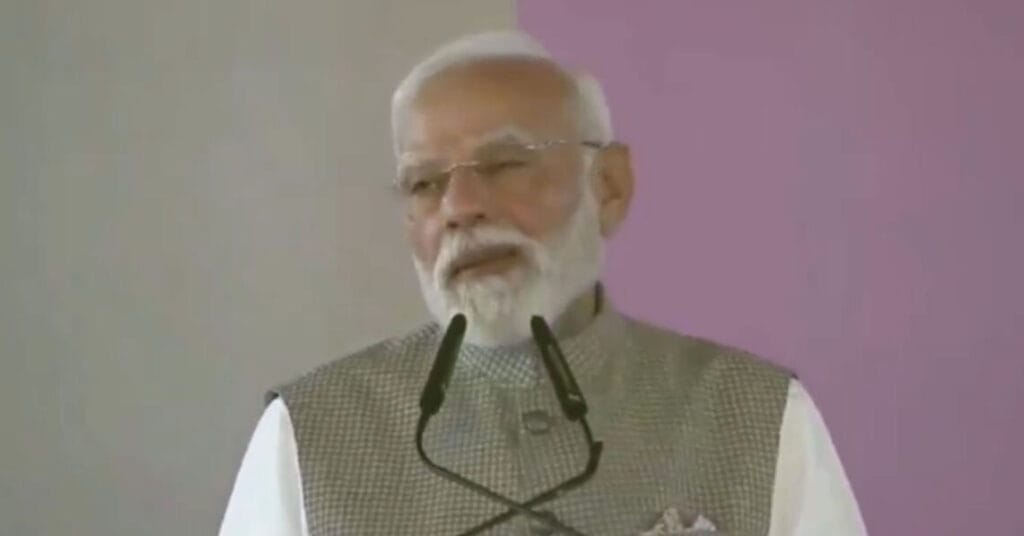
Without directly naming Chidambaram, Prime Minister Modi referred to his comments during his speech in Navi Mumbai, saying that the Congress party had “sent a message of weakness” after the attacks. He said, “Mumbai, the country’s economic capital, was attacked in 2008, but the then government’s response gave a message of bowing before terrorism.”
The Prime Minister also questioned the rationale behind the Congress government’s decision not to allow the armed forces to retaliate despite being ready for action. “A senior Congress leader, who also served as Home Minister, has recently admitted that India’s forces were prepared to strike Pakistan after 26/11. The country wanted it too. But according to him, the government stopped the forces due to pressure from another country. Congress must answer who took that decision under international pressure,” Modi said.
He further alleged that the Congress party’s “weak leadership” at the time emboldened terrorist groups and compromised India’s security. “The Congress’ weakness emboldened terrorists and weakened India’s national security. We have paid the price for that weakness with the lives of our people,” Modi stated.
Modi Highlights His Government’s Strong Security Stance
Contrasting his administration’s approach with that of the UPA government, PM Modi asserted that the India of today no longer hesitates to take decisive action against terrorism. He said, “Today’s India gives a fitting response to terrorism. This is a new India that attacks terrorists on their own turf — ghar me ghuske maarta hai (strikes them inside their homes).”
He highlighted India’s recent counter-terror operations as proof of this stance, citing Operation Sindoor, conducted in response to the Pahalgam terror attack in April 2025. The operation reportedly targeted key terror infrastructures in Pakistan, including the headquarters of Lashkar-e-Taiba in Muridke and Jaish-e-Mohammed in Bahawalpur. “The world now recognizes that India will not tolerate terrorism and will act decisively to protect its citizens,” Modi declared.
Political Reactions and Growing Debate
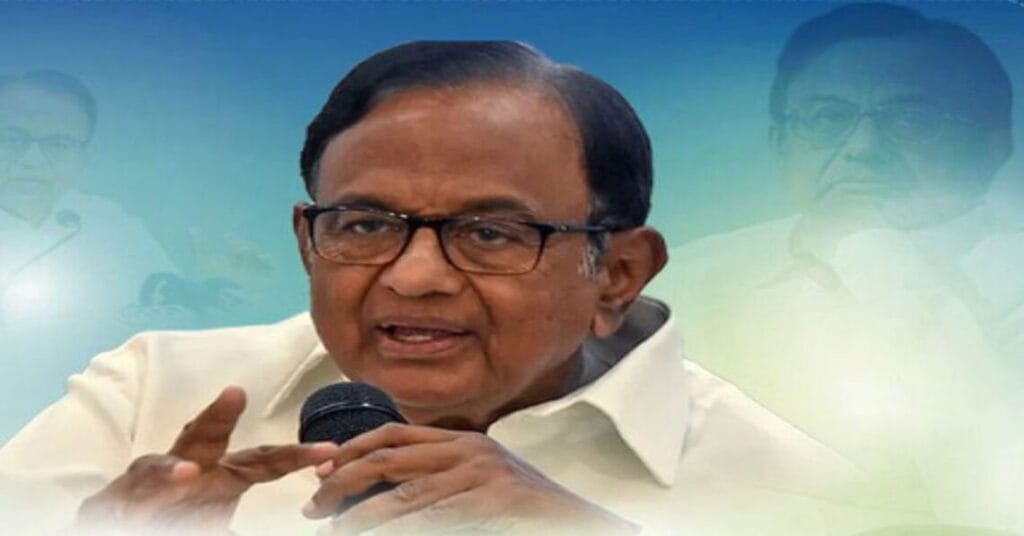
Chidambaram’s comments have triggered a political storm, with the BJP seizing on them to portray the Congress as weak on national security. Party leaders have echoed the Prime Minister’s criticism, arguing that India lost an opportunity to deliver a strong message to Pakistan in 2008.
READ ALSO- BJP Leader Pitavas Panda Shot Dead in Odisha’s BerhampurMeanwhile, Congress leaders have defended their government’s approach, saying that restraint was a calculated decision to prevent a full-scale war between two nuclear-armed nations. They argue that diplomatic efforts at the time successfully isolated Pakistan internationally, forcing it to acknowledge the role of its nationals in the 26/11 attacks.
Security Narrative Dominates Political Discourse
As the 2024 general election narratives continue to emphasize national security, Modi’s latest attack on the Congress reinforces his party’s image of being tough on terrorism. The BJP’s strategy appears focused on contrasting its “decisive” approach with what it describes as Congress’s “weak-kneed” policies of the past.
By invoking Chidambaram’s own words, PM Modi has reignited a debate that continues to resonate deeply with the Indian public — how a nation should respond to terrorism. As the political heat rises, the 26/11 attacks remain not just a painful chapter in India’s history but also a recurring theme in its political discourse.