

Dutch police deployed tear gas and water cannons to disperse violent anti-immigration protesters in The Hague on Saturday. The large-scale demonstration, marked by clashes, property damage, and arrests, highlighted the growing tension in the Netherlands over migration policies ahead of a key national election.
Violence Erupts in The Hague
Table of Contents
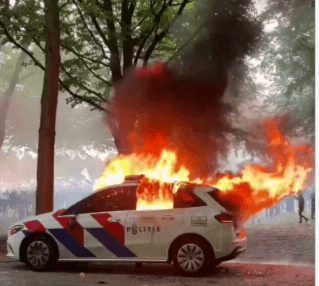
According to Dutch police figures reported by the Netherlands news agency ANP, around 1,500 protesters blocked a highway in The Hague during the rally. Some demonstrators threw rocks and bottles at officers, while others set a police vehicle on fire.
Authorities confirmed that 30 people were arrested and at least two police officers were injured during the unrest. The situation escalated as security forces attempted to clear the crowds, using riot-control measures including water cannons and tear gas.
Political Leaders Condemn Violence
Prime Minister Dick Schoof strongly condemned the violence, calling the scenes “shocking and bizarre images of shameless violence” and stressing that such behavior was “completely unacceptable.”
Right-wing politician Geert Wilders, whose Party for Freedom (PVV) is leading in opinion polls ahead of the 29 October election, was invited to speak at the demonstration but did not attend. While absent, Wilders also condemned the unrest, describing the violent acts against police as the work of “idiots.”
Both leaders, despite their differing stances on migration, stressed that violence against law enforcement and property damage could not be tolerated in a democratic society.
Protest Organized by Right-Wing Activists
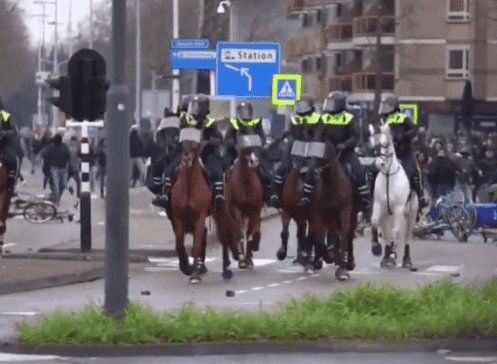
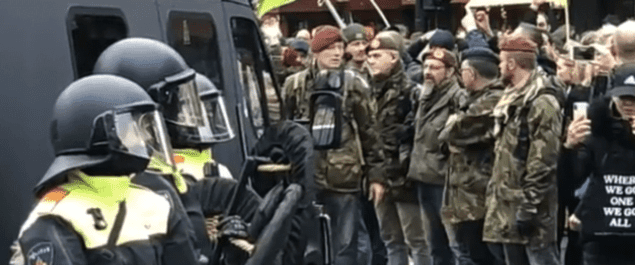
The rally was organized by a right-wing activist group demanding stricter migration policies and tougher action against asylum seekers. Protesters carried Dutch national flags as well as banners and flags associated with far-right movements.
The demonstration turned violent when large groups clashed with police, escalating into widespread chaos. The clashes underscore how migration has become one of the most polarizing issues in Dutch politics.
Far-Right Targeting Political Parties
During the violence, protesters also targeted political offices. The headquarters of the centre-left D66 party was attacked, with its windows smashed and property inside extensively damaged.
D66 party leader Rob Jetten condemned the attack, warning protesters to “stay away from political parties.” He stated on social media platform X:
‘if you think you can intimidate us , tough luck. we will never let extremist rioters take away our beautifull country,”
Party officials confirmed that no staff members were inside the D66 building at the time of the attack.
Migration Dispute Behind Political Tensions
The protests come amid heightened political instability in the Netherlands. In June, the Dutch government collapsed after Geert Wilders withdrew his far-right PVV party from the governing coalition due to disagreements over migration policy.
Wilders had pushed for 10 new asylum restrictions, including freezing asylum applications, halting construction of reception centers, and limiting family reunification rights. These proposals sparked deep divisions within the coalition, ultimately leading to its collapse.
The government had only been in power for less than a year before it broke down, leaving migration policy as one of the most contentious issues ahead of the October elections.
Public Opinion and Upcoming Election
With immigration dominating political debates, Geert Wilders’ PVV continues to perform strongly in opinion polls. The weekend’s violent protests are expected to further intensify discussions on migration and security in the run-up to the election.
READ ALSO- Cardi B Opens Up About Cheating Rumors on Her Second Album
While many Dutch citizens are calling for stricter asylum rules, the violence in The Hague has drawn widespread criticism. Even right-wing leaders like Wilders, who campaign for tighter immigration controls, have distanced themselves from the violent methods employed by demonstrators.
A Nation Divided
The Hague protests illustrate the deep divisions within Dutch society over immigration. For some, migration is seen as a strain on national resources and social cohesion, while others argue that asylum is a humanitarian obligation.
The violent clashes between police and protesters demonstrate how this debate has moved beyond parliament into the streets. As the election nears, both supporters and critics of immigration will likely make their voices heard, but leaders across the spectrum are urging demonstrations to remain peaceful.