
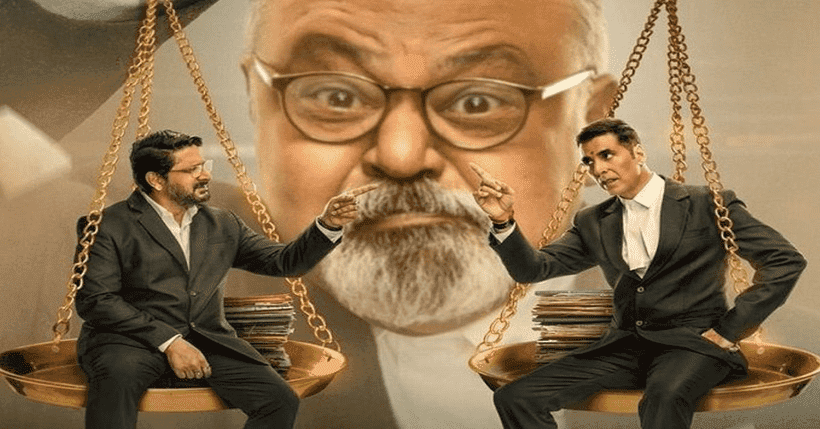
Jolly LLB 3, directed by Subhash Kapoor, hit theatres on 19th September, featuring Akshay Kumar, Arshad Warsi, Saurabh Shukla, Gajraj Rao, Ram Kapoor, and Seema Biswas.
‘Jolly LLB 3’ tackles a timely and sensitive issue—the struggles faced by farmers in India. Inspired by the 2011 Bhatta-Parsaul incident, where farmers opposed forced land acquisition by the UP government, the film transforms this real-life conflict into a gripping courtroom drama that is both engaging and thought-provoking.
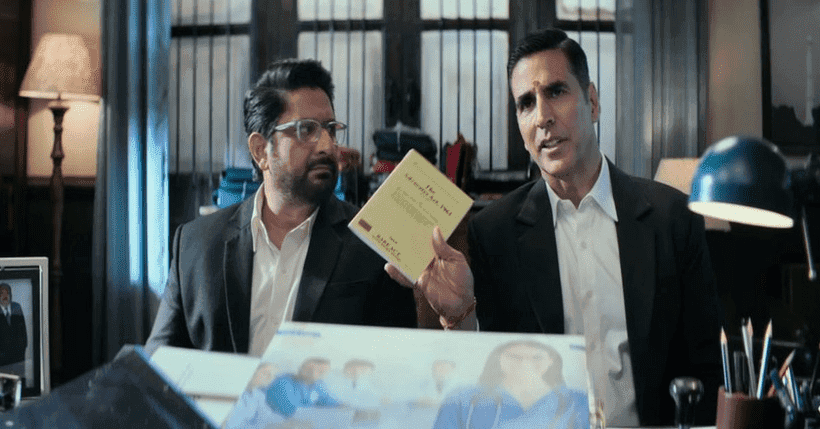
A Courtroom Drama with a Powerful Message Jolly LLB 3
Director Subhash Kapoor once again proves his strength in storytelling, blending humor with intense drama to deliver an engaging narrative. The major highlight is the much-awaited reunion of Arshad Warsi and Akshay Kumar, who previously played Jolly in separate installments. Their on-screen camaraderie adds freshness and energy, as their witty banter, playful antics, and effortless chemistry bring a lighter touch to the film—even when dealing with serious themes.
Jolly LLB 3 Highlighting the Farmers’ Struggles
The story opens with a tragic event—a farmer in Bikaner loses his life after his land is seized by Imperial Industry, a company backed by corrupt officials. To ensure control, the company manipulates the system so that all legal cases fall under Delhi’s jurisdiction. Too poor to afford transport, the farmers of Bikaner are forced to march on foot to the capital in search of justice. Hari Bhai Khaitan (Gajraj Rao), the powerful industrialist, offers Rs. 10 lakh in compensation to the farmer’s widow, Janki Solanki (Seema Biswas). She refuses, prompting Khaitan to threaten the entire village’s land. Initially, Jagdishwar Mishra (Akshay Kumar) defends Khaitan, unaware of the full truth. But once he learns of the company’s real motives, he withdraws. Meanwhile, persuaded by his wife, Jagdish Tyagi (Arshad Warsi) takes up Janki’s case. In time, Mishra joins him, and the two Jollys come together in a united fight for justice.

Strong Start, Uneven Execution
Running for about 160 minutes, Jolly LLB 3 opens on a promising note. This time, the courtroom shifts to Delhi, stepping away from the Uttar Pradesh backdrop of the earlier films. The first half is lighthearted, filled with humor and witty exchanges, while the second half dives into more serious territory, tackling the core issue. Director Subhash Kapoor smartly weaves in references to real events, including a playful nod to Vijay Mallya, giving the narrative a contemporary edge. However, the film is not without shortcomings. Despite being pivotal, Seema Biswas remains underutilized, her presence largely confined to the background until a powerful courtroom breakdown in the climax. The story also misses an opportunity to explore the farmers’ lives in greater depth. While their struggle is strongly established at the beginning, the narrative doesn’t sustain that intensity throughout. For a theme so relevant, the treatment occasionally feels surface-level.
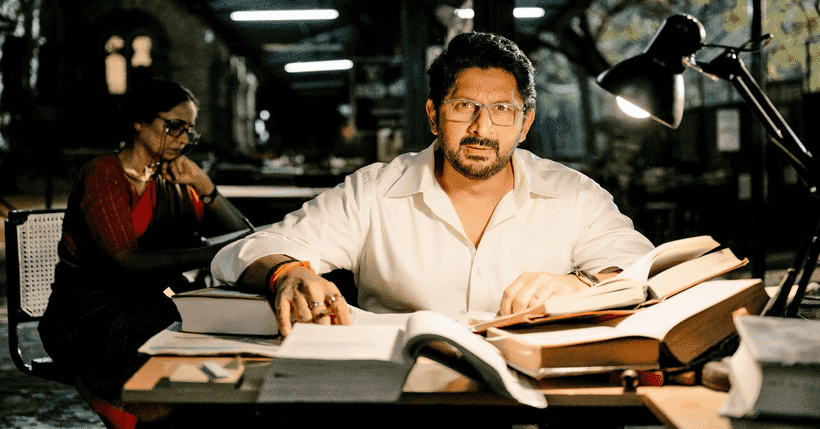
Saurabh Shukla Steals the Show
The true strength of Jolly LLB 3 lies in its performances. Akshay Kumar and Arshad Warsi share the screen with ease, their sharp comic timing and flashes of genuine emotion making their camaraderie believable. Gajraj Rao delivers a strong act as Khaitan, embodying the ruthless businessman driven solely by profit, while Ram Kapoor impresses as the polished opposing lawyer, adding depth to the conflict.
Yet, it is Saurabh Shukla who once again emerges as the heart of the film. As Judge Tripathi, he blends humor with compassion, anchoring the narrative with warmth and authenticity. Subtle details in his portrayal—like a quirky Valentine’s Day celebration—make him not just memorable, but the very soul of the courtroom sequences.
READ ALSO -The Ba**ds of Bollywood* OTT Release Date: Aryan Khan’s Directorial Debut SeriesMissed opportunities, yet an engaging ride
Though entertaining, the film misses a few opportunities to hit harder. The restaurant scene featuring Saurabh Shukla, Akshay Kumar, Arshad Warsi, Huma Qureshi, and Amrita Rao falls flat, and the alcohol-fueled meeting between the two Jollys feels underdeveloped. However, the final 30 minutes in the courtroom make up for these shortcomings. With sharp exchanges, palpable tension, and arguments that push the audience to think beyond the screen, the climax delivers impact.
While Jolly LLB 3 doesn’t explore its theme as deeply as it could, it still resonates with its mix of humor, drama, and moral dilemmas.
Despite its flaws, it stands as a courtroom drama worth watching—powered by compelling performances, a timely message, and moments that linger.