
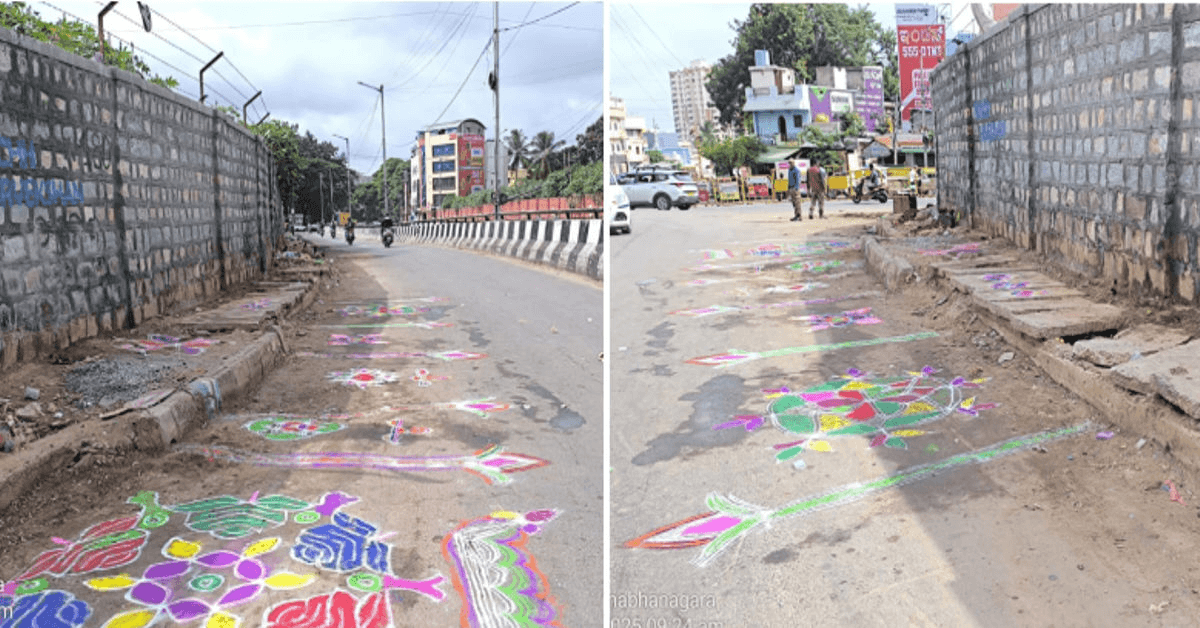
Bengaluru Footpath Cleaned– Days after Canadian national Caleb Friesen posted a viral video documenting the hazardous footpaths in Bengaluru, the local authorities have taken swift action to address the issue. The Greater Bengaluru Authority (GBA) announced that the area highlighted by Mr. Friesen had been thoroughly cleaned and repaired, ensuring safe pedestrian passage for city residents.
Viral Video(Bengaluru Footpath Cleaned) Highlights Dangerous Footpath Conditions
Table of Contents
Caleb Friesen’s video showed the unwalkable footpaths in Bengaluru’s Majestic area during his 2.4 km walk from the Majestic bus stand to a nearby Starbucks. Throughout his walk, he encountered numerous obstacles, including open drains, barbed wire, and what he described as “pavement pudding”—making it nearly impossible for pedestrians to navigate the path safely.
Friesen’s video gained massive attention online, drawing the focus of local residents and authorities alike. The video was a clear reflection of the persistent neglect of pedestrian infrastructure in Bengaluru, one of India’s busiest cities, and raised serious questions about urban planning and maintenance.
Authorities Respond Swiftly
Following the video going viral, the Greater Bengaluru Authority (GBA) issued a statement via X (formerly Twitter), confirming that an intensive cleaning and repair drive had been carried out by the Bengaluru Central City Corporation team. The primary focus was on cleaning and fixing the footpaths in the Majestic area to ensure a clean and safe pedestrian space.
An official statement read:
“Intensive cleaning drive was carried out around Majestic surroundings by Bengaluru central city corporation team focusing on the footpaths to ensure a clean and safe pedestrian space.”
This rapid action by the authorities was widely appreciated, especially given how quickly it followed Friesen’s viral post.
Caleb Friesen’s Response
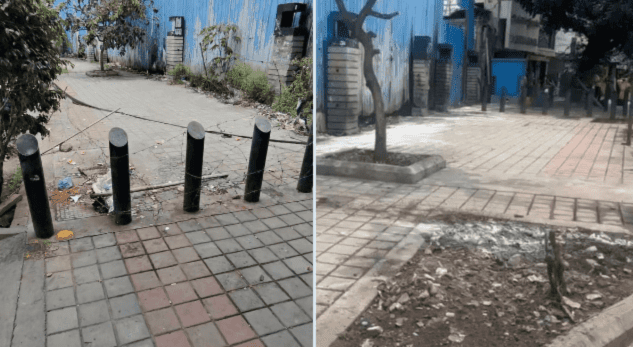
Mr. Friesen expressed his gratitude towards the authorities for taking prompt action. He shared before and after pictures of the footpath, showcasing the remarkable difference made in just a short time.
His post read:
“Thank you for listening and taking rapid action @GBAoffic. No more parkour over barbed wire required by pedestrians before and after.”
Friesen’s engagement with the authorities and the wider public made it clear that his intention was to highlight systemic problems, not just criticize them. His proactive approach focused on constructive solutions rather than merely pointing out flaws.
Mixed Public Reactions on Social Media
After @caleb_friesen2 flagged the poor condition of footpaths around Majestic, #Bengaluru Central Commissioner Rajendra Cholan joined volunteers to clean the stretch & was seen sitting and eating on the same stretch @GBAoffic @THBengaluru pic.twitter.com/QrGLBGoTUa
— Rishita Khanna (@rishitaakhanna) September 13, 2025
The video(Bengaluru Footpath Cleaned) and subsequent cleanup generated mixed reactions on social media platforms. While some praised the authorities for their swift action, others criticized the fact that it took a foreigner to spotlight the problem for the city to act.
One user commented:
“So basically we need to fly in more foreigners to point out your inability to do your job before you get it done.”
Another added:
“So good to see this. The entire city needs this. Go for intensive cleaning every month and involve citizens. If the government does it regularly, surely citizens will join hands.”
A third user expressed skepticism:
“For how long will you be doing it? Or as usual, is it a one-time photo-op?”
These comments reflect a broader frustration among citizens about the inconsistent and reactive nature of urban governance in India.
Caleb Friesen’s Previous Efforts
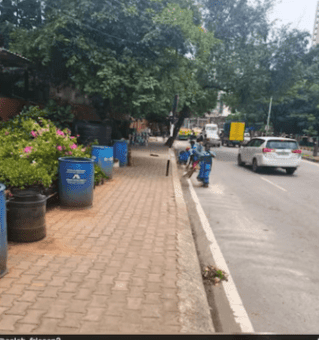
This isn’t the first time Caleb Friesen has sparked public debate in India. Earlier this year, in May, he gained significant attention with his “Polite India Challenge” video. In that video, he urged Indians to practice simple acts of politeness in daily life. His challenge outlined five easy actions designed to improve daily interactions, emphasizing that politeness wasn’t difficult to adopt and could be achieved in a single day.
Friesen’s approach has always focused on constructive engagement rather than criticism. His consistent efforts highlight his genuine interest in improving daily life in India, particularly in urban areas where civic neglect affects millions.
The Bigger Issue of Urban Infrastructure
Caleb’s video sheds light on a long-standing issue in Indian cities—poor pedestrian infrastructure. Open drains, broken footpaths, and other obstacles are a common sight in many urban centers, not just Bengaluru. Despite promises from various city administrations, maintenance and planning often fall short, leaving pedestrians to navigate unsafe paths daily.
READ ALSO- ‘Mirai’- Release Date Returns with Pan-India Fantasy Action-Adventure
Experts argue that urban infrastructure must prioritize pedestrian safety as much as vehicle traffic management. Lack of accountability, poor urban planning, and irregular maintenance cycles exacerbate the problem. Citizens, civil society organizations, and social media activists play a vital role in holding local authorities accountable.
Call for Regular Maintenance and Citizen Participation
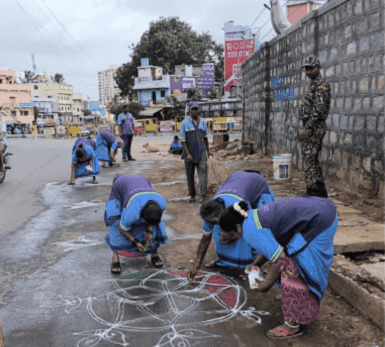
The viral video( Bengaluru Footpath Cleaned) has reignited calls for regular, systematic maintenance of public spaces. Citizens, urban planners, and activists suggest that monthly or quarterly cleaning drives, backed by strong governmental systems and citizen participation, are essential for long-term solutions.
Experts emphasize that public awareness campaigns, stricter regulations for manpower agencies, and more robust urban governance structures are required to prevent such neglect from recurring. The involvement of citizens in reporting issues and monitoring municipal work is crucial to maintaining public infrastructure.
A Step Towards Positive Change
Caleb Friesen’s video and the subsequent action by Bengaluru authorities represent a positive but reactive step toward improving urban infrastructure. While the cleanup is commendable, the incident highlights the systemic neglect faced by pedestrians in India’s fast-growing cities.
The incident serves as a reminder that sustainable solutions require ongoing commitment, regular maintenance, and citizen involvement. Hopefully, this will encourage the authorities to adopt more proactive and long-term strategies rather than responding to issues only after they go viral.