
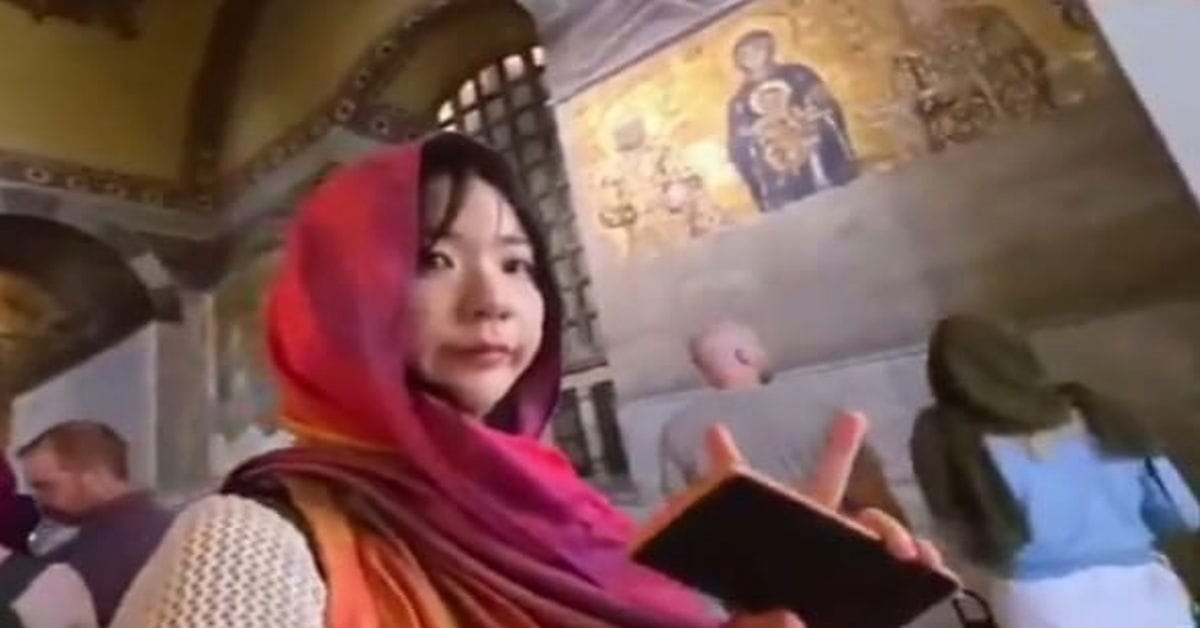
Travel often teaches us lessons that extend beyond beautiful landscapes and famous landmarks. Sometimes, the most meaningful discoveries happen in the smallest, unexpected interactions. This was the case for a South Korean traveler named Tyongeee, who recently found herself in an unusual cultural misunderstanding during her trip to Turkey. What started as a lighthearted video moment quickly turned into an eye-opening lesson about how hand gestures can carry vastly different meanings across cultures.
A Simple Gesture, A Surprising Reaction
While exploring Turkey, Tyongeee—who often documents her journeys on Instagram—began recording a casual video for her followers. In a familiar and playful manner, she flashed the widely recognized “peace sign,” a two-finger gesture that, in most parts of the world, is considered a symbol of peace, victory, or goodwill.

To her surprise, the reaction was immediate. Two local men approached her and politely cautioned her against using the gesture in Turkey. Confused at first, she asked whether recording videos in public places was prohibited. The men clarified that filming was not the issue. Instead, it was the two-finger peace sign itself that carried an unintended and politically charged meaning within the Turkish cultural and political landscape.
One of the men explained:
“In your culture, it means peace. But unfortunately, in Turkey, it’s raised about terrorism.”
Realizing her innocent mistake, Tyongeee immediately apologized, explaining she had no idea the sign was controversial in Turkey. Curious to avoid further misunderstandings, she asked whether another South Korean gesturethe “finger heart” would be acceptable. The men reassured her that such a gesture was perfectly fine and not associated with any negative connotation.
Social Media Reactions: Respect and Understanding
The incident, captured on video, quickly drew attention online. In the comments section of her Instagram post, users praised the respectful way both sides handled the misunderstanding.
One user wrote:
“They were respectful, and so was the girl. That’s how people should talk every time.”
Many viewers appreciated how calmly the conversation unfolded without confrontation, judgment, or hostility. Instead, it became a moment of cultural exchange and learning.
A Turkish Instagram user added more context, writing:
“This sign, of course, was originally a peace sign. However, in our country, since it is often used by terrorist Kurds, it has left a negative impression on the Turkish public. It is not banned, but its use is generally frowned upon, and people may look at you differently. For years, the terrorist Kurds who have caused us great suffering in our country have unfortunately tainted this beautiful sign for us and made it evoke negative feelings. Thank you for your understanding.”
The Deeper Context: Why the Peace Sign Is Controversial in Turkey
To outsiders, the two-finger peace sign is harmless, even friendly. But in Turkey, the symbol has been linked to the Kurdistan Workers’ Party (PKK), a Kurdish militant group that has waged a decades-long armed struggle against the Turkish state. The PKK is designated as a terrorist organization by Turkey, the United States, and the European Union.
Because members and sympathizers of the PKK often use this hand gesture during rallies and demonstrations, it has taken on strong political undertones in Turkey. As a result, the peace sign is sometimes interpreted not as a symbol of harmony but as a political statement of solidarity with Kurdish separatists.
Although using the gesture is not illegal, it can draw unwanted attention and suspicion. Many ordinary Turkish citizens, shaped by years of conflict and violence associated with the PKK, view the sign negatively. This explains why the men who approached Tyongeee felt the need to warn her: they wanted to spare her from accidentally offending locals or facing potential trouble.
The Importance of Cultural Awareness in Travel
This incident highlights a broader truth about travel: what feels natural or innocent in one country may carry completely different meanings elsewhere. Gestures, words, clothing styles, and even colors can be loaded with cultural or political symbolism depending on the local context.
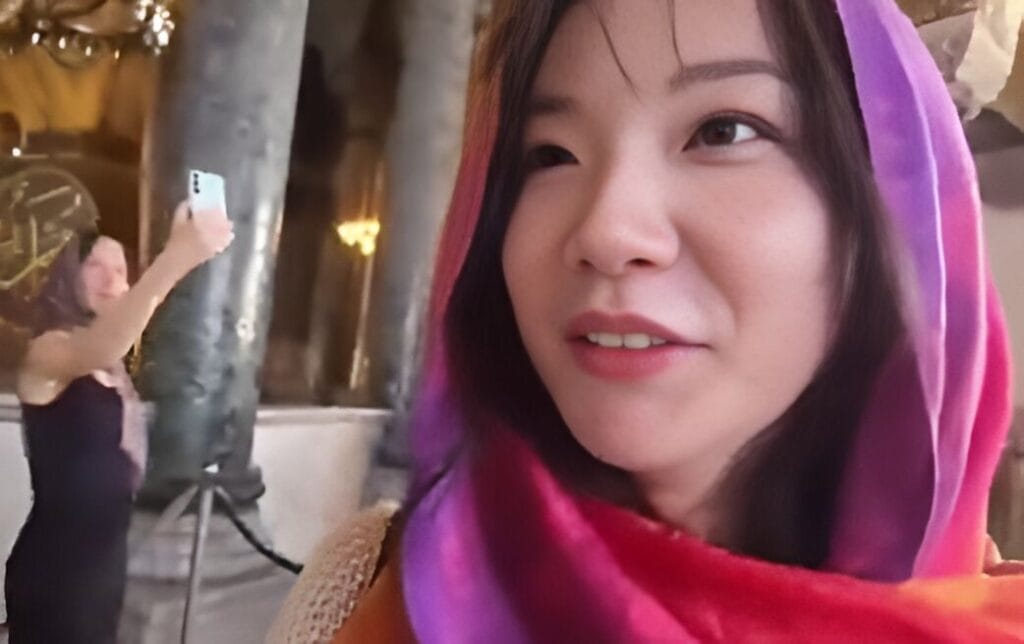
For example:
- In Greece, showing the open palm with fingers spread (known as the moutza) is considered highly offensive, unlike in other cultures where it might simply mean “stop.”
- In Thailand, touching someone’s head—even a child’s—is seen as disrespectful because the head is considered sacred.
- In India, pointing feet at someone is considered rude, as feet are associated with impurity.
- In Japan, casually sticking chopsticks upright into rice is avoided because it resembles a funeral ritual.
What Tyongeee experienced in Turkey is a reminder that travelers must always approach other cultures with humility and curiosity. Asking questions, observing locals, and being willing to learn can help avoid misunderstandings and deepen connections with people around the world.
A Positive Takeaway
Despite the awkwardness of the situation, the outcome was overwhelmingly positive. Tyongeee not only avoided further mistakes but also gained a deeper understanding of Turkish cultural sensitivities. The respectful exchange showed that cultural gaps can be bridged with patience and kindness.
Her experience also sparked valuable conversations online, educating others about the nuances of hand gestures and the importance of cultural sensitivity while traveling. Many praised her openness to correction and the polite way the locals handled the situation.
Travel is more than sightseeing—it’s about understanding the world in all its complexity. Tyongeee’s story serves as a reminder that small gestures can carry big meanings, and cultural awareness is as essential as a passport when exploring new countries.
In Turkey, the “peace sign” may not always symbolize harmony, but the respectful dialogue between a South Korean traveler and Turkish locals certainly did. Through listening, learning, and apologizing when necessary, Tyongeee turned a potential conflict into a moment of genuine cultural exchange.