
Air travel is often stressful, but for a Mumbai-based woman, a routine late-night flight turned into an ordeal that left her feeling humiliated, shaken, and disillusioned. What was supposed to be a simple journey became a deeply uncomfortable experience after an IndiGo First Officer allegedly barged into the aircraft lavatory while she was using it, only for the crew to downplay the incident.
The passenger, Rhea Chatterji, co-founder of the gold merchandise platform Safegold and an alumna of the prestigious London School of Economics, shared her account in a now-viral LinkedIn post. Her detailed narration has sparked intense debate on social media about airline accountability, women’s safety, and the casual manner in which serious complaints are often handled.
The Incident: A Disturbing Breach of Privacy
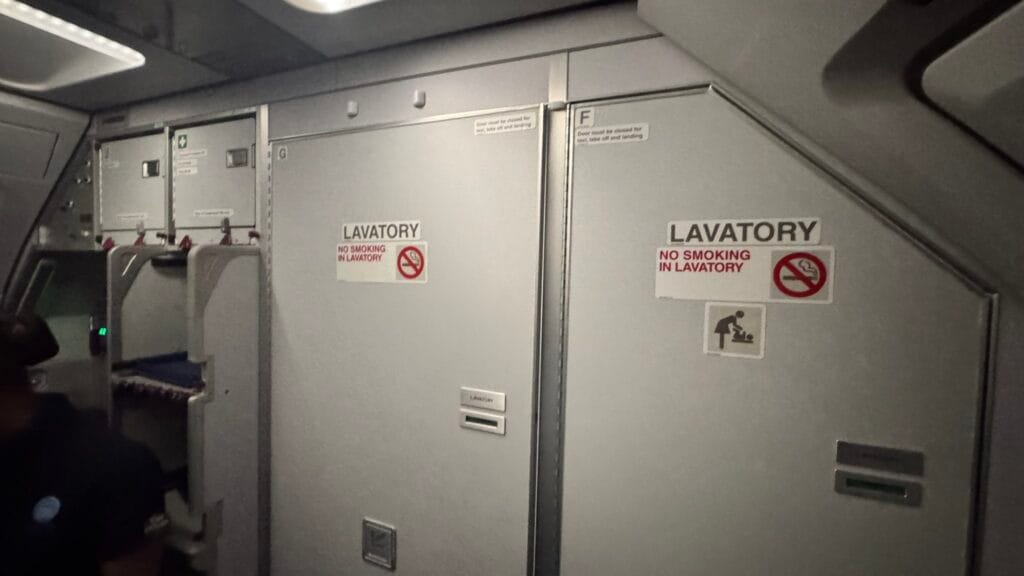
According to Chatterji, the incident took place on 8 August when she boarded a late-night IndiGo flight. Shortly after takeoff preparations, she proceeded to use the forward lavatory on the aircraft.
“I locked the door and, once seated, heard a knock, which I replied to. Shortly after, there was another knock, which I replied to more loudly. Before I’d even fully spoken, the door was forcibly opened, and a male crew member was gazing directly at me while I was in a vulnerable state. He simply said ‘oh’ and shut the door,” she wrote.
That “male crew member” turned out to be none other than the First Officer (co-pilot) of the flight. For Chatterji, the shock was not only in the sudden violation of her privacy but also in how the airline staff treated the matter afterward.
Chatterji alleged that instead of acknowledging the seriousness of what had occurred, the flight attendants minimized her distress.
“I felt shocked and utterly violated. To make matters worse, the female flight attendants then tried to downplay the incident, saying they were sorry for the ‘inconvenience’ and were sure ‘he hadn’t seen anything’,” she recounted.
She went on to explain that she spent the remainder of the 90-minute flight in discomfort and unease, repeatedly requesting not to be engaged in further conversation with the crew. Instead of support, she said, she was met with dismissive assurances.
Even when she asked to meet the Captain and First Officer for clarification, the arrangement left her more anxious. “The Captain and the First Officer were absent, and I was instead told to meet them inside the cockpit. Every woman reading this will certainly understand why the thought of that caused even greater anxiety for me,” she wrote.
Post-Flight Communication: Corporate Jargon Over Compassion
After landing, Chatterji reached out to IndiGo’s leadership team in hopes of a sincere resolution. Instead, she says, the airline’s responses only deepened her disappointment.

“Sadly, IndiGo’s idea of making this right was a few calls repeating this was an inconvenience and an email paying lip service full of corporate jargon, saying the individual conveyed ‘profound remorse’. Not once was this remorse or regret conveyed directly,” she explained.
Eventually, the airline offered her a refund and vouchers, but Chatterji clarified that her intention in highlighting the incident was never about monetary compensation.
“This post isn’t for IndiGo. It is for everyone on my network, especially women and those with young children. IndiGo has clearly demonstrated that if your flight is incident-free, it’s because you took every precaution, presuming the worst – not because IndiGo cared,” she wrote in her LinkedIn post.
IndiGo’s Official Response
In response to the viral post, IndiGo issued an apology. The airline called it an “inadvertent mistake” by the First Officer and assured that corrective measures had been taken.
“Ms Chatterji, we profoundly apologise once again for the experience you went through due to an inadvertent mistake by one of our crew. Please be assured that your feedback has been taken with utmost seriousness. At IndiGo, safety, dignity, and comfort of our customers remain our highest priority. We assure you that the crew has been counselled and sensitised, and we are reinforcing training to ensure such incidents are never repeated,” the statement read.
However, the apology did little to convince the public. Many LinkedIn users found the response lacking, particularly because it downplayed the severity of the incident by framing it as a mere inconvenience.
The post quickly gained traction on social media, where users expressed anger, empathy, and disappointment with the airline’s handling of the matter.
“This is appalling. No one should have to go through such a violation, and the way it was handled makes it worse. Privacy and dignity should never be treated as an ‘inconvenience’,” one user wrote.
Another user, sharing her own experience, said: “Reading this gave me a knot in my stomach… I’ve had a similar experience and was so scared that now, every time I use an aircraft loo, I keep my arm stretched out against the door just in case. That tiny habit saved me from embarrassment once, but it shouldn’t have to be a reflex for women flying. What makes this worse is that these aren’t just ‘accidents’. Aircraft loos are designed with a red indicator when occupied. How could a First Officer of all people ignore that?”
Others highlighted that the issue was not just about one incident but about systemic apathy. “This sorry state of apathy runs across industries. Speaking up for such wrongs will someday bring about the necessary change in attitudes,” one commenter said.
Broader Concerns: Safety, Sensitivity, and Trust
The outrage surrounding the incident underscores a larger concern: the erosion of passenger trust when airlines fail to respond with sensitivity and transparency. While mistakes can happen, critics argue that dismissing such incidents as “inconveniences” shows a lack of empathy.
The fact that the alleged offender was a First Officer—a position associated with high levels of training and responsibility—makes the incident even more alarming. Social media users pointed out that aircraft lavatories are equipped with occupancy indicators, and a trained pilot should have been aware of these systems.
Chatterji’s experience resonated with many because it touched on multiple issues:
- Women’s safety in public spaces, including the highly controlled environment of an aircraft.
- Corporate responses to customer grievances, often marked by jargon and lack of accountability.
- The gap between brand promises and real passenger experiences.
Her post was not merely about a single incident but a commentary on how companies often fail to prioritise dignity and respect when addressing customer complaints.
The IndiGo lavatory incident has sparked a wider debate on the importance of sensitivity training, accountability, and respect for passenger privacy. For Chatterji, the violation was compounded not just by what happened in the lavatory but by the dismissive way it was handled afterward.
As she put it, “IndiGo has clearly demonstrated that if your flight is incident-free, it’s because you took every precaution, presuming the worst – not because IndiGo cared.”
Her words serve as both a warning and a call for change. If airlines—and companies at large—wish to retain the trust of their customers, they must go beyond scripted apologies and show genuine accountability. For passengers, especially women, the expectation is simple: dignity and safety should never be negotiable, even at 30,000 feet.