
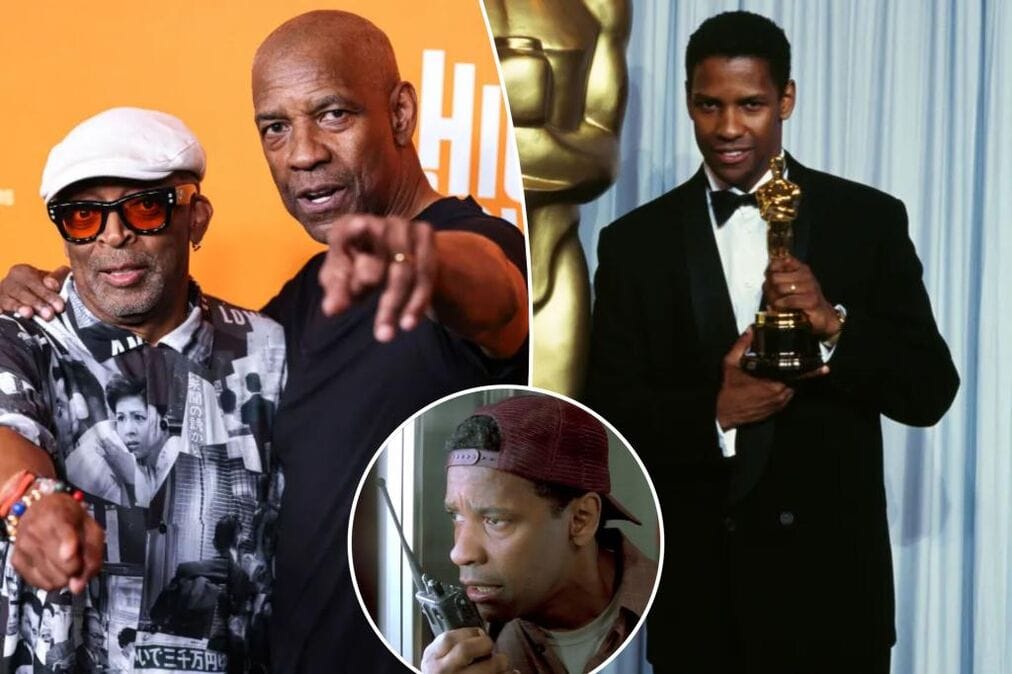
Hollywood legend Denzel Washington has once again reminded audiences why he remains one of the most respected voices in film and beyond. In a candid conversation alongside longtime collaborator Spike Lee, the two-time Academy Award winner addressed one of the most hotly debated topics of today: cancel culture.
During a video interview, Washington was asked whether he ever worried about “being cancelled.” Instead of offering a cautious or politically calculated answer, the actor-director leaned into his trademark authenticity. “What does that mean—to be cancelled?” Washington countered, visibly unbothered by the notion. When the interviewer clarified that cancellation typically refers to a loss of public support, Washington’s response was simple yet powerful: “Who cares?”
He then followed with a deeper reflection, questioning the value society places on public validation. “What made public support so important to begin with?” he asked. For Washington, external approval is fleeting and unreliable, while spiritual grounding offers something far more enduring.
Faith Over Public Opinion
For decades, Washington has been outspoken about the role his faith plays in his life and career. His latest remarks underscored that perspective. “I don’t care who’s following who,” he said. “You can’t lead and follow at the same time, and you can’t follow and lead at the same time. I don’t follow anybody. I follow the heavenly spirit. I follow God, I don’t follow man.”
The veteran actor went further, expressing his hope in humanity while also acknowledging its flaws. “I have faith in God. I have hope in man, but look around, it ain’t working out so well.” His voice sharpened as he concluded with a message that resonated with many: “You can’t be cancelled if you haven’t signed up. Don’t sign up.”
In a rare moment of vulnerability, Washington admitted that even discussing the subject made him uneasy. “My chest started hurting. You know, chest is getting tight talking about it,” he said, half in jest, half in earnest.
A Storied Career Without the Need for Validation
With nine Academy Award nominations and two wins—for his roles in Glory (1989) and Training Day (2001)—Washington’s career is nothing short of remarkable. Yet, he has consistently dismissed the idea that awards or public accolades define his success.
In a recent interview with Variety, Washington reiterated that stance: “I don’t do it for Oscars. I don’t care about that kind of stuff. I’ve been at this a long time, and there’s times when I won and shouldn’t have won, and then didn’t win and should’ve won. Man gives the award. God gives the reward.”
His humility is perhaps best captured in his casual remark about the location of his trophies: “People ask me, ‘Where do I keep [my Oscars]?’ Well, next to the other one. I’m not bragging—just telling you how I feel about it. On my last day, [Oscars] aren’t going to do me a bit of good.”
This grounded outlook separates Washington from many Hollywood figures who often appear deeply invested in industry recognition. For him, true fulfillment lies in craft, faith, and legacy rather than accolades.
Washington’s comments came while promoting his latest collaboration with acclaimed director Spike Lee. The pair share a long and fruitful history, having worked together on classics like Mo’ Better Blues (1990), Malcolm X (1992), and He Got Game (1998). Their reunion after nearly two decades has generated considerable excitement among cinephiles.
Their newest project, Highest 2 Lowest, marks their fifth collaboration. The A24 and Apple-produced film is a reinterpretation of Akira Kurosawa’s 1963 classic High and Low. In this modern retelling, Washington stars as a powerful music mogul who becomes the target of a sophisticated ransom plot.
Lee has hinted that this won’t be their final project together, signaling that one of cinema’s most iconic director-actor duos still has much more to offer.
Cancel Culture: A Broader Context
Washington’s stance arrives at a time when cancel culture continues to polarize public discourse. For some, cancellation represents accountability, particularly for celebrities and public figures who wield significant influence. For others, it has become synonymous with censorship and mob-driven punishment, where mistakes—sometimes decades old—are amplified beyond proportion.
By distancing himself from the fear of losing public favor, Washington presents a philosophy rooted not in resistance to accountability but in prioritizing personal integrity and spiritual conviction. His message is clear: the approval of the masses is fleeting, but one’s values and faith are permanent.
This outlook resonates in a cultural climate where social media trends can elevate or destroy reputations overnight. Washington’s refusal to “sign up” for that cycle of validation is not only refreshing but also a reminder of his old-school approach to stardom—where talent, discipline, and principles take precedence over popularity metrics.
Why Washington’s Words Matter
At 69, Denzel Washington remains an influential figure whose voice carries weight well beyond the entertainment industry. He embodies a rare combination of critical acclaim, box office success, and moral authority. His words on cancel culture are not a dismissal of societal change but a call for individuals to anchor themselves in something more enduring than digital approval.
As Hollywood continues to wrestle with issues of representation, accountability, and shifting public expectations, Washington’s philosophy provides a counterbalance. He reminds both audiences and fellow actors that careers should not be built—or destroyed—on the whims of social media but on dedication, craft, and a deeper sense of purpose.
Denzel Washington’s reflections on cancel culture serve as more than just a headline; they’re a window into the mindset of a man who has spent over four decades navigating fame without letting it define him. “You can’t be cancelled if you haven’t signed up,” he declared, offering advice that extends well beyond Hollywood.
With his faith in God, his commitment to storytelling, and his refusal to be swayed by public opinion, Washington continues to prove why he is one of the most respected figures in global cinema. As audiences flock to see his latest performance in Highest 2 Lowest, his words may linger even longer than the credits, reminding us all of the importance of staying true to one’s values in a world obsessed with approval.