
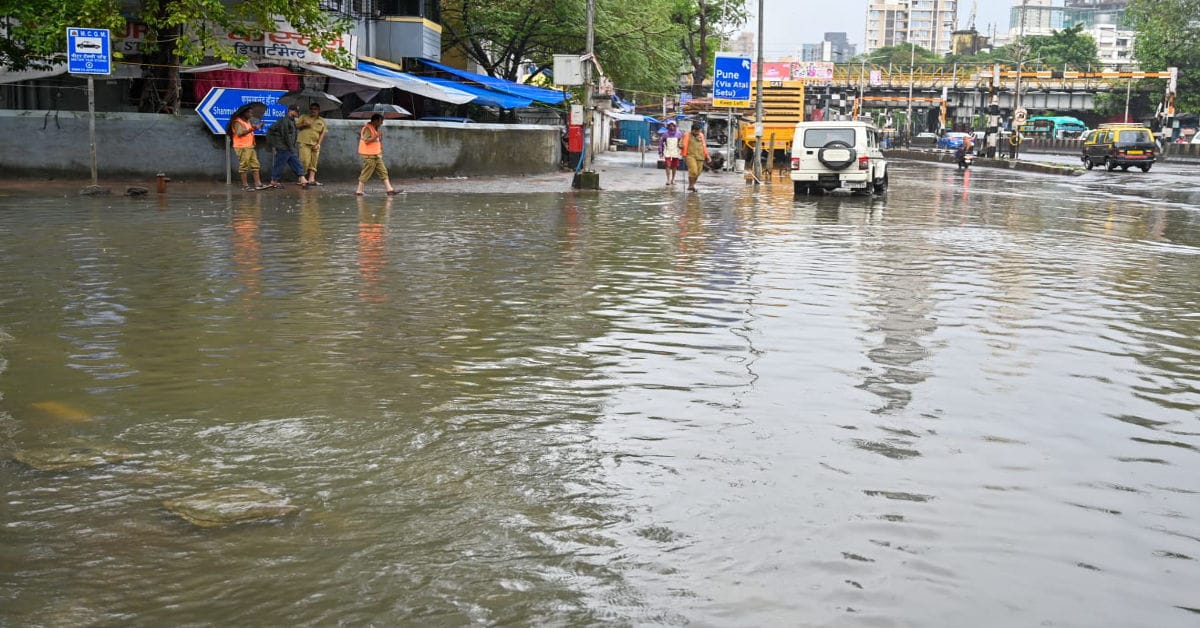
Mumbai continued to reel under relentless monsoon showers for the third consecutive day on Monday, with heavy rainfall once again disrupting daily life across the city and its suburbs. The India Meteorological Department (IMD) has issued a ‘red’ alert for Mumbai and the adjoining suburban districts, warning of heavy to very heavy rainfall over the next few hours.

The intense downpour, which began overnight, led to waterlogging in several parts of the city, delayed suburban train services, and forced traffic diversions on key routes. For Mumbaikars, it was yet another reminder of the monsoon’s grip on the city that never quite slows down but always feels the strain when the rain gods arrive in full force.
Heavy Rainfall Prompts Red Alert
According to IMD data, Mumbai witnessed widespread rainfall over the past 24 hours ending at 8:30 am on Monday. The Santacruz weather station, which represents the suburbs, recorded 99 mm of rain, while the Colaba observatory in South Mumbai registered 38 mm.
The Brihanmumbai Municipal Corporation’s (BMC) network of automatic weather stations showed uneven distribution of rainfall across the city. The eastern suburbs recorded the highest average with 60.57 mm, followed by the western suburbs with 52.30 mm, while the island city division measured 45 mm.
The IMD has placed the city under a ‘red’ alert, which signifies the likelihood of extremely heavy rainfall in isolated places. Officials cautioned that the downpour is expected to continue in the short term and urged residents to remain alert, especially those in low-lying areas prone to flooding.
Train Services Hit, Delays Reported
The city’s lifeline—its suburban rail network—was not spared from the weather’s impact. Local trains on both the Central and Western Lines were reported to be running late by around 10 minutes due to heavy rainfall and water accumulation along sections of the track.
Though services were not fully disrupted, the delays caused inconvenience for thousands of commuters rushing to work on Monday morning. The authorities said they were monitoring the situation closely and would take necessary measures to ensure commuter safety if water levels along tracks rose further.
Given the reliance of nearly 80 lakh passengers on Mumbai’s suburban trains each day, even minor delays ripple across the city’s tightly packed commute schedule, underlining how critical uninterrupted rail operations are to Mumbai’s daily functioning.
Waterlogging Forces Traffic Diversions
The heavy rain also left a significant mark on Mumbai’s road traffic. One of the worst-hit stretches was the Andheri subway, which had to be completely shut for vehicular movement on Monday due to severe waterlogging. Both lanes of the subway were submerged, forcing authorities to divert traffic through alternate routes.
The Mumbai Traffic Police announced that vehicles would be rerouted via the Thackeray bridge and Gokhale bridge until conditions improved. Commuters traveling through western suburbs faced longer travel times as bottlenecks formed around the diversions.
Elsewhere in the city, waterlogging was reported near Vakola bridge, Hyatt Junction, and Khar subway, further adding to traffic snarls. The situation was particularly difficult during peak morning hours, with long queues of vehicles moving slowly through the affected zones.
A Familiar Monsoon Story
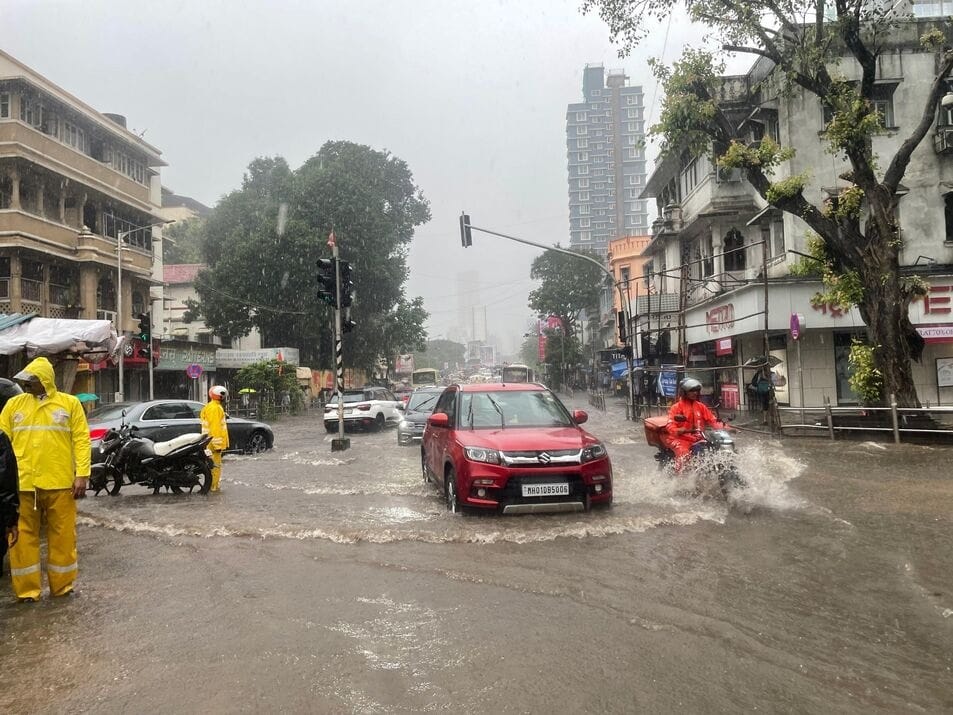
For Mumbai, heavy monsoon rains and the chaos they bring are nothing new. Each year, the city faces the dual challenge of managing its overwhelming water volumes while keeping its urban machinery running. The IMD’s red alert serves as both a warning and a reminder: while the city is used to rain, preparedness remains vital.
The BMC, which manages the city’s civic infrastructure, said that pumping stations were working at full capacity to drain waterlogged areas. Efforts were also underway to clear choked drains and prevent further flooding. Still, the sheer intensity of rainfall in short bursts often overwhelms the city’s drainage system, leaving commuters stranded in knee-deep water in some areas.
Citizens Caught in the Middle
For residents, the downpour translated into another day of navigating flooded roads, delayed trains, and uncertain commutes. Office-goers and students were among those worst affected, with many reporting extended travel times.
Social media platforms quickly filled with images and videos of flooded streets, stranded vehicles, and crowded train stations, reflecting the widespread impact. Some residents expressed frustration at what they described as an annual failure to manage monsoon woes, while others highlighted the resilience of Mumbaikars who continue to adapt to the seasonal disruptions.
Looking Ahead
With the IMD predicting heavy to very heavy rainfall in the immediate future, authorities have urged citizens to stay indoors as far as possible, avoid waterlogged zones, and pay attention to official advisories.
ALSO READ- MrBeast Sets New Guinness World Record, Raises ₹100 Crore for Charity in Livestream
Emergency teams, including those from the BMC, police, and disaster response units, have been put on alert to respond quickly to incidents of flooding, traffic congestion, or accidents. Hospitals and health centers have also been advised to remain prepared for emergencies.
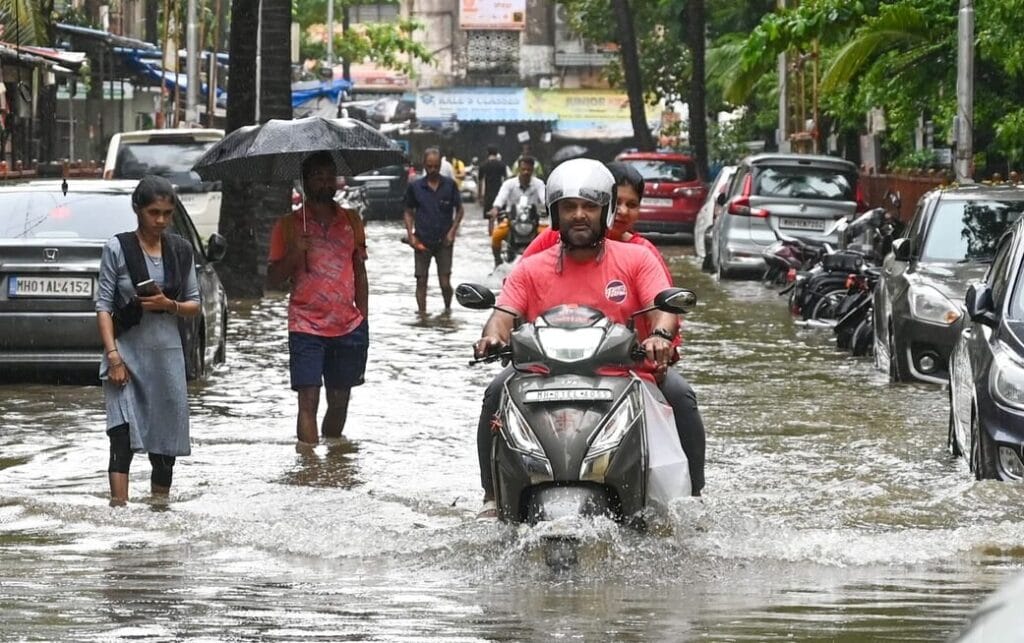
While the rains bring much-needed relief from the summer heat and replenish reservoirs that supply water to Mumbai, they also highlight the vulnerabilities of a city that balances immense population density with aging infrastructure.
As Mumbai continues to grapple with intense rainfall, the familiar challenges of flooded streets, delayed trains, and choked traffic are once again at the forefront. Monday’s showers, coupled with the IMD’s red alert, serve as a stark reminder of the city’s perennial struggle with the monsoon.
For now, residents are left to adapt, as they do every year—navigating alternate routes, checking live train updates, and bracing themselves for the unpredictability that comes with the rains.
What remains constant is the resilience of Mumbaikars, who despite the disruption, find ways to carry on, often with umbrellas in hand and determination in spirit. But as the downpour continues, the hope is that preparedness and swift response from authorities can ensure safety and minimize disruption until the skies finally clear.