

At anti-Israel demonstrations worldwide, a common chant is “Globalize the Intifada.” But what does this slogan actually mean? How is it connected to past Palestinian violence against Israel, and why do many see it as a threat that could lead to attacks on Jews today? Here’s an explanation.
What Does “Globalize the Intifada” Mean?
“Globalize the Intifada” is a slogan used by some pro-Palestinian activists that calls for resistance against Israel and its supporters. Because past intifadas have often involved violence, the phrase is widely understood as encouraging attacks on Israelis, Jews, and institutions linked to Israel. Even if an individual using the phrase intends it differently, the impact on Jewish communities is one of fear and perceived incitement to violence.
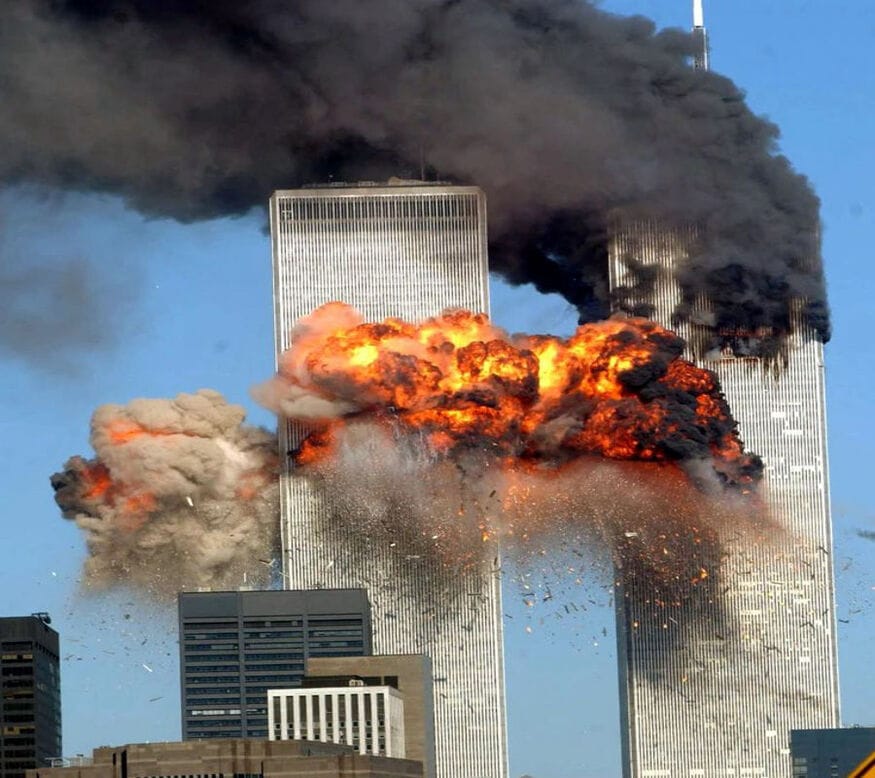
What is an Intifada?
The Arabic word “Intifada” translates to “uprising” or “shaking off.” It refers to periods of Palestinian resistance against Israel, often marked by violence and terrorism. The two most notable intifadas were the First Intifada (1987–1990) and the Second Intifada (2000–2005).
The First Intifada involved widespread Palestinian protests, civil disobedience, and acts of violence and terrorism targeting Israelis.
The Second Intifada, also known as the Al-Aqsa Intifada, erupted in September 2000 and lasted until 2005. It was a period of intense conflict characterized by large-scale demonstrations, suicide bombings, and terrorist attacks. Nearly 1,000 Israelis were killed or injured in attacks, including bombings on buses and in civilian areas.
The slogan “Globalize the Intifada” extends this concept beyond the Middle East, urging people worldwide to “rise up” against Israel. Because the term Intifada is strongly associated with violence during these uprisings, its use today is often interpreted as incitement. It risks encouraging attacks on institutions and individuals linked to Israel—many of whom are Jewish. Incidents of violence against synagogues, Jewish homes, and cultural centers highlight why advocates for Palestinian rights should use caution and avoid rhetoric that can be perceived as a call for violence.
Where Is the Phrase Being Used Today?
Calls to “Globalize the Intifada” fuel the perception that people worldwide must take action against supporters of Israel. While many demonstrations using this slogan have remained peaceful, some have escalated into violence targeting Jews and Jewish institutions.
The phrase has appeared at numerous high-profile rallies, including in New York City’s Times Square, outside the Israeli Consulate in Manhattan, in central London, and along Eastern Parkway in Brooklyn near Crown Heights—a neighborhood with a large Hasidic Jewish community and home to the Chabad-Lubavitch movement. A particularly alarming example occurred in Amsterdam, where mobs carried out a violent “Jew hunt” against Israeli and Jewish soccer fans. Incidents like these have prompted organizations such as the AJC to urge European leaders to prioritize combating anti-Jewish hate.
On college campuses, the chant has become a rallying cry within anti-Israel protests. At Harvard University, demonstrators shouted “Long live the Intifada” during a pro-Palestinian rally, sparking both support and backlash. Similar chants surfaced during the volatile encampments at Columbia University in spring 2024, where protests often turned hostile. At UC Berkeley, tensions grew so severe that police had to escort Jewish students to safety after chants of “Long live the Intifada” created an unsafe environment.

What Has Zohran Mamdani Said About “Globalize the Intifada”?
New York State Assemblyman Zohran Mamdani, fresh off his Democratic primary victory for New York City mayor, is facing growing criticism for refusing to condemn the slogan “Globalize the Intifada”—a phrase widely viewed as incitement to violence against Jews. Pressed multiple times on NBC’s Meet the Press, Mamdani declined to denounce the chant, saying only, “That’s not language that I use,” and arguing it is not the mayor’s role to “police language.” Moderator Kristen Welker countered, noting that both Jews and non-Jews widely interpret the phrase as a call to violence.
Mamdani had earlier defended the slogan on The Bulwark podcast, portraying it as a misunderstood call for Palestinian rights and even pointing to the Holocaust Museum’s use of “Intifada” in Arabic translations. This justification drew sharp criticism from AJC CEO Ted Deutch, who called the comparison “offensive and outrageous.”
In a post on X, Deutch strongly rebutted Mamdani’s stance: “‘Globalize the Intifada’ is not a call for justice; it is a call for violence.” He reminded followers that the First and Second Intifadas were marked by Hamas’s rise and deadly suicide bombings targeting Israeli civilians, adding, “Calls for ‘Globalize the Intifada’ are calls to attack Jews.” Deutch dismissed Mamdani’s “speech policing” defense as a distraction, stressing that “every candidate for every office should and must decry antisemitism and all forms of hate.” He warned that failing to condemn such rhetoric—especially amid rising antisemitic attacks—sends a dangerous message: “This is not about politics. It is about safety. And community.”
How Is the Phrase Being Used to Target Jewish Institutions?
Since Hamas’s October 7 massacres in Israel and the subsequent war in Gaza, Jewish individuals, synagogues, and cultural institutions have increasingly been targeted in the name of “protests” against Israel. Beyond demonstrations, anti-Israel activists have also directed hostility toward corporations and institutions doing business with Israel.
One example came from the anti-Israel group Within Our Lifetime, a self-described Palestinian-led community organization. In a social media post headlined with the phrase “Globalize the Intifada,” the group shared a map highlighting targets in New York City. The locations included The New York Times, Penn Station, Grand Central Station, the investment firm BlackRock, and the Israeli tech company Check Point.
READ ALSO – Harvard Study: Stalking Raises Women’s Heart Attack Risk by 41%
“Each of the locations on this map reflects the office of an enemy of both the Palestinian people and colonized people all over the world,” the group declared. “Today and beyond, these locations will be sites for popular mobilization in defense of our people. May this map serve as a call for every struggle to act in their own interest. As we do so, we uplift one another’s struggles and free Palestine from the river to the sea.”
AJC CEO Ted Deutch condemned the post, warning: “This is not promoting peace. This is an incitement to violence against Jews, and it must be taken seriously.”
The map was just one of several the group circulated online. Within Our Lifetime has openly praised Hamas’s October 7 attacks as “whatever means necessary” for Palestinian liberation, while regularly organizing anti-Israel street protests. Additional maps they shared pinpointed the offices of Jewish and Jewish-led organizations, further raising fears of targeted violence.
This tactic is not new. In June 2022, activists published the so-called Boston Mapping Project, a campaign claiming to expose ties between Massachusetts institutions and “support for the colonization of Palestine.” Promoted by groups such as Boston BDS and Massachusetts Peace Action, the project effectively painted targets on Jewish organizations and community leaders, alarming a Jewish community already deeply concerned about its safety.