
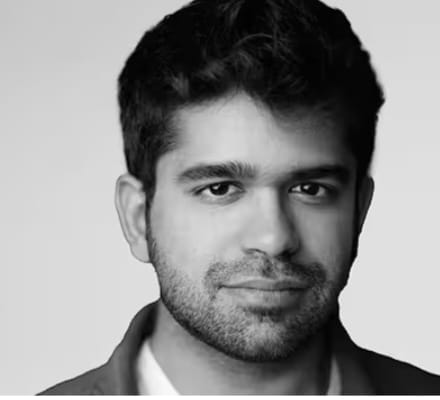

Aravind Srinivas: The Perplexity AI CEO Behind a Bold $34.5B Google Chrome Bid Aravind Srinivas, the visionary CEO of Perplexity AI, has emerged at the center of a jaw-dropping $34.5 billion offer to acquire Google Chrome — a proposal that has stunned the tech world. The bid is more than double Perplexity’s own $14 billion valuation and has captured global attention not just for its size, but for the significance of the target.
With over three billion users worldwide, Chrome is far more than just a browser. It’s the primary gateway to Google’s lucrative search, advertising, and cloud services. For a three-year-old AI startup to make such a daring move is unprecedented and has sparked intense debate among investors, analysts, and industry insiders.
Who is Aravind Srinivas?
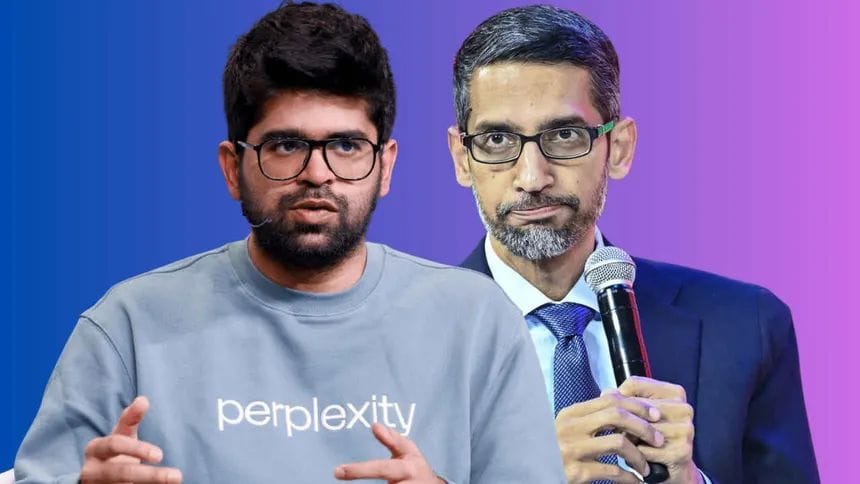
Born in Chennai, India, Aravind Srinivas has built an impressive trajectory in both academia and industry. He began his higher education at the Indian Institute of Technology (IIT) Madras, where he earned dual degrees — B.Tech and M.Tech — in electrical engineering. His academic ambitions then took him to the United States, where he pursued a Ph.D. in computer science at the University of California, Berkeley.
At Berkeley, his doctoral research, “Representation Learning for Perception and Control,” was supervised by renowned AI pioneer Pieter Abbeel. His work focused on advanced machine learning techniques, laying the foundation for what would become his vision of AI-powered search.
Beyond academia, Aravind Srinivas gained practical experience through roles at some of the world’s most respected AI organizations, including OpenAI, Google Brain, and DeepMind. He also collaborated with influential AI researcher Yoshua Bengio early in his career, further expanding his understanding of deep learning and large-scale AI systems.
Founding Perplexity AI
In 2022, Aravind Srinivas co-founded Perplexity AI alongside Denis Yarats, Johnny Ho, and Andy Konwinski. The startup’s mission was clear from the outset — to rethink how people search for information. Instead of returning a list of links, Perplexity’s AI-powered search engine delivers direct, conversational answers using real-time data.
This approach challenges the traditional model of search engines, which have long been dominated by Google. By focusing on instant, context-rich responses, Perplexity aims to give users faster, more accurate, and more intuitive results.
The $34.5 Billion Chrome Bid
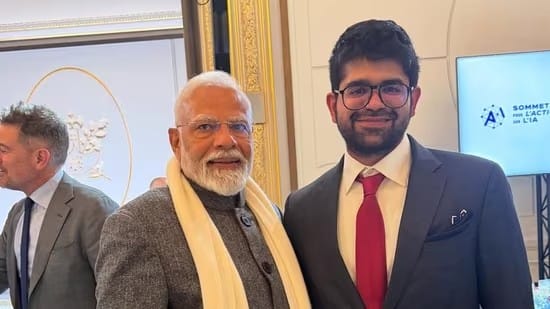
Under Aravind Srinivas’s leadership, Perplexity AI made headlines when it offered $34.5 billion to acquire Google Chrome. The staggering offer has been widely discussed across social media, tech forums, and the financial press.
From a strategic perspective, acquiring Chrome would give Perplexity direct access to billions of users and a powerful distribution platform for its AI-driven search technology. However, the move is also highly symbolic. Industry experts note that for a young company to make such a proposal — particularly to a tech titan like Google — is as much a statement of intent as it is a serious acquisition bid.
Why Chrome Matters
Chrome isn’t just a browser; it’s a central pillar of Google’s business model. Its deep integration with Google Search, YouTube, Gmail, and cloud services makes it a critical gateway for online activity. Owning Chrome would mean controlling one of the most widely used pieces of software in the world — and the data and advertising opportunities that come with it.
Independent browsers have historically struggled to compete with Chrome’s scale, speed, and seamless integration. Any separation of Chrome from Google would present enormous technical and operational challenges.
Timing and Antitrust Context
The timing of Perplexity’s bid is noteworthy. Google is currently navigating a landmark U.S. antitrust case. Recently, U.S. District Judge Amit P. Mehta ruled that Google had illegally maintained its monopoly in search, partly by paying hefty sums to remain the default search engine on devices and browsers.
While potential remedies are still under consideration, one theoretical — though unlikely — outcome could involve forcing Google to divest Chrome. Google has vowed to appeal the ruling, a process that could take years. At present, there’s no indication that Google would willingly sell Chrome, making Perplexity’s bid more of a provocative gesture than a near-term deal.
Perplexity’s Broader Vision

Regardless of whether the Chrome bid succeeds, Perplexity AI has signaled that it is not content to play small in the tech world. The company recently launched Comet, an AI-powered browser designed to compete directly with existing market leaders.
Comet integrates Perplexity’s conversational search capabilities directly into the browsing experience, allowing users to get answers instantly without navigating through multiple web pages. This AI-first approach aligns with Srinivas’s belief that the future of the internet lies in real-time, context-aware information delivery rather than traditional link-based search.
ALSO READ- Indian traveller calls Paris lunch at Eiffel Tower a scam over ‘tough bread’ and ‘disaster dessert’
Industry Reaction and Future Prospects
The $34.5 billion offer has drawn a mix of admiration and skepticism. Supporters see it as a bold, visionary play that forces the industry to rethink the role of AI in search and information delivery. Critics, however, view it as a publicity stunt designed to boost Perplexity’s profile.
Yet, even if the bid is symbolic, it has already succeeded in sparking conversations about the future of browsers, search engines, and AI-powered information tools. In that sense, Perplexity has already won part of the battle — capturing the attention of users, investors, and even potential partners.
Aravind Srinivas’s journey from Chennai to the forefront of Silicon Valley innovation is a story of ambition, expertise, and fearless vision. By blending academic rigor with industry experience, he has positioned Perplexity AI as a challenger to some of the most entrenched players in tech.
The $34.5 billion Chrome bid may never close, but it serves as a clear signal: Perplexity AI intends to play on the biggest stage. With products like Comet and a strategy centered on AI-driven search, Srinivas and his team are aiming not just to participate in the future of the internet, but to help define it.


 By
By