
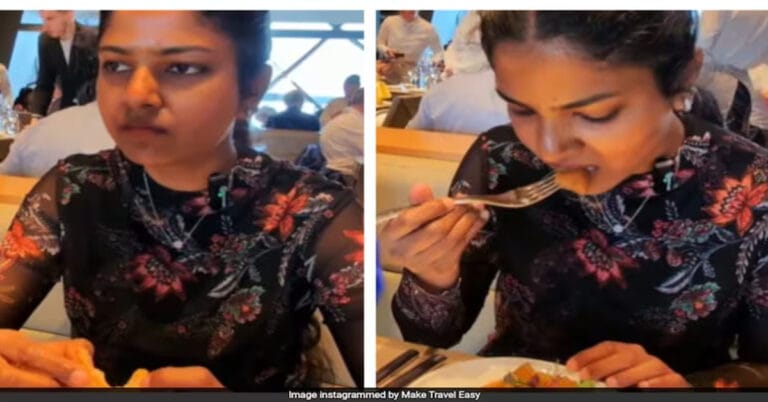

An Indian woman’s review of her lunch at one of Paris’s most prestigious restaurants has sparked a lively debate online — and divided opinions about what counts as fine dining.
The traveller, Ishwarya, visited Le Jules Verne, a two-Michelin-starred restaurant perched on the second floor of the Eiffel Tower. Known for its panoramic views of Paris and refined French cuisine, the restaurant is celebrated for dishes like langoustine ravioli, roasted pigeon, and artistic desserts. But for Ishwarya, the much-anticipated experience turned out to be a major disappointment.
A Meal With High Expectations
Le Jules Verne sits 125 metres above ground, offering sweeping views of the city through its floor-to-ceiling windows. For many visitors, it’s a bucket-list dining experience — and with tasting menus starting at around €190 (about ₹17,000) for lunch, it’s certainly priced as one.
Ishwarya and her husband, Sakthivel, who run the travel page Make Travel Easy, booked a lunch seating, expecting a memorable fine-dining experience. Instead, she said, it quickly became one of the most underwhelming — and expensive — meals of her life.
The Bread That Sparked the Criticism
In a video shared on their travel page, Ishwarya began by pointing to the bread served at the start of the meal, describing it as “impossible to chew.” She later explained that an elderly New Zealander seated nearby had also struggled with it.
When Ishwarya asked the waiter if there was an alternative, she said she was told it was the only bread option available. “For a restaurant of this level, I expected variety, or at least something edible without breaking your jaw,” she remarked in the video.
The bread became a running theme throughout the lunch. The New Zealander reportedly ate very little and later accepted Ishwarya’s offer to accompany her to a supermarket to buy biscuits instead.
Courses Ratings
Ishwarya went on to review each course of the meal in blunt terms:
- Starter: Served cold, earning a score of 2/10. “Not the kind of cold that’s refreshing — just… cold,” she said.
- Main Course: Rated 7/10, which she described as “average, nothing spectacular.”
- Dessert: Marked down to 1/10 for being “overly creamy” and heavy. “It was just a disaster for me,” she said.
By the end of the meal, Ishwarya summed up her experience as her “most expensive” and “worst” lunch.
The review, posted with the caption “I will never go here again. The most expensive lunch I had turned out like this”, quickly gained traction online. Many viewers sympathised with her, calling the restaurant a “tourist trap” and agreeing that dining at such iconic locations often prioritises the view over the food.
One commenter wrote:
“It is a tourist trap, do you think locals will go to have lunch at the Eiffel Tower?”
Another user added:
“Whenever you go to a restaurant, check the bread first — it shows you the real quality of the place.”
The Backlash
Not everyone sided with Ishwarya. Some accused her of failing to appreciate traditional French dining, particularly the bread, which they said was intentionally hard.
One user argued:
“European breads are supposed to be hard… not all breads are soft. There are so many different types of breads.”
Another commented:
“You don’t go to such a fine restaurant if you’re not used to French cuisine.”
Several people pointed out that in France, harder bread is often served for dipping in soups or pairing with rich dishes — and that its texture is part of the culinary tradition.
About Le Jules Verne
Le Jules Verne is named after the famed French novelist known for adventure classics like Around the World in 80 Days. With its location inside one of the world’s most recognisable landmarks, the restaurant attracts both locals and tourists seeking a special-occasion meal.
The menu is designed to showcase modern French cuisine, with a focus on seasonal produce and elaborate presentation. Signature dishes include:
- Langoustine Ravioli: Delicate pasta parcels filled with sweet langoustine meat and served in a fragrant broth.
- Roasted Pigeon: Cooked to perfection and served with an intricate arrangement of sides.
- Artistic Desserts: Often featuring layered mousses, fruit gels, and edible flowers.
The restaurant also boasts an extensive wine list, with over 430 French vintages to complement the tasting menus.
While some see Ishwarya’s review as an honest account of her personal experience, others believe it underscores a cultural gap in culinary expectations. Fine dining in Europe often involves dishes and textures unfamiliar to travellers from other regions — and what feels “average” to one person might be highly prized by another.
Her criticism of the bread in particular has become symbolic of this divide. In France, crusty bread is standard, whereas in India and many Asian countries, softer bread varieties dominate. This difference can shape how diners perceive quality.
The viral nature of the video also raises a common question for travellers: is dining at famous landmarks worth it? Restaurants in such locations often charge premium prices, and critics argue that the view — not the food — is the main draw.
Supporters of these establishments, however, insist that the combination of location, service, and atmosphere makes them worth the splurge, even if the food doesn’t appeal to every palate.
Ishwarya’s Final Word
Despite the criticism, Ishwarya clarified in later comments that the meal was “edible” but simply didn’t match her expectations for the price. She also stressed that she understands different cultures have different food traditions, but felt that her honest review could help others make an informed choice.
READ MPRE – Daboo Malik Says Sexual Assault Allegations Against Anu Malik ‘Shattered’ Their Family
“I’m not saying don’t go,” she said. “I’m saying — know what you’re getting into. If you love French cuisine, maybe you’ll enjoy it. But for me, it wasn’t worth it.”
In the end, her review has done exactly what viral travel content often does — spark conversations, challenge assumptions, and make future diners think twice before booking a table simply for the view. Whether you see Le Jules Verne as an unmissable Paris experience or an overpriced tourist trap may depend less on the Michelin stars and more on your taste buds — and perhaps, your tolerance for very hard bread.


 By
By