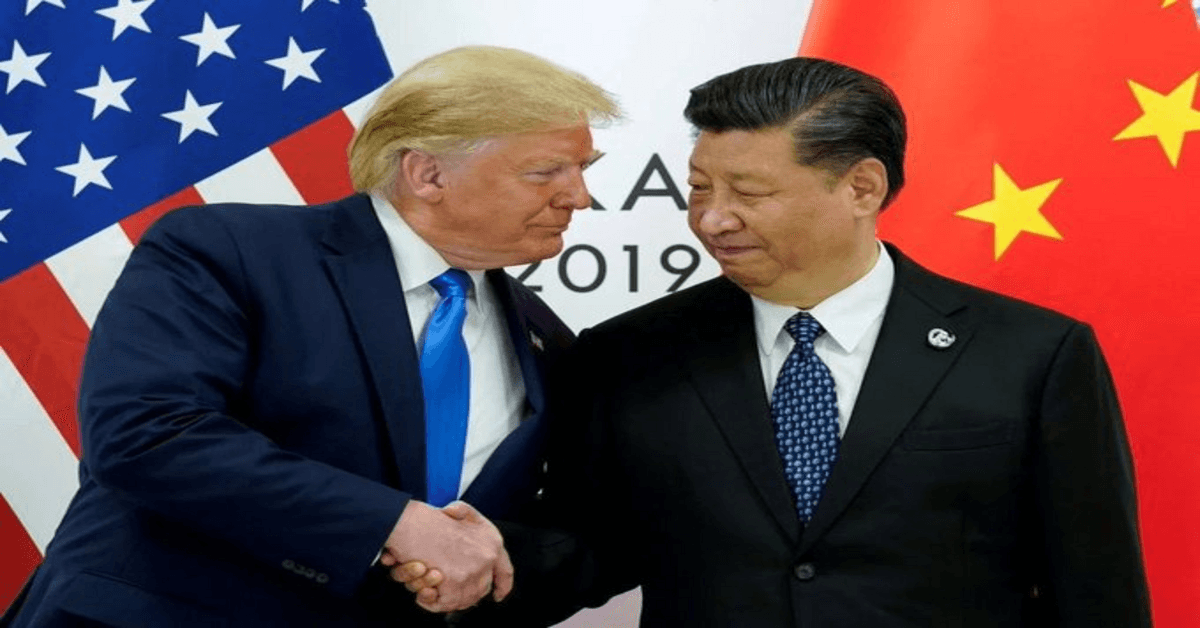
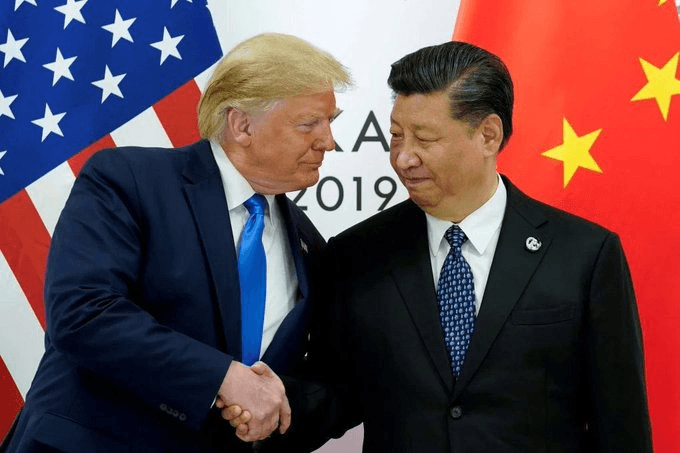
Washington: President Donald Trump has extended the ongoing trade truce with China by another 90 days, averting—for now—what could have been a sharp escalation in the trade war between the world’s two largest economies. The announcement, made Monday on Trump’s Truth Social platform, confirmed that he had signed an executive order for the extension and that “all other elements of the Agreement will remain the same.”
The previous deadline was set to expire at 12:01 a.m. Tuesday. Without the extension, the United States was poised to increase tariffs on Chinese imports from an already steep 30%, while Beijing was expected to respond with higher retaliatory duties on American exports. This reprieve gives both nations additional time to negotiate and possibly arrange a high-level summit later this year between Trump and Chinese President Xi Jinping.
For U.S. businesses with significant operations or sales in China, the pause was a welcome development. Sean Stein, president of the U.S.-China Business Council, called the move “critical,” saying it provides a much-needed window for both governments to work toward a deal that could enhance market access for American firms in China and restore the predictability companies need for medium- and long-term investment planning.
Uncle Trump Extends China Tariff Deadline By 90 Days
Was Widely Expected
The deadline for Trade Deal between US & China was set to end Today pic.twitter.com/7JnpyvsgWy
— Aashish Verma (@AshVerma111) August 12, 2025
Stein emphasized that a successful agreement should also address key issues such as curbing fentanyl production and export, which could lead to tariff reductions on both sides. “Securing an agreement on fentanyl that leads to a reduction in U.S. tariffs and a rollback of China’s retaliatory measures is acutely needed to restart U.S. agriculture and energy exports,” he said.
Trump’s Trade Approach: From Openness to Protectionism
Since taking office, Trump has reshaped U.S. trade policy by imposing double-digit tariffs—once considered extreme—on countries across the globe. The average U.S. tariff rate has surged from around 2.5% at the start of the year to 18.6%, the highest level since 1933, according to the Budget Lab at Yale University. The European Union, Japan, and other allies reluctantly accepted trade deals with higher U.S. tariffs—such as 15% on certain imports—to avoid even harsher measures.
However, resisted such concessions. It countered U.S. tariffs by leveraging its dominance in the production of rare earth minerals and magnets, essential components in products ranging from electric vehicles to jet engines. This standoff tested the limits of Washington’s strategy of using tariffs as leverage to extract economic concessions.
Steps Toward De-escalation
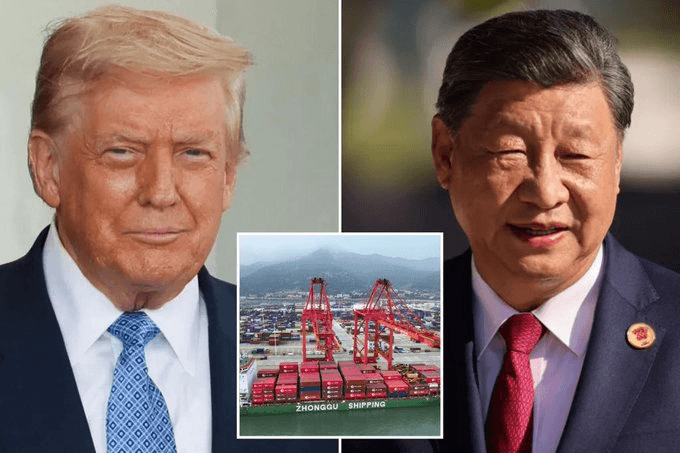
In June, the two countries made modest progress toward easing tensions. Washington agreed to lift certain export restrictions on computer chip technology and ethane—a feedstock in petrochemical production—while Beijing promised to make it easier for U.S. firms to access rare earth supplies.
“The U.S. has realized it does not have the upper hand,” observed Claire Reade, senior counsel at Arnold & Porter and former assistant U.S. trade representative.
This followed an even more dramatic episode in May, when the U.S. and China narrowly avoided an economic disaster. At the time, both nations had imposed massive tariffs on each other’s goods—up to 145% on Chinese exports to the U.S. and 125% on U.S. goods bound for. Such punitive measures threatened to halt bilateral trade entirely and caused turmoil in global financial markets.
During emergency talks in Geneva, the two sides agreed to scale back the tariffs—America’s fell to 30%, China’s to 10%—and resume negotiations. Since then, discussions have continued, with both parties aware of the damage they can inflict on each other’s economies.
Limits of Tariff Leverage
Ali Wyne, a specialist in U.S.-China relations at the International Crisis Group, said the episode revealed the limitations of Washington’s unilateral approach. “By overestimating the ability of steep tariffs to induce economic concessions from China, the Trump administration has not only underscored the limits of unilateral U.S. leverage, but also given Beijing grounds for believing that it can indefinitely enjoy the upper hand in subsequent talks with Washington by threatening to curtail rare earth exports,” Wyne noted.
According to Wyne, the administration’s desire for a trade détente stems partly from the self-inflicted economic consequences of its earlier aggressive stance.
The Road Ahead
Despite the extension, major sticking points remain unresolved. These include the U.S.’s longstanding complaints about China’s weak protection of intellectual property rights, state subsidies, and industrial policies that, Washington argues, give Chinese companies an unfair advantage in global markets. These practices, American officials say, have contributed to the $262 billion U.S. trade deficit recorded last year.
Reade, the former trade representative, cautioned against expecting sweeping breakthroughs. “I don’t expect much beyond limited agreements,” she said, predicting deals such as increased Chinese purchases of U.S. soybeans, commitments to crack down on chemicals used to produce fentanyl, and continued access to rare earth magnets for U.S. manufacturers.
While such incremental measures could help reduce immediate tensions, they are unlikely to resolve the deeper structural issues at the heart of the trade dispute.
Jeff Moon, a former U.S. diplomat and trade official who now heads the China Moon Strategies consultancy, believes the underlying trade conflict is far from over. “The trade war will continue grinding ahead for years into the future,” he warned.
Conclusion
Trump’s decision to extend the tariff deadline buys negotiators time, but it does not guarantee a lasting resolution. The history of U.S.-China trade talks suggests that while both sides may reach temporary compromises, deeply rooted differences—over market access, intellectual property, state subsidies, and strategic dominance in key industries—will keep tensions alive.
For now, U.S. companies dependent on markets can breathe a sigh of relief. But unless substantial progress is made in the coming months, the threat of renewed escalation will remain, and the global economy will continue to watch nervously as the world’s two largest economies navigate their turbulent relationship.