
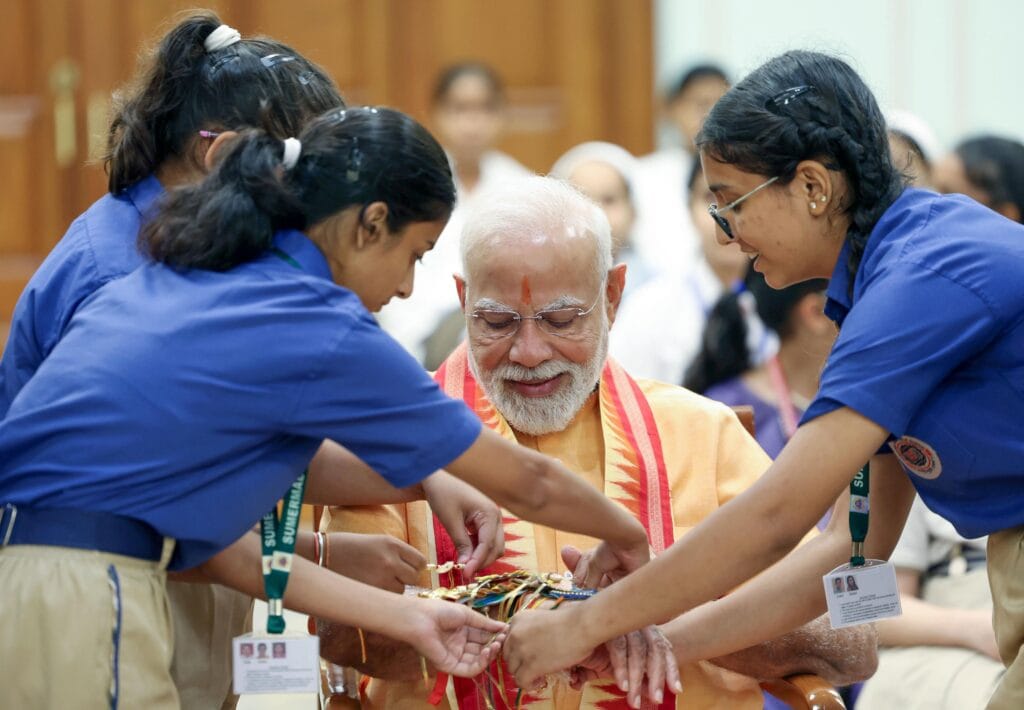
PM Narendra Modi marked the festival of Raksha Bandhan on Saturday with a warm and symbolic gathering at his residence in New Delhi, celebrating the occasion with students, members of the Brahma Kumaris organisation, and people from diverse walks of life.
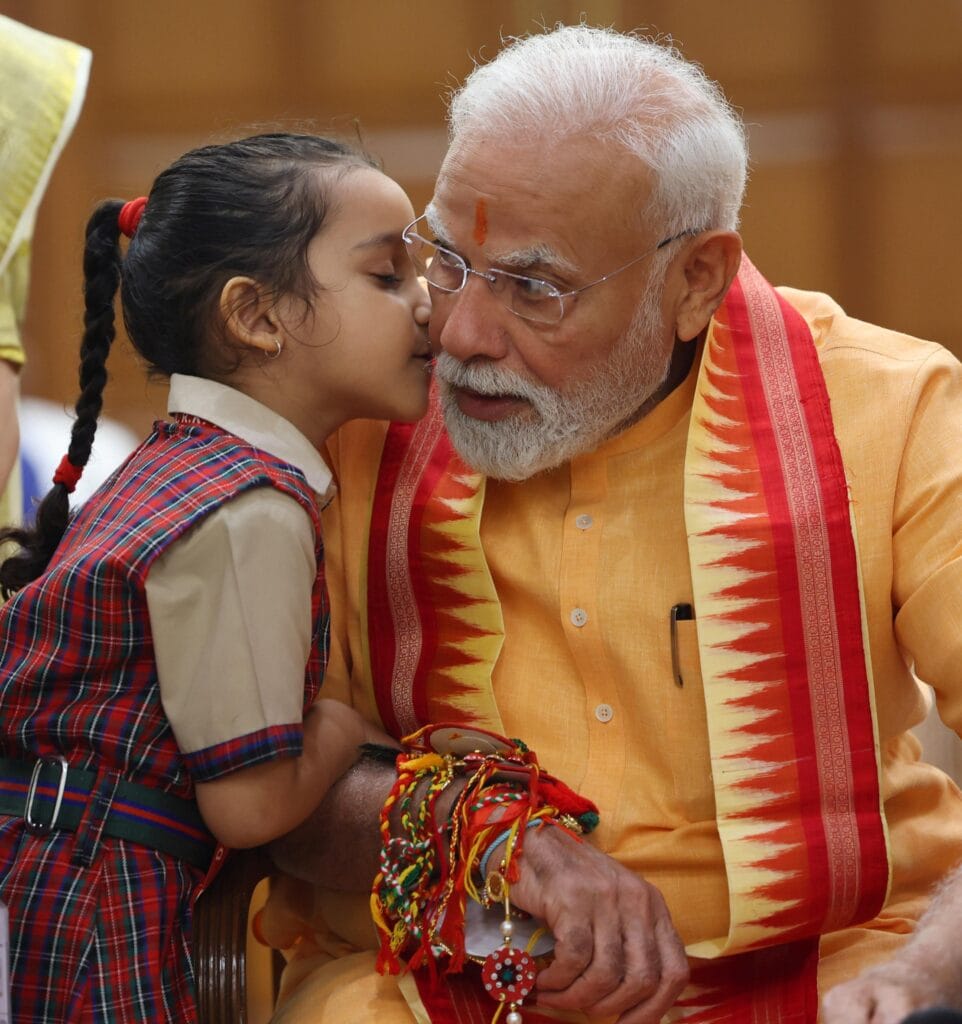
The event was filled with the spirit of tradition, unity, and affection, as attendees tied sacred threads “rakhi” on the PM MODI’s wrist, symbolising the bond of protection and care between brothers and sisters.
A Festival of Bonds and Traditions
School children celebrated Raksha Bandhan by tying rakhis to PM @narendramodi in Delhi today.
Take a look.#RakshaBandhan pic.twitter.com/WLz2PPZ7V6
— MyGovIndia (@mygovindia) August 19, 2024
Raksha Bandhan, celebrated across India and in Indian communities worldwide, is one of the country’s most cherished festivals. It traditionally involves sisters tying a rakhi—a decorated thread—on their brothers’ wrists, praying for their well-being and prosperity. In return, brothers pledge to protect and support their sisters.
Over the years, the festival has expanded beyond blood relations to include expressions of goodwill and mutual respect between friends, mentors, colleagues, and community members. This evolving significance was reflected in the diverse group of people who gathered with the Prime Minister.
Celebrations at the Prime Minister’s Residence
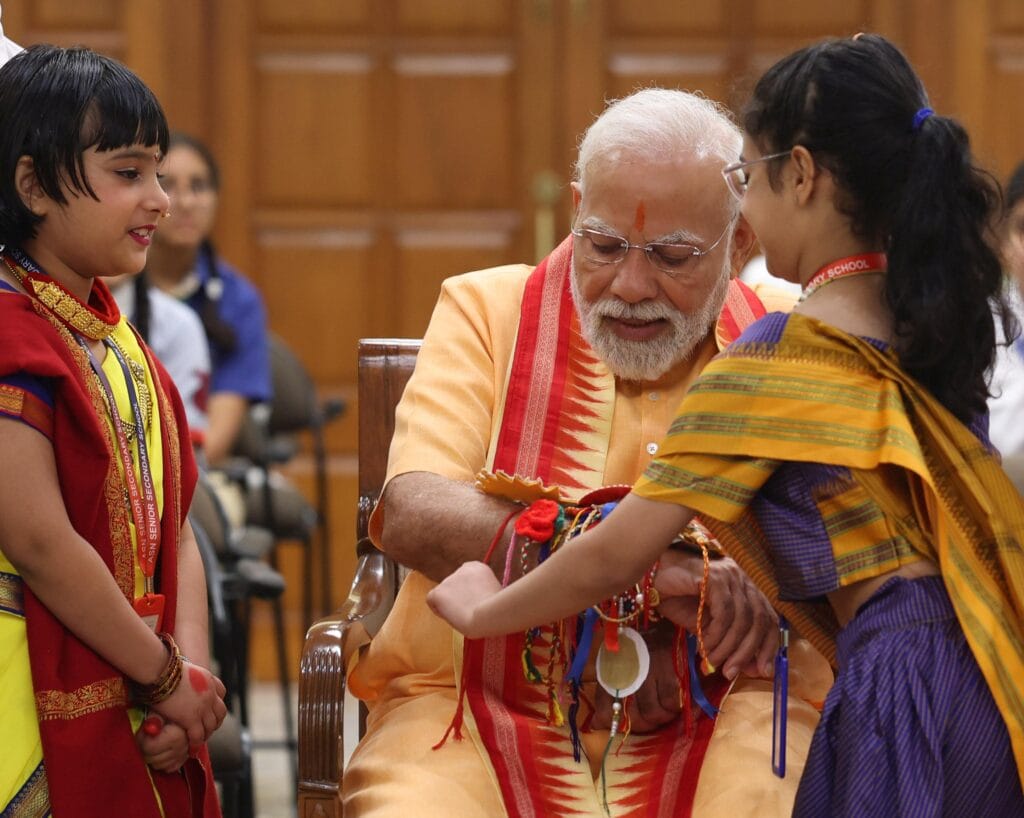
The PM Modi residence was decked out in simple yet elegant festive décor. Attendees, including schoolchildren from Delhi and nearby states, members of the Brahma Kumaris spiritual organisation, and women from various community groups, came dressed in vibrant traditional attire, carrying intricately designed rakhis.
Smiling and interacting warmly with the guests, PM Modi welcomed each participant, allowing them to tie rakhis while engaging in light conversations. The atmosphere was filled with laughter, blessings, and the rustle of colourful threads and sweets being exchanged.
In keeping with tradition, attendees also applied a ceremonial Tilak on the PM Modi’s forehead before tying the rakhi and offering sweets—a gesture that symbolises auspiciousness and goodwill.
Addressing the gathering informally, PM Modi spoke about the deeper meaning of Raksha Bandhan beyond the customary exchange of rakhis and gifts. “This festival is not just about the bond between brothers and sisters. It is a celebration of trust, respect, and commitment to protect one another. It strengthens our social fabric and reminds us of our cultural values,” he said.
He also emphasised the importance of harmony in society, noting that the essence of festivals lies in bringing people together across different backgrounds, religions, and regions.
Participation of the Brahma Kumaris
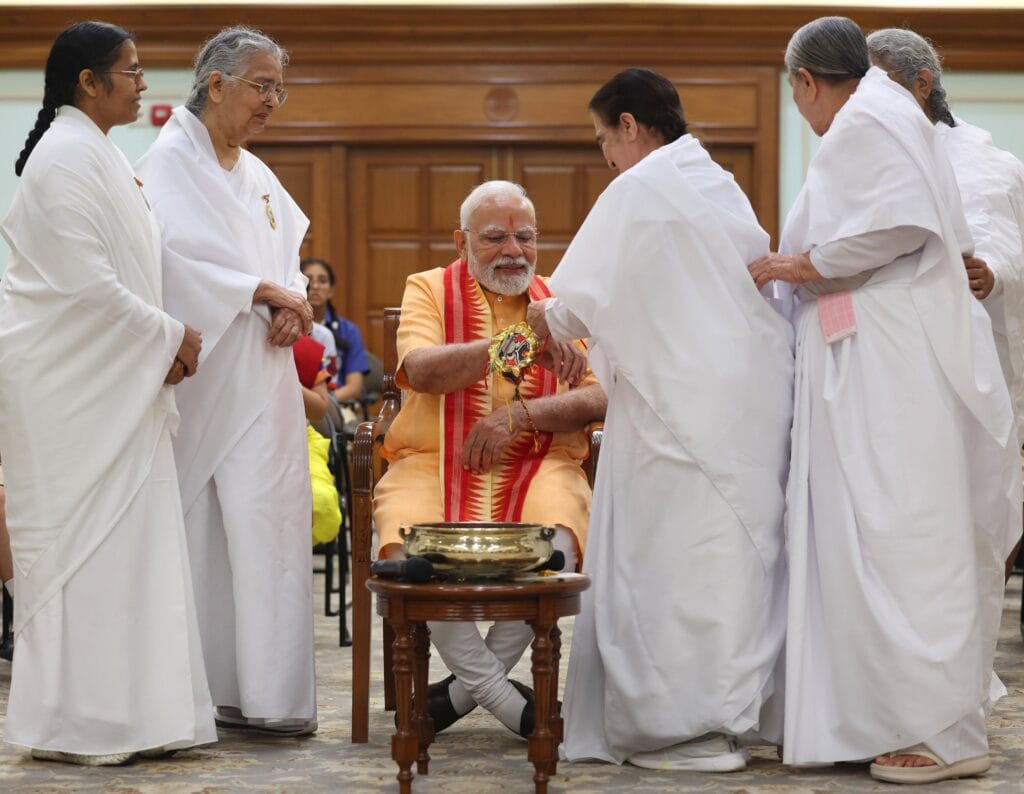
Members of the Brahma Kumaris, a global spiritual organisation known for its emphasis on self-transformation and community service, played a special role in the celebrations. They tied RAKHIS made with eco-friendly materials, symbolising a commitment to both human relationships and environmental care.
The group’s senior sisters blessed the PM and spoke briefly about the values of peace, selflessness, and service to humanity. Their presence highlighted the festival’s spiritual dimension and its potential to inspire compassionate action in daily life.
Interaction with Students
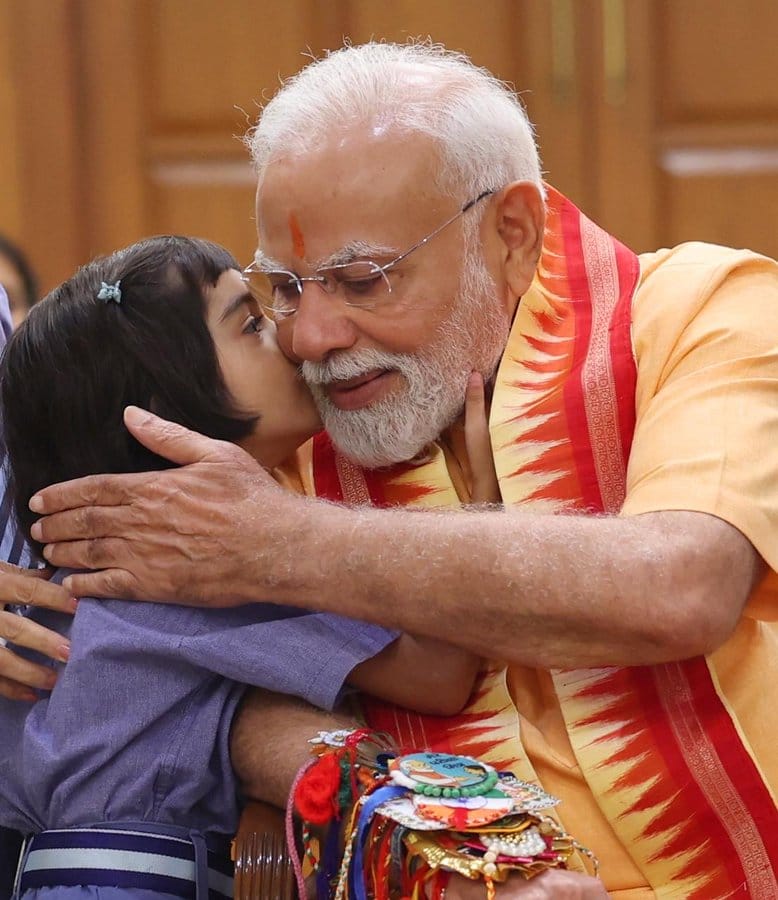
For the schoolchildren in attendance, meeting the PM on Raksha Bandhan was a moment they would remember for years. Many of them expressed excitement about the opportunity to personally interact with the country’s leader.
PM Modi encouraged the students to focus on their education, stay disciplined, and cultivate a sense of responsibility towards their families and the nation. “Your dreams and aspirations are the foundation of India’s future. Work hard, remain humble, and always stay connected to your roots,” he told them.
Some of the children also presented handmade cards and drawings along with their rakhis, which the PM accepted with visible appreciation.
In recent years, PM Modi has often used Raksha Bandhan as an opportunity to broaden the festival’s meaning, linking it to the protection of the environment, respect for women, and safeguarding the nation’s unity.
During the gathering, he reiterated that the spirit of the festival should extend beyond individual relationships to include the protection of shared resources, heritage, and social harmony. “Our duty to protect is not limited to our families—it includes our environment, our traditions, and the values that keep our country strong,” he said.
Raksha Bandhan, with its centuries-old roots, continues to evolve in modern India. The festival’s core values—love, trust, and mutual respect—remain unchanged, but its interpretation has expanded to include symbolic bonds between communities, leaders, and citizens.
By celebrating with people from various backgrounds—students, spiritual leaders, and community representatives—PM Modi sought to highlight this inclusive aspect of the festival.
As the ceremony concluded, guests were served sweets and light refreshments. Many took the opportunity to click photographs with the Prime Minister, who patiently posed for pictures and thanked each participant for taking the time to join him on the festive day.
For the attendees, the occasion was not only about tying a rakhi on the Prime Minister’s wrist but also about feeling acknowledged and valued. For PM Modi, the event appeared to be a reaffirmation of his connection with citizens across all sections of society.
ALSO READ- Raksha Bandhan Love Between Brother And Sister
Closing the Day
The Raksha Bandhan celebration at the PM Modi’s residence stood as a reminder of how festivals in India often transcend their traditional scope, becoming platforms for shared cultural expression, national unity, and social goodwill.
As attendees departed, the mood remained joyful, and the symbolic threads tied during the day represented not only personal bonds but also the enduring promise of collective care, unity, and protection—values at the very heart of the festival.